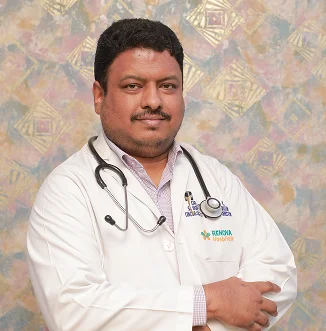
Our cardiology department provides diagnostic evaluation and management of cardiovascular conditions, including routine cardiac investigations and interventional procedures. Cardiologists work with other specialists, including cardiothoracic surgeons, when surgical evaluation or treatment is required.
Cardiology Services at Renova Hospitals
Renova Hospitals provides cardiology services involving preventive cardiac assessment, diagnostic investigations, medical treatment, and interventional procedures. Treatment planning depends on the patient's cardiovascular condition and individual medical requirements.
- A dedicated cardiology department in a hospital setting with modern diagnostic and interventional facilities.
- Cardiology consultants providing assessment and treatment for cardiovascular conditions.
- 24/7 emergency support for heart attacks, arrhythmias, and cardiac arrests.
- Advanced facilities for non-invasive cardiology, invasive cardiology procedures, and interventional cardiology procedures.
- Integration with cardiothoracic surgery vs cardiology teams for complete heart and lung care.
- Cardiology services for the diagnosis and management of cardiovascular conditions.
- Cardiac care services for adults and assessment of paediatric cardiac conditions where relevant specialists and facilities are available.
Procedures Done by a Cardiologist
Cardiology procedures help diagnose and manage heart conditions. At Renova Hospitals, cardiologists use investigations such as ECG, echocardiography, and other cardiac diagnostic tests to assess heart rhythm, function, and structural abnormalities.
Common non-invasive cardiology procedures include:
- Echocardiogram and Doppler studies to assess heart function and valve conditions.
- Treadmill test (TMT) to evaluate exercise tolerance and detect blockages.
- Holter monitoring for irregular heart rhythms.
- Stress echocardiography to check blood flow under stress.
- Blood pressure and cholesterol evaluations for early detection of heart disease.
- Cardiac CT and MRI scans for detailed imaging of the heart structure.
These are part of what is known as clinical cardiology, which helps detect problems before symptoms worsen.
Interventional Cardiology Procedures
When medicines or lifestyle changes aren’t enough, interventional cardiology or surgical options become essential. At Renova, our interventional cardiology doctors and cardiology surgeons perform a wide range of interventional and invasive cardiology procedures with precision and safety.
Common cardiology surgery types and operations include:
- Angioplasty and stent placement – a key cardiology stent procedure to open blocked arteries.
- Coronary artery bypass grafting (CABG) – often coordinated with cardiothoracic vs cardiology teams for severe blockages.
- Pacemaker and defibrillator implantation for rhythm correction and management.
- Interventional cardiology valve replacement for damaged or leaking valves.
- Balloon valvuloplasty and septal defect closures for congenital heart issues.
- Electrophysiology studies and ablation for arrhythmia management.
- Interventional cardiology vs. invasive cardiology procedures, such as catheter-based repairs performed without open-heart surgery.
Cardiologists assess individual patient conditions to determine appropriate diagnostic and treatment approaches, considering clinical indications, expected benefits, and potential risks.
When Should You See a Cardiologist?
If you experience any of these cardiology symptoms, it’s essential to seek expert care early. Visit our cardiology clinic near me if you have:
- Chest pain, heaviness, or tightness during activity or rest.
- Shortness of breath, fatigue, or swelling in the legs.
- Irregular or rapid heartbeat.
- High blood pressure or cholesterol not controlled by medicines.
- Family history of cardiovascular disease or heart attacks.
- Dizziness or fainting spells.
- Diabetes, obesity, or smoking history affecting your heart.