The heart relies on its own electrical system to beat at a steady, appropriate rate. When that system malfunctions, causing the heart to beat too slowly or irregularly, a
pacemaker can help restore a normal rhythm. Understanding when a pacemaker is needed, how the implantation procedure works, and what to expect afterward can make this common cardiac procedure feel far less daunting. This guide, reviewed by
Renova's cardiology team, explains pacemaker implantation in plain, practical terms.
Key Takeaways
- A pacemaker sends electrical signals to help the heart maintain a normal rate and rhythm.
- It is generally recommended for a heart rate that is too slow (bradycardia) or for certain heart block conditions.
- Implantation is usually a minimally invasive procedure performed under local anaesthesia.
- The procedure typically takes one to two hours, with most patients going home within a day or two.
- Several types of pacemakers exist, chosen based on the specific heart rhythm problem.
- Recovery generally involves some activity precautions for four to six weeks while the device settles in place.
- Regular follow-up checks monitor battery life and device function, typically every six to twelve months.
- A hospital with an experienced interventional cardiology and device implantation team supports a smoother, safer procedure and recovery.
What Is a Pacemaker and How Does It Work?
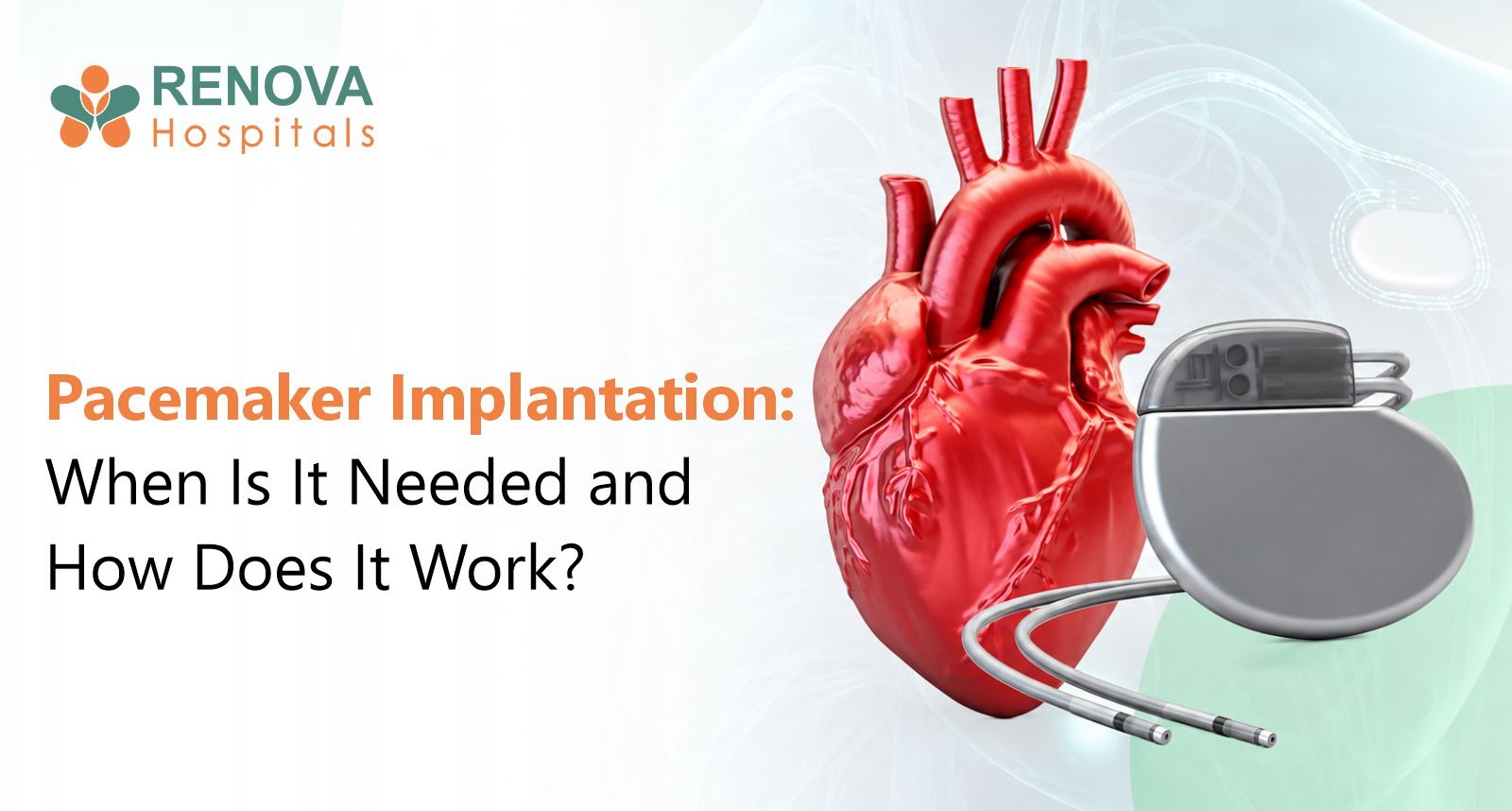
A pacemaker is a small electronic device, generally about the size of a matchbox, implanted just under the skin, usually near the collarbone. It is connected to the heart by one or more thin wires called leads.
The device continuously monitors the heart's electrical activity. When it detects that the heart is beating too slowly, or missing beats, it sends small electrical impulses through the leads to prompt the heart to beat at an appropriate rate.
When Is a Pacemaker Needed?
A pacemaker is generally recommended when the heart's natural electrical system cannot reliably maintain an adequate heart rate on its own.
Common reasons a pacemaker may be needed include:
- Bradycardia: a heart rate that is persistently too slow to meet the body's needs
- Heart block: a delay or blockage in the electrical signal travelling through the heart
- Sick sinus syndrome: a malfunction of the heart's natural pacemaker (the sinus node)
- Certain arrhythmias following a heart attack or heart surgery
- Fainting or dizziness caused by a slow or irregular heart rhythm
What Are the Symptoms That Might Mean You Need a Pacemaker?
Certain symptoms can indicate an underlying heart rhythm problem that may need evaluation for a pacemaker.
- Unexplained fatigue or reduced exercise tolerance
- Dizziness or lightheadedness
- Fainting or near-fainting episodes
- A noticeably slow or irregular pulse
- Shortness of breath, particularly with exertion
These symptoms have many possible causes, so a cardiac evaluation, usually including an ECG and heart rhythm monitoring, is needed to determine whether a pacemaker is the right treatment.
Types of Pacemakers
Different types of pacemakers are used depending on the specific rhythm problem being treated.
- Single-chamber pacemaker: uses one lead, typically placed in the right ventricle
- Dual-chamber pacemaker: uses two leads, coordinating signals between the right atrium and right ventricle for a more natural rhythm
- Biventricular pacemaker (cardiac resynchronisation therapy): used for certain patients with heart failure, coordinating both lower chambers of the heart
- Leadless pacemaker: a newer, smaller device implanted directly inside the heart without separate leads, suitable for select patients
Your cardiologist will recommend the type best suited to your specific heart rhythm condition and overall health.
How Does Pacemaker Implantation Work?
Pacemaker implantation is generally a minimally invasive procedure, often performed in a catheterisation laboratory rather than requiring open-heart surgery.
- Local anaesthesia is used to numb the area, usually near the collarbone, and light sedation may also be given
- A small incision is made, and the lead or leads are guided through a vein into the correct position in the heart
- The pacemaker device is connected to the leads and placed in a small pocket created under the skin
- The device is tested to confirm it is sensing and pacing the heart correctly before the incision is closed
- The entire procedure typically takes about one to two hours
Is Pacemaker Implantation Major Surgery?
It is generally considered a minor to moderate procedure, not major open-heart surgery.
Most pacemaker implantations are performed under local anaesthesia with sedation, without opening the chest. This makes it a comparatively low-risk procedure for most patients, though, as with any procedure, it carries some risks that your cardiologist will discuss beforehand.
What to Expect: Hospital Stay and Recovery
Recovery from pacemaker implantation is generally quicker than for open-heart procedures, though some precautions are important in the early weeks.
In the Hospital
- Most patients are monitored for a few hours to a day after the procedure
- An X-ray or device check may be done to confirm correct lead placement
- Most patients are discharged within one to two days
The First Four to Six Weeks
- Avoid raising the arm on the side of the implant above shoulder height
- Avoid heavy lifting or strenuous activity on that side while the device and leads settle into position
- Keep the incision site clean and dry, and monitor for signs of infection
- Follow any specific guidance from your cardiologist about driving and returning to work
How Long Does It Take to Recover from Pacemaker Surgery?
Most people recover from the procedure itself within a few days, with full settling-in of the device over four to six weeks.
Many patients feel back to normal within a week or so for everyday activities, while more strenuous activity involving the affected arm and shoulder is generally avoided until the initial healing period is complete, as advised by your cardiologist.
Living With a Pacemaker: Long-Term Follow-Up
A pacemaker requires ongoing monitoring to ensure it continues to function correctly.
- Regular follow-up visits, typically every six to twelve months, to check device function and battery status
- Some devices allow remote monitoring, sending data to your care team between in-person visits
- Pacemaker batteries generally last many years, and the device is replaced through a smaller procedure when needed
- Most people can resume normal daily activities, including exercise, once fully recovered
Can You Live a Normal Life With a Pacemaker?
Yes, for most people, a pacemaker allows a return to normal or near-normal daily activity.
Most patients are able to work, exercise, and travel as before, with a few practical precautions, such as informing airport security and certain medical staff about the device, and being mindful around strong magnetic fields. Your cardiologist will provide guidance specific to your device and lifestyle.
Choosing Where to Have Pacemaker Implantation
Pacemaker implantation is a specialised procedure, and outcomes benefit from an experienced interventional cardiology and cardiac device team, along with appropriate catheterisation laboratory and critical care support in case of any complications.
When considering where to have the procedure, it can help to ask about the team's experience with device implantation, the range of pacemaker types available, and the hospital's follow-up and remote monitoring capabilities.
Medical Review
Pacemaker implantation is a well-established, generally low-risk procedure that helps restore a normal heart rate and rhythm when the heart's natural electrical system cannot do so reliably on its own. Most procedures are minimally invasive, performed under local anaesthesia, with a relatively short hospital stay and recovery period.
With appropriate follow-up and monitoring, most patients with a pacemaker return to a full and active life.
Consult the Cardiology Team at Renova Hospitals
If you have been advised to consider a pacemaker, or are experiencing symptoms such as fainting, dizziness, or unexplained fatigue, our cardiology team can help evaluate your heart rhythm and explain your options.
At
Renova Hospitals, our
Cardiology team provides comprehensive evaluation and treatment of heart rhythm disorders, including pacemaker and ICD implantation.
Dr. Mohammed Shoeb Ahmed, Interventional Cardiologist at Renova Hospital Langar Houz with specific expertise in device closures, pacemaker implantation, and ICD placement, and the wider cardiology team can guide you through evaluation, the procedure, and long-term follow-up.
Request a consultation or call 040 2333 3333.
Questions to Ask Your Cardiology Team
It can help to ask your care team directly:
- Which type of pacemaker is most suitable for my specific heart rhythm condition?
- What does the implantation procedure and hospital stay involve for me?
- What precautions will I need to follow during recovery?
- How will my pacemaker be monitored over the long term, and does the hospital offer remote monitoring?
Clear answers to these questions can help you approach the procedure with confidence.
The Bottom Line
A pacemaker helps restore a normal heart rate and rhythm when the heart's own electrical system cannot reliably do so, most often due to a heart rate that is too slow or a block in electrical conduction. Implantation is typically a minimally invasive procedure with a short hospital stay, and most patients return to normal activity within a few weeks, supported by regular long-term follow-up.
At Renova Hospitals, our cardiology and interventional cardiology teams provide comprehensive evaluation, pacemaker implantation, and long-term device follow-up, guiding patients through every stage of the process.
Medical References
Medically Reviewed & Approved By:
Dr. Mohammed Shoeb Ahmed
MBBS, DNB (Pulmonology), DM (Cardiology)
Interventional Cardiologist, Renova Hospital, Langar Houz, Hyderabad
This article has been reviewed and approved by a qualified medical professional to ensure medical accuracy and adherence to current clinical standards.