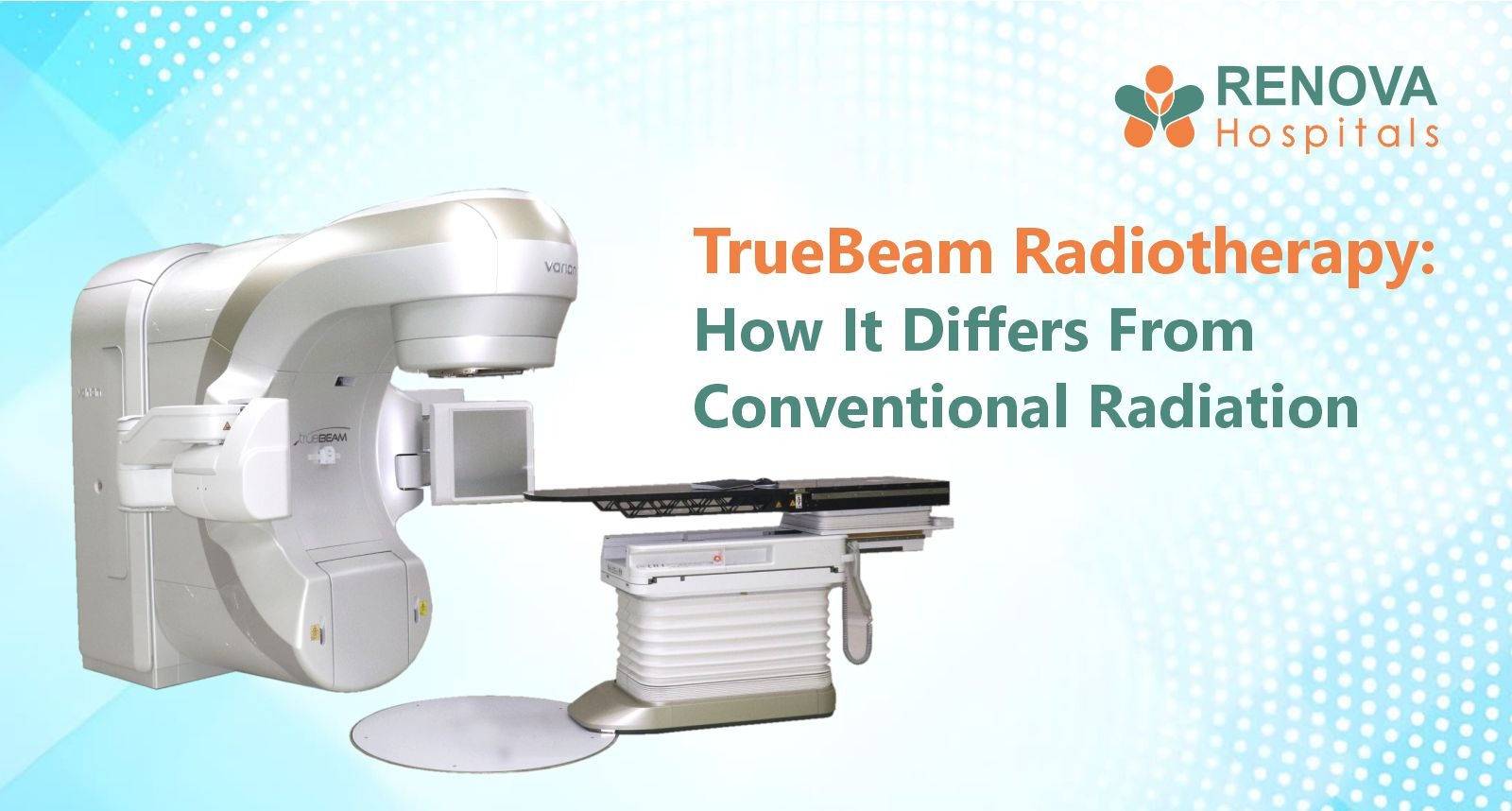
When brain metastases or certain brain tumours are being treated with radiation, two very different approaches are commonly considered:
stereotactic radiosurgery (SRS) and whole brain radiation therapy (WBRT). These treatments differ significantly in how they are delivered, what they target, and the side effects they carry. Understanding these differences can help patients have a more informed conversation with their radiation oncology team about which approach fits their specific situation. This guide, reviewed by
Renova's radiation oncology team, explains both treatments in clear, practical terms.
Key Takeaways
- Stereotactic radiosurgery (SRS) delivers precisely focused, high-dose radiation to a small target area, usually in one to five sessions.
- Whole brain radiation therapy (WBRT) treats the entire brain, typically over two to three weeks of daily sessions.
- SRS is generally preferred for a limited number of small, well-defined brain tumours or metastases.
- WBRT may be used when there are numerous tumours throughout the brain, or in certain preventive situations.
- SRS is associated with fewer cognitive side effects than WBRT, since it spares more healthy brain tissue.
- The choice between SRS and WBRT depends on the number, size, and location of tumours, and overall treatment goals.
- Both treatments are delivered using linear accelerator-based systems capable of precise radiation targeting.
- A radiation oncologist, often alongside a multidisciplinary tumour board, determines the most appropriate approach for each patient.
What Is Stereotactic Radiosurgery (SRS)?
Stereotactic radiosurgery is a highly precise form of radiation therapy that delivers a concentrated, high dose of radiation to a small, specifically targeted area, typically a tumour, while minimising exposure to surrounding healthy brain tissue.
Despite its name, SRS is not actual surgery. No incision is made. Instead, advanced imaging and treatment planning allow multiple radiation beams to converge precisely on the target from different angles, delivering a high dose in a small number of sessions, often just one.
What Conditions Is SRS Used For?
- A limited number of brain metastases (tumours that have spread to the brain from cancer elsewhere in the body)
- Certain primary brain tumours, particularly smaller or well-defined ones
- Some non-cancerous conditions, such as certain vascular malformations and trigeminal neuralgia
- Cases where a tumour is in a location that may be difficult to reach safely with surgery
What Is Whole Brain Radiation Therapy (WBRT)?
Whole brain radiation therapy delivers radiation to the entire brain, rather than a single targeted area. It is typically given in smaller daily doses over a period of two to three weeks, allowing healthy tissue time to recover between sessions.
WBRT is generally considered when:
- There are numerous brain metastases spread throughout the brain, too many to treat individually with SRS
- Microscopic disease is suspected throughout the brain, beyond what is visible on imaging
- A broader, preventive approach is needed in certain specific clinical situations
- SRS alone is not considered sufficient to address the extent of disease
Key Differences Between SRS and WBRT
The two approaches differ in several important ways, which influence which one a radiation oncologist may recommend for a given patient.
Treatment Area
SRS targets a specific, well-defined area with high precision, while WBRT treats the entire brain, affecting both tumour and healthy tissue throughout.
Number of Sessions
SRS is typically delivered in one to five sessions, sometimes called fractions, depending on the size and number of targets. WBRT is generally delivered daily over two to three weeks, as smaller, more frequent doses.
Side Effects
Because SRS spares more healthy brain tissue, it is generally associated with fewer side effects, particularly with regard to memory and cognitive function, compared with WBRT. WBRT, by treating the whole brain, carries a higher likelihood of fatigue, hair loss throughout the scalp, and longer-term cognitive effects, particularly with repeated or extensive treatment.
Suitable Cases
SRS is generally best suited to a limited number of small, clearly defined tumours. WBRT may be more appropriate when there are many tumours, when disease is widespread, or in specific clinical circumstances where broader brain coverage is considered necessary.
Which Is Right for You?
The choice between SRS and WBRT is not a matter of one being universally better than the other. It depends on several specific factors evaluated by a radiation oncologist, often alongside a multidisciplinary tumour board.
- The number of brain tumours or metastases present
- The size and location of each tumour
- Whether the primary cancer is well controlled elsewhere in the body
- The patient's overall health and treatment goals
- Whether previous brain radiation has already been given
In some cases, a combination approach may be considered, or SRS may be used to treat a small number of visible tumours while other treatments address disease elsewhere. This decision is always individualised rather than based on a fixed rule.
Can SRS Be Used Instead of Whole Brain Radiation for Multiple Tumours?
In some cases, yes, particularly as treatment approaches have evolved.
Advances in SRS technology have expanded its use to treat a greater number of brain metastases than was previously standard, in appropriately selected patients. However, there is generally a practical limit to how many individual tumours can be treated this way, and WBRT remains an important option when disease is more extensive. Your radiation oncologist will advise which approach is appropriate for your specific number and distribution of tumours.
What Is the Difference Between Gamma Knife and CyberKnife?
Both are brand names for systems capable of delivering stereotactic radiosurgery, and both achieve a similar underlying goal through different technology.
Gamma Knife systems use multiple beams of gamma radiation from a fixed device, historically requiring a head frame for precise positioning. CyberKnife and other modern linear accelerator-based systems use a robotically guided beam and image guidance, often without requiring a rigid head frame. Renova's radiation oncology department delivers SRS using advanced linear accelerator technology; patients can discuss with their radiation oncologist which specific delivery system and approach suits their case.
What Does Treatment and Recovery Involve?
Both SRS and WBRT are non-invasive and generally do not require a hospital stay, though the overall experience differs.
- SRS: usually completed in one to five outpatient sessions, often over a short period, with most patients resuming normal activities within a few days
- WBRT: involves daily visits over two to three weeks, with cumulative side effects such as fatigue and hair loss building gradually over the course
- Both treatments are followed by imaging and clinical follow-up to monitor response
- Side effects are managed by the radiation oncology team throughout treatment and in follow-up visits
Medical Review
Stereotactic radiosurgery and whole brain radiation therapy are both established, effective treatments for brain tumours and metastases, but they serve different purposes. SRS offers highly targeted treatment with fewer sessions and generally fewer cognitive side effects, making it well suited to a limited number of small, well-defined tumours. WBRT treats the entire brain and may be more appropriate when disease is more widespread.
The right choice is always individualised, based on the number, size, and location of tumours, and should be made in consultation with an experienced radiation oncology team.
Consult the Radiation Oncology Team at Renova Hospitals
If you or a family member has been diagnosed with a brain tumour or brain metastases and want to understand which radiation approach may be appropriate, our radiation oncology team can help explain the options.
At
Renova Hospitals, our
Radiation Oncology department offers advanced radiation techniques, including Stereotactic Radiosurgery (SRS), IMRT, IGRT, and VMAT, delivered using high-energy linear accelerator technology.
Dr. Jyothi Jonnadula, Senior Consultant Radiation Oncologist at Renova Century Hospital with specific expertise in SRS, IMRT, IGRT, and SBRT, and the wider radiation oncology team can help determine the most appropriate treatment approach for your specific case.
Request a consultation or call 040 2333 3333.
Questions to Ask Your Radiation Oncology Team
- Is stereotactic radiosurgery suitable for my specific number and location of tumours?
- What side effects should I expect from the recommended approach?
- How many treatment sessions will be needed?
- How will my response to treatment be monitored afterward?
Clear answers to these questions can help you feel informed about your treatment plan.
The Bottom Line
Stereotactic radiosurgery and whole brain radiation therapy both treat brain tumours with radiation, but in very different ways: SRS targets a small area precisely over a few sessions, while WBRT treats the whole brain over several weeks. SRS is generally preferred for a limited number of small tumours, with fewer cognitive side effects, while WBRT may be more suitable when disease is more widespread.
At Renova Hospitals, our radiation oncology team uses advanced technology and individualised assessment to recommend the approach best suited to each patient's specific situation.
Medical References
Medically Reviewed & Approved By
Dr. Nethula Gauthami
MBBS, DNB (Radiation Oncology)
Senior Consultant Radiation Oncologist, DDH Renova Cancer Centre, Vidya Nagar, Hyderabad
This article has been reviewed and approved by a qualified medical professional to ensure medical accuracy and adherence to current clinical standards.