Renova Hospitals Logo
Home Blogs TrueBeam Radiotherapy: How It Differs From Conventional Radiation
How TrueBeam radiotherapy differs from conventional radiation therapy

By Dr. Nethula Gauthami

October 30, 2026

TrueBeam Radiotherapy: How It Differs From Conventional Radiation

When a doctor recommends radiation, many patients hear terms such as conventional radiotherapy, IMRT, and TrueBeam and wonder what actually separates them. The difference lies in how precisely the radiation is aimed, how the tumour's position is checked, and how quickly the dose is delivered. Understanding these differences helps patients ask useful questions and appreciate why a particular technique is recommended for them. This guide, reviewed by Renova's radiation oncology team, explains TrueBeam and how it compares with conventional radiation in clear, practical terms.

Key Takeaways

  • TrueBeam is a Varian linear accelerator platform built for image-guided, high-precision radiotherapy.
  • Conventional radiotherapy uses broader, less tightly shaped beams and less frequent confirmation of tumour position.
  • TrueBeam supports IMRT, IGRT, RapidArc, stereotactic radiosurgery, and stereotactic body radiotherapy.
  • Higher dose-rate delivery can shorten the time a patient spends on the treatment table.
  • Respiratory gating helps keep treatment accurate for tumours that move with breathing, such as in the lung.
  • HyperArc is a TrueBeam-based approach designed to treat multiple brain metastases together using a single isocentre.
  • Advanced does not mean necessary for everyone; the right technique depends on the individual case.
  • A radiation oncologist, with a medical physics team, plans and checks every treatment.

What Is Conventional Radiotherapy?


Conventional radiotherapy generally refers to older or more basic external beam techniques, such as two-dimensional or three-dimensional conformal radiotherapy. These methods aim radiation at the tumour from a limited number of directions using beams shaped to the general outline of the treatment area.

They have treated cancer effectively for many years and remain appropriate for some situations. However, because the beams are less finely shaped and imaging checks are less frequent, a somewhat larger area of healthy tissue may receive radiation, and there is less ability to adapt to small day-to-day changes in position.

What Is TrueBeam Radiotherapy?


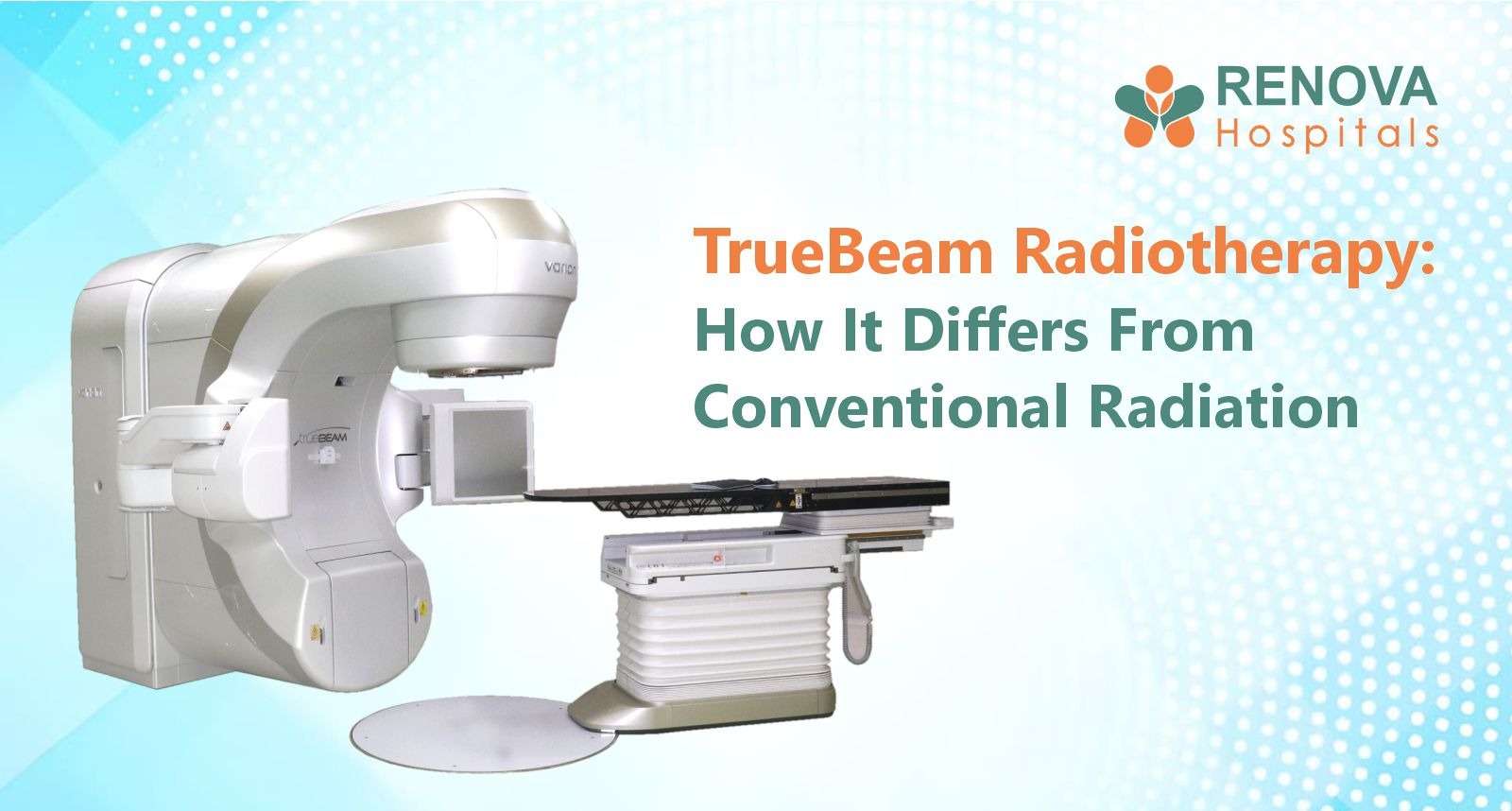
TrueBeam is a linear accelerator system from Varian Medical Systems designed to deliver advanced, image-guided radiotherapy. It combines imaging, precise beam shaping, and fast delivery in one platform, and it can be used for a wide range of cancers, including those of the head and neck, lung, liver, breast, and abdomen.

Key capabilities include:

  • Image-guided radiotherapy (IGRT), which uses on-board imaging to check the tumour's position before treatment
  • Intensity-modulated radiotherapy (IMRT) and RapidArc, which shape and vary the radiation dose to fit the tumour closely
  • Stereotactic radiosurgery (SRS) and stereotactic body radiotherapy (SBRT), which deliver very high, tightly focused doses in few sessions
  • Gated delivery, which synchronises the beam with the patient's breathing
  • High dose-rate modes that can shorten treatment time

How Does TrueBeam Differ From Conventional Radiation?


The practical differences fall into a few areas that matter to patients.

Precision of the Dose

Conventional techniques use broader beam shapes, while TrueBeam works with finely adjustable beam shaping and modulated dose, allowing the radiation to conform more closely to the tumour and spare more of the surrounding healthy tissue.

Image Guidance

With conventional techniques, positioning relies more on skin marks and periodic checks. With image-guided radiotherapy, imaging can confirm where the tumour sits at the time of treatment, so small changes from day to day can be corrected.

Handling Tumour Movement

Some tumours move as the patient breathes. Gated delivery lets the system treat only during selected parts of the breathing cycle, which helps maintain accuracy, particularly in lung and upper abdominal cancers.

Speed of Treatment

Higher dose-rate delivery can shorten the time spent on the treatment table. This can make treatment more comfortable, especially for patients who find it difficult to lie still for long periods.

Range of Techniques

Because it supports stereotactic approaches, TrueBeam can deliver very high doses to small, well-defined targets in a small number of sessions, which is not the role of basic conventional techniques.

Does TrueBeam Cure Cancer Better Than Conventional Radiation?


Not automatically.

The goal of advanced technology is to deliver the intended dose more accurately and to reduce unwanted radiation to healthy tissue, which can lower side effects and allow some treatments, such as stereotactic radiosurgery, that were not previously practical. The benefit for any individual depends on the cancer type, stage, and treatment goal, and a radiation oncologist will recommend the technique that best fits the situation.

What Is HyperArc?


HyperArc is a Varian solution used on TrueBeam systems that is designed for stereotactic radiosurgery of brain metastases. It uses non-coplanar arcs and automated planning to treat multiple brain metastases at the same time using a single isocentre, which can shorten the treatment compared with approaches that treat each lesion separately.

Renova's own information describes radiation oncology delivered on Varian TrueBeam with HyperArc and Halcyon systems, with HyperArc enabling single-session treatment of multiple brain metastases. Availability of specific systems can differ between centres, so it is worth confirming the location when booking.

Which Cancers May Be Treated With TrueBeam?


TrueBeam is a general-purpose advanced platform, so it may be used for many cancer types depending on the plan.

  • Brain tumours and brain metastases, including stereotactic radiosurgery
  • Lung cancer, including stereotactic body radiotherapy for suitable early-stage tumours
  • Head and neck cancers, where sparing nearby structures matters
  • Breast cancer and cancers of the abdomen and liver
  • Spine and bone metastases treated with focused high-dose techniques

This list shows where the technology can be used, not a guarantee that it is suitable for every patient with these cancers. Suitability is decided individually.

What to Expect During TrueBeam Treatment


The patient experience is similar to other external beam radiotherapy, though the planning is detailed.

  • A planning scan, usually a CT, with immobilisation devices such as a mask or cushion to hold the position
  • Detailed treatment planning by the radiation oncologist and medical physics team
  • Daily or scheduled sessions, during which imaging confirms position before the beam is delivered
  • Painless treatment, with the machine moving around the patient
  • Regular review to monitor side effects and response

Is TrueBeam Radiotherapy Painful?


No. The radiation itself is painless, like having an X-ray. Patients may feel tired or notice skin or site-specific side effects over the course of treatment, which the team monitors and manages.

Choosing a Radiation Oncology Centre


Technology is only part of the picture. Outcomes depend on the planning expertise of the radiation oncologist, the medical physics and quality assurance team, and coordination with surgical and medical oncology.

When choosing a centre, it helps to ask which systems are available at the specific location, how treatment is planned and checked, and whether cases are reviewed by a multidisciplinary tumour board.

Medical Review


TrueBeam is an advanced image-guided linear accelerator platform that supports IMRT, RapidArc, stereotactic radiosurgery, stereotactic body radiotherapy, and gated delivery. Compared with conventional radiotherapy, it offers closer conformity of the dose to the tumour, routine confirmation of tumour position, management of breathing motion, and faster delivery.

These strengths allow more precise treatment and, for some patients, options that were not previously available, while conventional techniques remain suitable in selected cases. The right choice is made individually by the radiation oncology team.

Consult the Radiation Oncology Team at Renova Hospitals


If you have been advised to have radiotherapy, or want to understand whether advanced techniques may suit your case, our radiation oncology team can help.

At Renova Hospitals, the Radiation Oncology department delivers radiotherapy on advanced systems that include Varian TrueBeam with HyperArc and Halcyon, supported by medical physicists, dosimetrists, and radiation technologists. Dr. Jyothi Jonnadula, Senior Consultant Radiation Oncologist at Renova Century Hospital with expertise in high-energy linear accelerators including Varian TrueBeam, and Dr. Sandeep Kumar Tula, Senior Radiation Oncologist at Renova Soumya Cancer Centre, Secunderabad, who delivers IMRT, IGRT, VMAT, SRS, and SBRT, can help you understand the approach recommended for your case.

Request a consultation or call 040 2333 3333.

Questions to Ask Your Radiation Oncology Team


  • Which radiotherapy technique is being recommended for me, and why?
  • Which machine will my treatment be delivered on, and at which centre?
  • How many sessions will I need, and how long is each one?
  • How will my position be checked, and how will side effects be managed?

Clear answers to these questions can help you feel confident about your treatment plan.

The Bottom Line


TrueBeam radiotherapy differs from conventional radiation mainly in precision, image guidance, motion management, and speed, and it supports advanced techniques such as IMRT, RapidArc, stereotactic radiosurgery, and stereotactic body radiotherapy. It is not automatically necessary or better for every patient, but for the right cases it allows more accurate and efficient treatment.

At Renova Hospitals, our radiation oncology team plans each treatment individually and uses advanced technology where it benefits the patient.

Medical References


Medically Reviewed & Approved By


Dr. Nethula Gauthami
MBBS, DNB (Radiation Oncology)
Senior Consultant Radiation Oncologist, DDH Renova Cancer Centre, Vidya Nagar, Hyderabad

This article has been reviewed and approved by a qualified medical professional to ensure medical accuracy and adherence to current clinical standards.

Want to connect with a specialist?

Book your appointment now

Our Panel of Doctors

Our healthcare specialists are equipped with the knowledge and skills to provide you with the support you require. From consultation to diagnosis to treatments, our experts are dedicated to helping you.

Dr. Nethula Gauthami - Best doctor at Renova Hospitals

Dr. Nethula Gauthami

Radiation Oncology

11 years Experience

Telugu, English, Hindi

DDH Renova Cancer Centre - Vidya Nagar

MBBS, DNB (Radiation Oncology)

Recent Blogs

Our healthcare specialists are equipped with the knowledge and skills to provide you with the support you require. From consultation to diagnosis to treatments, our experts are dedicated to helping you.

Comparing angioplasty and bypass surgery for blocked heart arteries
Cardiology

Coronary Angioplasty vs Bypass Surgery: How Doctors Decide

09 November 2026 | By Dr. Nirmal Kumar

Understand the differences between coronary angioplasty and bypass surgery, including how doctors assess blocked arterie...

Who is a candidate for spinal cord stimulation for chronic pain?
Neurosurgery

Spinal Cord Stimulation for Chronic Pain: Who Is a Candidate?

06 November 2026 | By Dr. Syed Ameer Basha Paspala

Learn how spinal cord stimulation helps manage certain types of chronic pain, who may be eligible for this treatment, an...

Brain tumour surgery recovery timeline and post-operative care
Neurosurgery

Brain Tumour Surgery Recovery: What to Expect Week by Week

04 November 2026 | By Dr. Vishnu Vardhan

Understand the week-by-week recovery process after brain tumour surgery, including healing milestones, common post-opera...

Treatment approaches for hormone receptor positive breast cancer
Medical Oncology

Hormone Receptor Positive Breast Cancer: Treatment Options and Prognosis

02 November 2026 | By Dr. Jyosthna Elagandula

Learn about hormone receptor positive breast cancer, including treatment options such as hormone therapy, targeted thera...

Comparing blood cancer and solid tumour treatment approaches
Medical Oncology

Blood Cancer vs Solid Tumour: How Diagnosis and Treatment Differ

28 October 2026 | By Dr. Goli Vasu Babu

Understand how blood cancers and solid tumours differ in diagnosis, medical evaluation, and treatment approaches, includ...

Understanding HIPEC surgery for peritoneal cancer treatment
Surgical Oncology

HIPEC Surgery: What Patients With Peritoneal Cancer Need to Know

26 October 2026 | By Dr. Srinivas Juluri

Learn about HIPEC surgery for peritoneal cancer, including how the procedure works, its potential benefits, eligibility...

Frequently Asked Questions

Find quick answers to common questions about our services, doctors, and care at Renova Hospitals. So you can feel informed and confident at every step.

Which hospital in Hyderabad offers TrueBeam radiotherapy?

Where can I book a consultation for radiotherapy in Hyderabad?

How much does TrueBeam radiotherapy cost?

Is TrueBeam better than conventional radiotherapy?

What is the difference between TrueBeam and IMRT?

What is HyperArc radiotherapy used for?

Is TrueBeam radiotherapy painful, and how long does a session take?

Call Us Request a
Callback
WhatsApp


Corporate Office

Plot No. 270/A, Padmaja Tower, 2nd Floor, MLA Colony, Road No. 12, Banjara Hills, Hyderabad - 500034

Phone: 040 2333 3333