Renova Hospitals Logo
Home Blogs Valve Replacement Surgery: Types, Benefits and Recovery Process
Types of heart valve replacement surgery and recovery process

By Dr. Hemanth Kaukuntla

October 07, 2026

Valve Replacement Surgery: Types, Benefits and Recovery Process

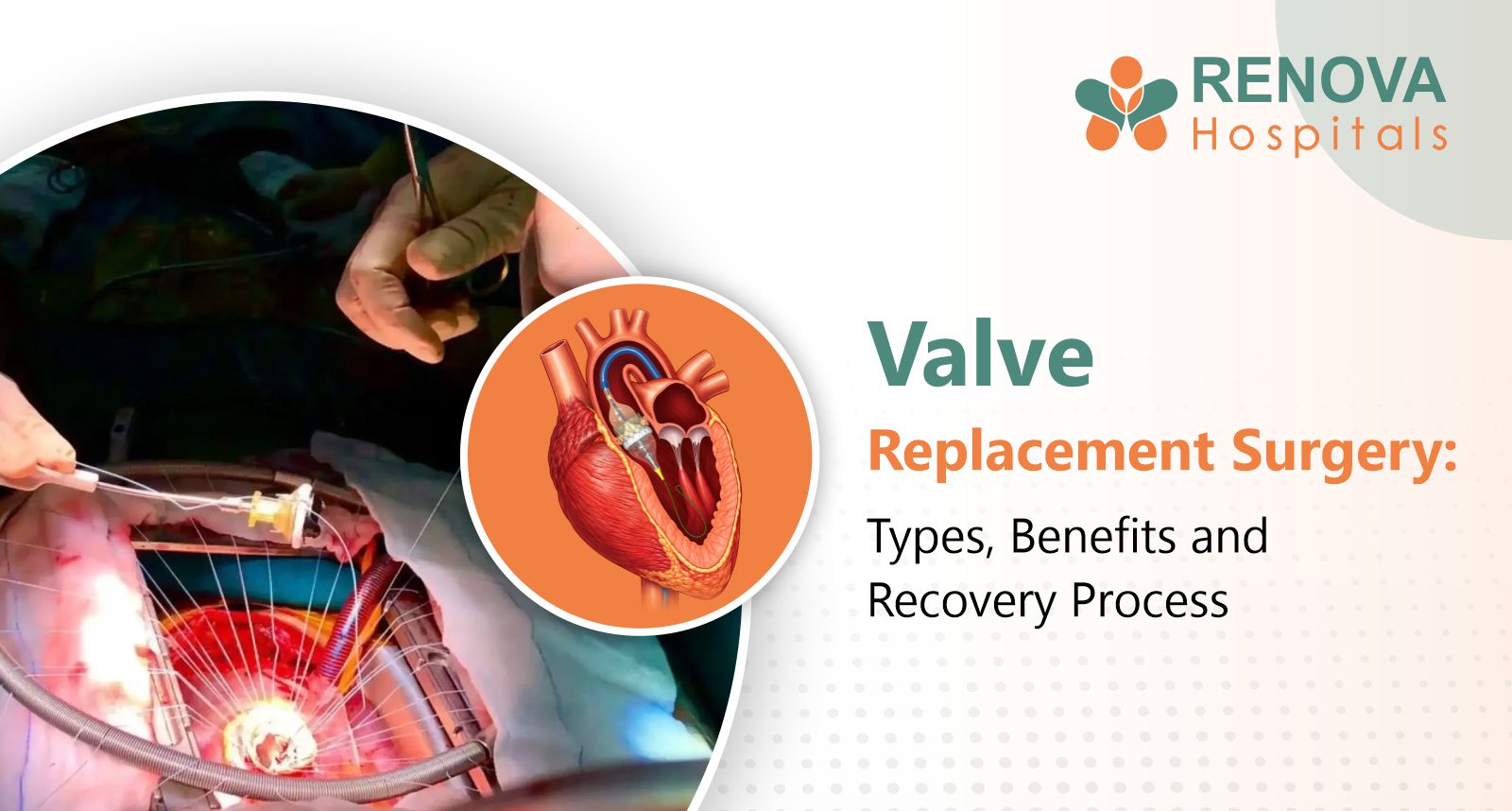
When a heart valve becomes too damaged to open or close properly, it can no longer do its job of keeping blood flowing in the right direction through the heart. In such cases, heart valve replacement surgery removes the damaged valve and replaces it with an artificial one. Understanding the types of replacement valves available, why surgery may be recommended, and what recovery involves can help patients and families approach this decision with more confidence. This guide, reviewed by Renova's cardiac surgery team, covers the essentials of valve replacement surgery.

Key Takeaways

  • Valve replacement surgery removes a damaged valve and replaces it with a mechanical or tissue valve.
  • It is generally used when a valve cannot be adequately repaired.
  • Mechanical valves last longer but require lifelong blood-thinning medication.
  • Tissue valves do not usually require long-term blood thinners but may wear out and need replacement over time.
  • TAVR (transcatheter aortic valve replacement) is a less invasive option for select aortic valve cases.
  • Hospital stay is typically four to seven days, with initial recovery over six to twelve weeks.
  • The choice of valve type depends on age, lifestyle, other health conditions, and personal preference.
  • Cardiac rehabilitation and long-term follow-up support recovery and valve function over time.

Why Is Heart Valve Replacement Needed?


The heart has four valves that keep blood flowing in one direction. When a valve narrows (stenosis) or fails to close properly (regurgitation), the heart has to work harder, which can lead to symptoms such as breathlessness, fatigue, chest discomfort, or swelling.

Valve replacement is generally considered when:

  • The valve is too damaged or calcified to repair effectively
  • Valve disease is causing significant symptoms or heart strain
  • Imaging shows the valve problem is severe, even if symptoms are still mild
  • A previous valve repair has failed or is no longer effective

Types of Replacement Heart Valves


There are two main categories of replacement valves, each with different advantages and considerations.

Mechanical Valves

  • Made from durable materials such as carbon or titanium
  • Generally last a lifetime, so repeat surgery is less likely to be needed
  • Require lifelong blood-thinning medication to prevent clot formation on the valve
  • Often considered for younger patients, where valve longevity is a priority

Tissue (Biological) Valves

  • Made from treated animal tissue, commonly from a pig or cow, or occasionally a human donor
  • Do not usually require lifelong blood thinners
  • Tend to wear out over time, typically over ten to twenty years, and may eventually need replacement
  • Often considered for older patients, or those who cannot take long-term blood thinners

Which Type of Valve Is Better, Mechanical or Tissue?


Neither is universally better; the right choice depends on individual factors.

Mechanical valves offer greater durability but require lifelong anticoagulation, which carries its own risks and lifestyle considerations. Tissue valves avoid the need for long-term blood thinners but may need replacement later in life. Your cardiac surgeon will discuss age, lifestyle, other health conditions, and personal preference to help decide which option suits you best.

Surgical Approaches to Valve Replacement


Valve replacement can be performed through different surgical approaches, depending on the valve involved and the patient's condition.

  • Open-heart surgery: the traditional approach, involving an incision through the breastbone to access the heart directly
  • Minimally invasive valve surgery: uses smaller incisions in select cases, which may reduce recovery time for suitable patients
  • Transcatheter aortic valve replacement (TAVR): a catheter-based technique for replacing the aortic valve without open-heart surgery, generally used for patients at higher surgical risk

Not every patient or valve is suited to every approach. Your cardiac team will recommend the technique best matched to your specific valve problem and overall health.

Can a Heart Valve Be Replaced Without Open Heart Surgery?


In some cases, yes.

TAVR allows the aortic valve to be replaced using a catheter inserted through a blood vessel, without opening the chest. It is generally considered for patients with aortic valve disease who are at higher risk from traditional open-heart surgery, though suitability depends on the specific valve, anatomy, and overall health. Mitral and other valve replacements are less commonly performed this way, though minimally invasive options exist for select cases.

Benefits of Valve Replacement Surgery


For patients with significant valve disease, replacement surgery can offer meaningful improvements in health and quality of life.

  • Relief from symptoms such as breathlessness, fatigue, and chest discomfort
  • Reduced strain on the heart, which can help prevent further heart muscle damage
  • Improved capacity for physical activity and daily function
  • Reduced risk of complications associated with untreated severe valve disease, such as heart failure

How Serious Is Heart Valve Replacement Surgery?


It is a major operation, but outcomes are generally favourable when performed by an experienced team.

As with any major heart surgery, there are risks, including bleeding, infection, irregular heart rhythms, and, rarely, stroke or death. However, for patients with significant, symptomatic valve disease, the risks of leaving the condition untreated are often greater than the risks of surgery. Your surgical team will discuss your individual risk profile before proceeding.

What to Expect: The Recovery Process


Recovery after valve replacement surgery follows a broadly similar path to other open-heart procedures, though the exact timeline depends on the surgical approach used.

In the Hospital


  • Initial recovery in the intensive care unit (ICU) for close monitoring, typically for a day or so
  • Transfer to a general ward once stable, usually within one to two days
  • Gradual mobilisation, including sitting up and short walks, encouraged early in recovery
  • Hospital stay is typically four to seven days for open-heart valve surgery, and often shorter for TAVR

At Home: The First Six to Twelve Weeks


  • Rest and gradually increasing activity, guided by your care team
  • Precautions around lifting and chest-straining movement, particularly after open-heart surgery, while the breastbone heals
  • Cardiac rehabilitation is often recommended to rebuild strength and fitness safely
  • Follow-up appointments to check valve function and overall recovery, including echocardiograms

Long-Term Follow-Up


Ongoing follow-up continues well beyond initial recovery. Patients with mechanical valves require regular monitoring of blood-thinning medication, while those with tissue valves are monitored over time for signs of valve wear. Regular cardiology review helps catch any issues early.

What Is the Success Rate of Heart Valve Replacement Surgery?


Success rates are generally high, particularly for planned, non-emergency procedures performed in experienced centres.

Outcomes depend on factors such as age, overall health, the specific valve involved, and whether other heart conditions are present. Many patients experience significant symptom relief and improved quality of life after successful valve replacement. Your surgical team can provide outcome data most relevant to your specific situation.

Life After Valve Replacement


Most patients return to a good quality of life after valve replacement, though certain long-term considerations apply depending on the valve type chosen.

  • Patients with mechanical valves need regular blood tests to monitor anticoagulation levels
  • Patients with tissue valves are monitored over time for gradual valve wear
  • Heart-healthy lifestyle habits, including diet, activity, and not smoking, support overall cardiovascular health
  • Dental and other procedures may require antibiotic precautions in some patients; discuss this with your cardiologist

Medical Review


Heart valve replacement surgery is a well-established treatment for significant valve disease that cannot be adequately repaired. The choice between mechanical and tissue valves, and between open-heart and less invasive approaches such as TAVR, depends on individual factors including age, overall health, and lifestyle.

Recovery unfolds over weeks to months, supported by cardiac rehabilitation and structured follow-up, and most patients experience meaningful improvement in symptoms and quality of life.

Consult the Cardiac Surgery Team at Renova Hospitals


If you or a family member has been advised to consider valve replacement surgery, our cardiac team can help explain the options and what to expect.

At Renova Hospitals, our Cardiothoracic Surgery and Cardiology teams provide comprehensive valve disease evaluation and treatment, from diagnosis through surgery and long-term follow-up. Dr. Hemanth Kaukuntla, Senior Cardiothoracic Surgeon at Renova Century Hospital with extensive experience in aortic and mitral valve repair and replacement using both mechanical and tissue valves, and the wider cardiac team can help you understand which approach may be right for you.

Request a consultation or call 040 2333 3333.

Questions to Ask Your Cardiac Team


It can help to ask your care team directly:

  • Which valve is affected, and is repair still an option?
  • Would a mechanical or tissue valve be more suitable for me?
  • Am I a candidate for a less invasive approach such as TAVR?
  • What does recovery typically look like for my specific situation?

Clear answers to these questions can help you feel more informed and prepared.

The Bottom Line


Heart valve replacement surgery restores normal blood flow through the heart when a damaged valve cannot be adequately repaired, using either a mechanical or tissue valve, delivered through open-heart surgery or, in select cases, a less invasive approach such as TAVR. Recovery typically spans several weeks to a few months, supported by cardiac rehabilitation and long-term follow-up.

At Renova Hospitals, our cardiac surgery and cardiology teams guide patients through every stage of this decision and recovery, from choosing the right valve and approach to long-term heart health.

Medical References


Medically Reviewed & Approved By:

Dr. Hemanth Kaukuntla

MBBS, FRCS (Edinburgh), FRCS (Glasgow), FRCS (Cardiothoracic) (UK)
Senior Cardiothoracic Surgeon, Renova Century Hospital, Banjara Hills, Hyderabad

This article has been reviewed and approved by a qualified medical professional to ensure medical accuracy and adherence to current clinical standards.

Want to connect with a specialist?

Book your appointment now

Recent Blogs

Our healthcare specialists are equipped with the knowledge and skills to provide you with the support you require. From consultation to diagnosis to treatments, our experts are dedicated to helping you.

When should palliative care begin for cancer patients?
Pain & Palliative Care

What Is Palliative Care in Cancer and When Should It Begin?

21 October 2026 | By Dr. P. S. Vijayender Goud

Understand what palliative care means in cancer, when it can begin, and how it helps manage symptoms, improve comfort, a...

Essential health tests for adults over 40
General Medicine

Preventive Health Checkups After 40: Tests Everyone Should Consider

19 October 2026 | By Dr. Naresh Gundapuneni

Learn about important preventive health checkups and screening tests after 40 to detect potential health risks early and...

Understanding fatty liver disease – stages and symptoms
General Medicine

Fatty Liver Disease: Stages, Symptoms and How to Reverse It

16 October 2026 | By Dr. Dheeraj Kumar Anupa

Learn about fatty liver disease, its stages and symptoms, along with lifestyle changes and treatment approaches that can...

Advanced minimally invasive spine surgery for faster recovery
Neurosurgery

Minimally Invasive Spine Surgery: Latest Techniques for Faster Recovery

14 October 2026 | By Dr. Syed Ameer Basha Paspala

Explore the latest minimally invasive spine surgery techniques, their potential benefits, and how these advanced approac...

When is a pacemaker needed? Understanding pacemaker implantation
Cardiology

Pacemaker Implantation: When Is It Needed and How Does It Work?

12 October 2026 | By Dr. Mohammed Shoeb Ahmed

Pacemaker implantation: understand when a pacemaker is needed, the types available, how the procedure works, and what re...

Long-term care and rehabilitation after stroke

Stroke Rehabilitation: Recovery After Stroke and Long-Term Care

09 October 2026 | By Dr. Lalitha Pidaparthi

Learn about stroke rehabilitation, recovery after stroke, therapy options, long-term care, and strategies to support mob...

Frequently Asked Questions

Find quick answers to common questions about our services, doctors, and care at Renova Hospitals. So you can feel informed and confident at every step.

What is heart valve replacement surgery?

What is the difference between a mechanical and tissue heart valve?

Can a heart valve be replaced without open heart surgery?

How long does recovery take after valve replacement surgery?

How serious is heart valve replacement surgery?

What is the success rate of heart valve replacement surgery?

Do you need blood thinners for life after valve replacement?

Call Us Request a
Callback
WhatsApp


Corporate Office

Plot No. 270/A, Padmaja Tower, 2nd Floor, MLA Colony, Road No. 12, Banjara Hills, Hyderabad - 500034

Phone: 040 2333 3333