Key Takeaways
- AFib is an irregular heart rhythm that significantly raises stroke risk; it is the most common arrhythmia encountered in clinical practice in India.
- Common symptoms include palpitations, breathlessness, and fatigue; some patients are asymptomatic.
- A 12-lead ECG or Holter monitor confirms the diagnosis; echocardiography assesses underlying structural disease.
- Treatment involves rate or rhythm control and mandatory stroke prevention with anticoagulation in most patients.
- Catheter ablation (EPS + RFA) is the most effective long-term rhythm control strategy for symptomatic patients who fail antiarrhythmic drugs.
- Renova Heart Institute, Hyderabad, offers a full cardiac electrophysiology and arrhythmia management service including EPS and radiofrequency ablation for AFib.
- Lifestyle changes -- blood pressure control, weight reduction, alcohol restriction, and sleep apnoea treatment -- substantially reduce AFib episodes.
What Is Atrial Fibrillation?
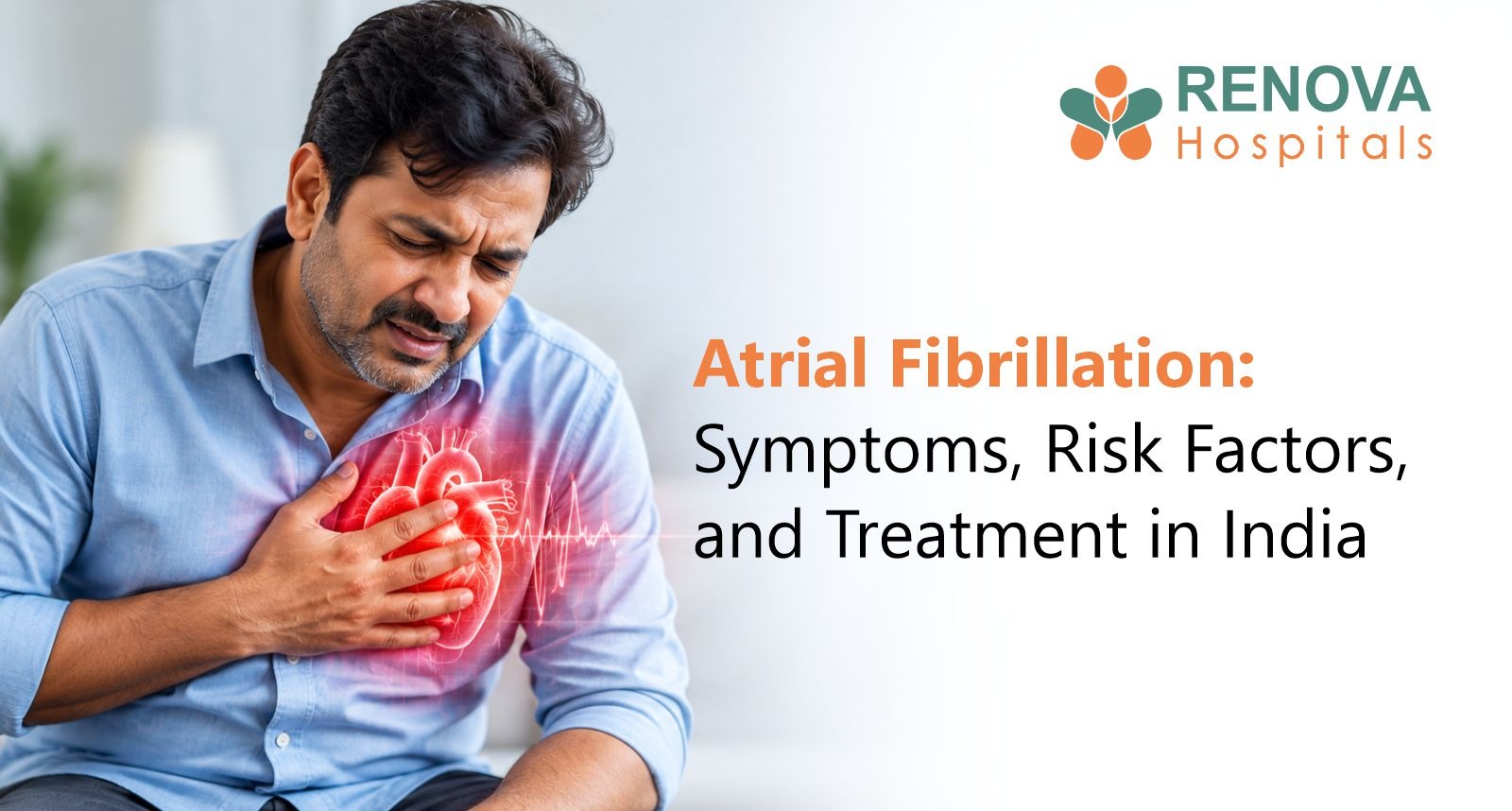
Atrial fibrillation (AFib or AF) is a cardiac arrhythmia in which the two upper chambers of the heart, the atria, beat chaotically and out of synchrony with the lower chambers, the ventricles. Instead of a single, coordinated electrical pulse, multiple disorganised signals fire simultaneously, causing the atria to quiver rather than contract fully.
This irregular rhythm disrupts blood flow, promotes clot formation in the left atrial appendage, and significantly raises the risk of stroke, heart failure, and other cardiovascular complications. In India, AFib prevalence is rising alongside ageing demographics, hypertension, diabetes, and rheumatic heart disease.
What Are the Types of Atrial Fibrillation?
- Paroxysmal AFib: Episodes start and stop on their own, typically within 48 hours, though they may last up to seven days.
- Persistent AFib: The abnormal rhythm does not return to normal on its own and requires medical intervention.
- Long-standing persistent AFib: Continuous AFib lasting more than twelve months.
- Permanent AFib: When the patient and physician decide to stop restoring normal rhythm and focus on rate control instead.
Recognising the type helps determine the most appropriate treatment strategy.
Atrial Fibrillation Symptoms: What Does AFib Feel Like?
Some people have no symptoms at all; AFib is discovered incidentally on an ECG. Others experience a range of symptoms that can vary in intensity:
- Palpitations: A rapid, fluttering, or irregular heartbeat that many patients describe as the heart "skipping a beat."
- Shortness of breath, particularly during exertion or when lying flat.
- Fatigue and reduced exercise tolerance.
- Dizziness or lightheadedness.
- Chest discomfort or pressure.
- Fainting or near-fainting (syncope) in some cases.
In India, AFib is frequently under-recognised because symptoms overlap with anxiety, anaemia, and thyroid disorders. A pulse check and a simple 12-lead ECG during a symptomatic episode is often enough to make the diagnosis.
When Should AFib Symptoms Prompt an Emergency Visit?
Seek immediate care if palpitations occur with:
- Sudden weakness or numbness on one side of the body
- Slurred speech or confusion (possible stroke)
- Severe chest pain or pressure
- Loss of consciousness
These signs may indicate stroke or haemodynamic instability and require urgent evaluation at an emergency cardiac centre.
Atrial Fibrillation Risk Factors in India
Several conditions increase the likelihood of developing AFib, and many of these are highly prevalent in the Indian population:
- Hypertension: The single biggest risk factor for AFib. Elevated blood pressure strains and remodels the atria over time.
- Valvular heart disease: Rheumatic mitral valve disease, common in India, is a major contributor to AFib, particularly in younger adults.
- Coronary artery disease and prior heart attack.
- Heart failure and cardiomyopathy.
- Diabetes mellitus.
- Thyroid disorders, especially hyperthyroidism.
- Obstructive sleep apnoea.
- Chronic kidney disease.
- Obesity and a sedentary lifestyle.
- Excessive alcohol consumption.
- Age: Risk doubles with each decade after 55.
In younger patients without the usual risk factors, conditions such as Wolff-Parkinson-White syndrome or genetic predisposition should be explored.
How Is Atrial Fibrillation Diagnosed?
How Is AFib Confirmed on an ECG?
The standard 12-lead electrocardiogram (ECG) shows absent P waves and an irregularly irregular R-R interval. If AFib is paroxysmal and the patient is symptom-free at the clinic, additional monitoring is used:
- 24- to 48-hour Holter monitor: Records the cardiac rhythm continuously for one to two days.
- Extended event monitors (up to 30 days): Useful when episodes are infrequent.
- Implantable loop recorder: A tiny subcutaneous device that monitors rhythm continuously for up to three years.
- Echocardiogram (echo): Assesses heart structure, valvular disease, and left atrial size.
- Blood tests: Thyroid function, renal function, complete blood count, and coagulation profile.
- Electrophysiology study (EPS): A catheter-based procedure that maps the heart's electrical system in detail, particularly before ablation.
Atrial Fibrillation Treatment: Which Approach Is Right for You?
Management of AFib follows two broad goals: controlling the heart rate or restoring normal sinus rhythm (rhythm control), and preventing stroke. The choice depends on symptom burden, AFib type, underlying heart disease, and patient preference.
Rate Control vs Rhythm Control: What Does the Evidence Say?
Rate control aims to keep the ventricular rate below 110 beats per minute at rest using medications such as beta-blockers (metoprolol, atenolol), non-dihydropyridine calcium channel blockers (diltiazem, verapamil), or digoxin. This approach manages symptoms without attempting to restore sinus rhythm.
Rhythm control aims to restore and maintain normal sinus rhythm. Options include:
- Cardioversion (electrical or pharmacological): Synchronised DC shock or intravenous amiodarone or flecainide resets the heart to normal rhythm.
- Antiarrhythmic drugs: Amiodarone, flecainide, propafenone, dronedarone, or sotalol to maintain sinus rhythm after cardioversion.
- Catheter ablation: The most effective long-term rhythm control strategy in eligible patients.
A landmark trial (EAST-AFNET 4) showed that early rhythm control in newly diagnosed AFib patients significantly reduced cardiovascular events compared with rate control alone. This has shifted practice towards earlier, more active rhythm management.
What Is Catheter Ablation for AFib?
Catheter ablation is a minimally invasive procedure in which thin, flexible wires (catheters) are introduced through the femoral vein and guided to the heart under X-ray fluoroscopy. The cardiologist maps the electrical pathways and delivers targeted energy to electrically isolate the pulmonary veins, the most common source of abnormal triggers in AFib.
Two main energy sources are used:
- Radiofrequency ablation (RFA): Delivers heat energy to create scar tissue that blocks aberrant signals.
- Cryoablation: Uses extreme cold to achieve the same effect with a balloon-based system.
Renova Heart Institute in Hyderabad performs electrophysiology studies (EPS) and radiofrequency ablation (RFA) for AFib, atrial flutter, and other arrhythmias as part of its comprehensive arrhythmia management programme.
Who Is a Good Candidate for AFib Ablation?
- Symptomatic paroxysmal or persistent AFib that has not responded to at least one antiarrhythmic drug.
- Patients who prefer ablation as first-line rhythm control.
- Younger patients with structurally normal hearts and shorter AFib duration.
- AFib with underlying conditions amenable to reversal (e.g., hyperthyroidism successfully treated).
Patients with very dilated left atria, severe valvular disease, or advanced heart failure may be less suitable and require individualised assessment.
Stroke Prevention in AFib: Understanding Anticoagulation
Why Does AFib Cause Stroke?
In AFib, blood pools in the left atrial appendage (LAA) rather than being pumped efficiently. This stasis promotes clot formation. If a clot breaks off and travels to the brain, it causes an ischaemic stroke. AFib is responsible for approximately 15-20% of all ischaemic strokes and for a higher proportion of severe, disabling strokes.
How Is Stroke Risk Assessed in AFib?
The CHA₂DS₂-VASc score assigns points for congestive heart failure, hypertension, age ≥75 (two points), diabetes, prior stroke/TIA (two points), vascular disease, age 65-74, and sex category (female). Most patients with a score of two or more warrant oral anticoagulation.
Anticoagulation options:
- Direct oral anticoagulants (DOACs): Rivaroxaban, apixaban, dabigatran, and edoxaban are now the preferred agents over warfarin for non-valvular AFib. They have predictable pharmacokinetics, fewer food-drug interactions, and an improved safety profile.
- Warfarin (acenocoumarol in India): Still used in patients with rheumatic valvular AFib or mechanical heart valves, with regular INR monitoring.
Anticoagulation must be continued even after successful cardioversion or ablation unless there is compelling evidence that AFib has been permanently eliminated, which is rarely certain.
Lifestyle Modifications That Support AFib Management
Medication and procedures work best alongside sustained lifestyle changes:
- Blood pressure control: Target below 130/80 mmHg with regular medication adherence.
- Weight management: Even modest weight loss of 5-10% in overweight patients substantially reduces AFib burden.
- Exercise: Regular moderate aerobic activity (30 minutes most days) improves cardiovascular fitness without worsening AFib.
- Alcohol restriction: Limit to below 14 units per week; consider complete abstinence if alcohol clearly triggers episodes.
- Management of sleep apnoea: CPAP therapy in OSA patients can reduce AFib recurrence.
- Diabetes and thyroid control: Optimising these conditions removes modifiable AFib triggers.
- Smoking cessation.
Living With AFib: Long-Term Monitoring and Follow-Up
AFib is a chronic condition that requires lifelong management for most patients. Regular follow-up includes:
- 12-lead ECG at every visit.
- Holter monitoring to assess rhythm control.
- Echocardiogram to track left atrial size and cardiac function.
- Anticoagulation review and renal function monitoring (for DOAC dosing).
- Stroke risk reassessment annually using CHA₂DS₂-VASc.
Patients should be educated to recognise symptom deterioration, understand the warning signs of stroke (FAST: Face drooping, Arm weakness, Speech difficulty, Time to call emergency services), and not self-discontinue anticoagulants without medical advice.
Atrial Fibrillation in India: Key Differences to Know
Several features make AFib in the Indian context distinct:
- Higher burden of rheumatic valvular AFib, particularly in younger women, compared to Western populations.
- Underuse of anticoagulation despite clear indications, partly due to cost, access, and bleeding concerns.
- Late presentation: Many patients tolerate palpitations for months before seeking care.
- Coronary artery disease and hypertension as dominant co-morbidities.
- Growing use of DOACs, which are increasingly covered under insurance schemes.
Awareness campaigns and integrated management clinics (combining cardiology, diabetology, and nephrology) can reduce the AFib stroke burden significantly in the Indian population.
Medical References
- January CT, Wann LS, Calkins H, et al. 2019 AHA/ACC/HRS Focused Update of the 2014 AHA/ACC/HRS Guideline for the Management of Patients With Atrial Fibrillation. Journal of the American College of Cardiology. 2019;74(1):104-132.
- Hindricks G, Potpara T, Dagres N, et al. 2020 ESC Guidelines for the Diagnosis and Management of Atrial Fibrillation. European Heart Journal. 2021;42(5):373-498.
- Saggu DK, Naik N, Vora A, et al. Consensus Statement on Management of Atrial Fibrillation in India -- Cardiological Society of India. Indian Heart Journal. 2020;72(4):281-299.
- EAST-AFNET 4 Trial Investigators. Early Rhythm-Control Therapy in Patients with Atrial Fibrillation. New England Journal of Medicine. 2020;383:1305-1316.
- Kirchhof P, Camm AJ, Goette A, et al. Early Rhythm Control Therapy in Symptomatic Atrial Fibrillation. New England Journal of Medicine. 2020;383:1305-1316.
Medically Reviewed & Approved By:
Dr. B.K. Srinivasa Sastry
MBBS, MD (Internal Medicine), DM (Cardiology)
Senior Interventional Cardiologist & Cardiac Electrophysiologist
Renova Century Hospital, Banjara Hills, Hyderabad
This article has been reviewed and approved by a qualified medical professional to ensure medical accuracy and adherence to current clinical standards.