Fatty liver disease is one of the most common liver conditions worldwide, and its numbers are rising alongside obesity and diabetes. In its early stages,
fatty liver disease often causes no symptoms at all, which is why it is frequently picked up incidentally during a routine scan or blood test. Understanding its stages, recognising the symptoms that can eventually appear, and knowing which lifestyle changes have real evidence behind them can help you take timely, effective action. This guide, reviewed by
Renova's gastroenterology and hepatology team, explains fatty liver disease in clear, practical terms.
Key Takeaways
- Fatty liver disease is a build-up of excess fat in the liver, most often linked to obesity, insulin resistance, or diabetes.
- It progresses through stages: simple fatty liver, steatohepatitis (inflammation), fibrosis, and cirrhosis.
- Early-stage fatty liver usually causes no symptoms, which is why routine screening and scans matter.
- Grade 1 fatty liver is generally mild and often reversible with lifestyle changes.
- Weight loss, dietary change, and increased physical activity are the most evidence-backed ways to reverse early fatty liver.
- Alcohol-related fatty liver and non-alcoholic fatty liver disease (NAFLD) are related but distinct, with different primary causes.
- Untreated fatty liver disease can progress to fibrosis and cirrhosis over time in some people.
- Regular monitoring by a gastroenterologist or hepatologist helps track progression and guide treatment.
What Is Fatty Liver Disease?
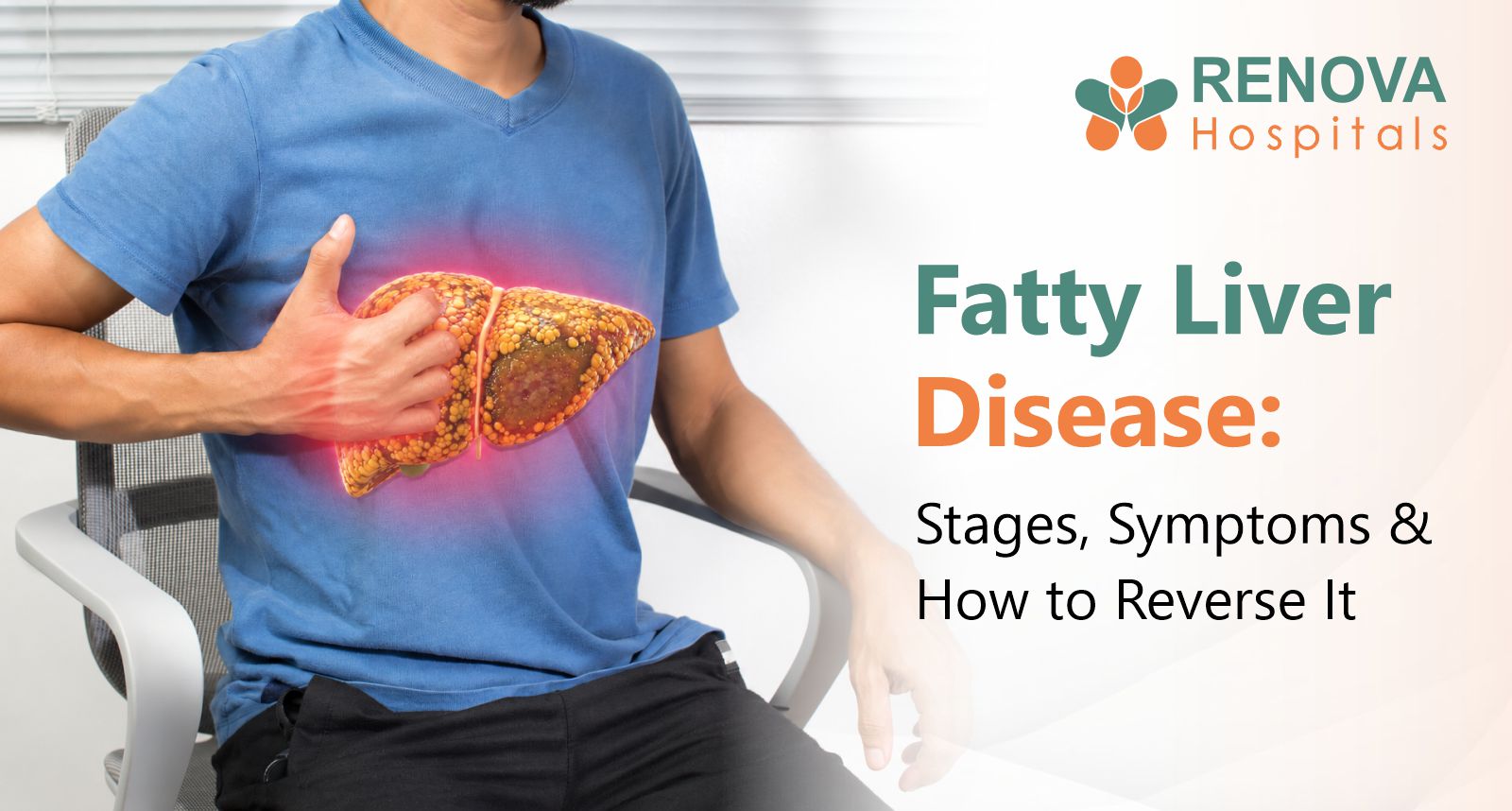
Fatty liver disease occurs when excess fat builds up in liver cells. A small amount of fat in the liver is normal, but when fat accounts for more than about 5 to 10 percent of the liver's weight, it is generally considered fatty liver disease.
There are two broad types:
- Non-alcoholic fatty liver disease (NAFLD): the more common type, linked to obesity, insulin resistance, type 2 diabetes, and metabolic syndrome, occurring in people who drink little or no alcohol
- Alcohol-related fatty liver disease: caused by heavy alcohol consumption over time
This guide focuses primarily on NAFLD, now often referred to in updated terminology as metabolic dysfunction-associated steatotic liver disease (MASLD), since it is the more common form seen in general practice today.
The Stages of Fatty Liver Disease
Fatty liver disease typically progresses through recognisable stages, though not everyone progresses through all of them.
Stage 1: Simple Fatty Liver (Steatosis)
- Fat accumulates in liver cells without significant inflammation or damage
- Often called grade 1 fatty liver on an ultrasound report
- Usually causes no symptoms and is frequently found incidentally
- Generally considered the most reversible stage with lifestyle changes
Stage 2: Non-Alcoholic Steatohepatitis (NASH)
- Fat build-up is accompanied by inflammation and some liver cell damage
- May correspond to grade 2 or higher on imaging, alongside other clinical findings
- Can still be asymptomatic, though some people notice fatigue or mild discomfort
- Requires more active medical management and monitoring than simple fatty liver
Stage 3: Fibrosis
- Ongoing inflammation leads to scar tissue forming in the liver
- The liver can still function relatively well at this stage
- Some degree of fibrosis may be reversible with sustained treatment, though this becomes harder as fibrosis advances
Stage 4: Cirrhosis
- Extensive scarring significantly impairs liver function
- Considered a serious, advanced stage of liver disease
- Can lead to complications such as liver failure or increase the risk of liver cancer
- Requires specialist hepatology management and, in some cases, evaluation for liver transplant
What Is the Difference Between Grade 1 and Grade 2 Fatty Liver?
Grades on an ultrasound report describe the amount of fat seen in the liver, and are different from the clinical stages described above.
Grade 1 (mild) fatty liver shows a small increase in liver fat with minimal changes on imaging. Grade 2 (moderate) shows more pronounced fat build-up, which may or may not be accompanied by inflammation. These imaging grades give a general picture, but your doctor will consider them alongside blood tests, your overall health, and sometimes further tests to determine the actual clinical stage and appropriate management.
What Causes Fatty Liver Disease?
Non-alcoholic fatty liver disease is closely linked to metabolic health, and several factors increase the risk.
- Being overweight or having obesity, particularly with excess abdominal fat
- Insulin resistance and type 2 diabetes
- High cholesterol or high triglycerides
- Metabolic syndrome (a combination of high blood pressure, high blood sugar, abnormal cholesterol, and abdominal obesity)
- Rapid weight loss or certain medications, in some cases
- Genetic and ethnic factors, which can influence individual risk
Symptoms of Fatty Liver Disease
Fatty liver disease is often described as a silent condition, because early stages typically cause no noticeable symptoms.
When symptoms do occur, particularly at more advanced stages, they may include:
- Fatigue or a general sense of being unwell
- Mild discomfort or a feeling of fullness in the upper right abdomen
- Unexplained weight loss (more common in advanced disease)
- Weakness
- In advanced stages: jaundice (yellowing of the skin or eyes), swelling in the legs or abdomen, and easy bruising
Because early fatty liver is usually silent, it is frequently detected during an ultrasound or blood test performed for an unrelated reason.
Can Fatty Liver Disease Be Detected Without Symptoms?
Yes, and this is actually the most common way it is found.
Fatty liver is frequently identified incidentally during a routine abdominal ultrasound, or through mildly elevated liver enzymes on a blood test performed for another reason. This is why regular health checkups, particularly for people with risk factors such as obesity or diabetes, play an important role in early detection.
How Is Fatty Liver Disease Diagnosed?
Diagnosis generally involves a combination of tests, since fatty liver often has no symptoms to guide the initial suspicion.
- Blood tests, including liver function tests, to check for elevated liver enzymes
- Abdominal ultrasound, which can identify fat accumulation and grade its severity
- Additional imaging, such as FibroScan (transient elastography), to assess liver stiffness and fibrosis
- In some cases, a liver biopsy, to more precisely assess inflammation and fibrosis
- Blood tests to rule out other causes of liver disease, such as viral hepatitis
Can Fatty Liver Disease Be Reversed?
Yes, particularly in its earlier stages. Simple fatty liver (grade 1, without significant inflammation or fibrosis) is often reversible with sustained lifestyle changes.
The most evidence-backed approaches include:
- Gradual, sustained weight loss: even a 7 to 10 percent reduction in body weight can significantly reduce liver fat in many people
- A balanced diet: emphasising vegetables, whole grains, lean protein, and healthy fats, while limiting added sugar, refined carbohydrates, and saturated fat
- Regular physical activity: both aerobic exercise and strength training have shown benefit in reducing liver fat
- Managing diabetes, high cholesterol, and high blood pressure, if present
- Avoiding alcohol, or significantly limiting it, particularly if there is any element of alcohol-related liver injury
- Avoiding unnecessary medications or supplements that can stress the liver, unless advised by your doctor
More advanced stages, particularly fibrosis and cirrhosis, are more difficult to fully reverse, though appropriate treatment can still slow or halt further progression and manage complications.
How Long Does It Take to Reverse Fatty Liver?
This varies by individual, but meaningful improvement is often seen within a few months of sustained lifestyle change.
Some studies show measurable reductions in liver fat within three to six months of consistent weight loss and dietary change. However, timelines vary based on the starting severity, how consistently changes are maintained, and individual metabolic factors. Regular follow-up imaging or blood tests can help track progress.
What Foods Should Be Avoided With Fatty Liver Disease?
Certain dietary patterns are more strongly linked to worsening fatty liver and are generally best limited.
- Sugary drinks and foods high in added sugar, particularly those containing fructose
- Refined carbohydrates, such as white bread and pastries
- Fried and highly processed foods
- Excessive red and processed meat
- Alcohol, particularly in significant quantities
Rather than focusing on eliminating single foods, most evidence supports an overall dietary pattern, such as a Mediterranean-style diet, as being beneficial for liver health.
When to See a Doctor About Fatty Liver Disease
Because fatty liver is often silent, it is worth discussing with your doctor if you have risk factors, even without symptoms.
- You are overweight or have obesity, particularly with excess abdominal fat
- You have type 2 diabetes, high cholesterol, or metabolic syndrome
- A routine scan or blood test has already shown signs of fatty liver
- You have unexplained fatigue, abdominal discomfort, or other concerning symptoms
- You have a family history of liver disease
Medical Review
Fatty liver disease is common, closely tied to metabolic health, and often silent in its early stages. It progresses through recognisable stages, from simple fatty liver through steatohepatitis, fibrosis, and, in advanced cases, cirrhosis.
Importantly, early-stage fatty liver disease is often reversible through sustained weight loss, dietary change, physical activity, and management of related conditions such as diabetes. Regular monitoring by a gastroenterologist or hepatologist helps track progress and adjust treatment as needed.
Consult the Gastroenterology Team at Renova Hospitals
If you have been told you have fatty liver, or have risk factors such as obesity or diabetes, our gastroenterology and hepatology team can help assess your liver health and guide appropriate management.
At
Renova Hospitals, our
Gastroenterology team provides comprehensive evaluation and management of fatty liver disease and other liver conditions, including ultrasound-based assessment and structured follow-up.
Dr. Dheeraj Kumar Anupa, Consultant Medical Gastroenterologist and Hepatologist at Renova Century Hospital with specific expertise in NASH, NAFLD, and chronic liver disease, and the wider gastroenterology team can guide your evaluation and treatment plan.
Request a consultation or call 040 2333 3333.
Questions to Ask Your Gastroenterology Team
- What stage or grade of fatty liver do I have?
- What specific lifestyle changes would help my particular case?
- How often should my liver be monitored going forward?
- Are there other conditions, such as diabetes or high cholesterol, that need to be managed alongside this?
Clear answers to these questions can help you take focused, effective steps toward better liver health.
The Bottom Line
Fatty liver disease is a common, often silent condition that progresses through stages, from simple fat build-up to inflammation, fibrosis, and, in advanced cases, cirrhosis. The encouraging news is that early-stage fatty liver is often reversible through sustained weight loss, dietary change, regular physical activity, and management of related metabolic conditions.
At Renova Hospitals, our gastroenterology and hepatology team supports patients through diagnosis, lifestyle-based treatment, and ongoing monitoring of fatty liver disease, helping protect long-term liver health.
Medical References
Medically Reviewed & Approved By:
Dr. Dheeraj Kumar Anupa
MBBS, MD (General Medicine), DrNB (Medical Gastroenterology)
Consultant Medical Gastroenterologist, Hepatologist & Therapeutic Endoscopist, Renova Century Hospital, Banjara Hills, Hyderabad
This article has been reviewed and approved by a qualified medical professional to ensure medical accuracy and adherence to current clinical standards.