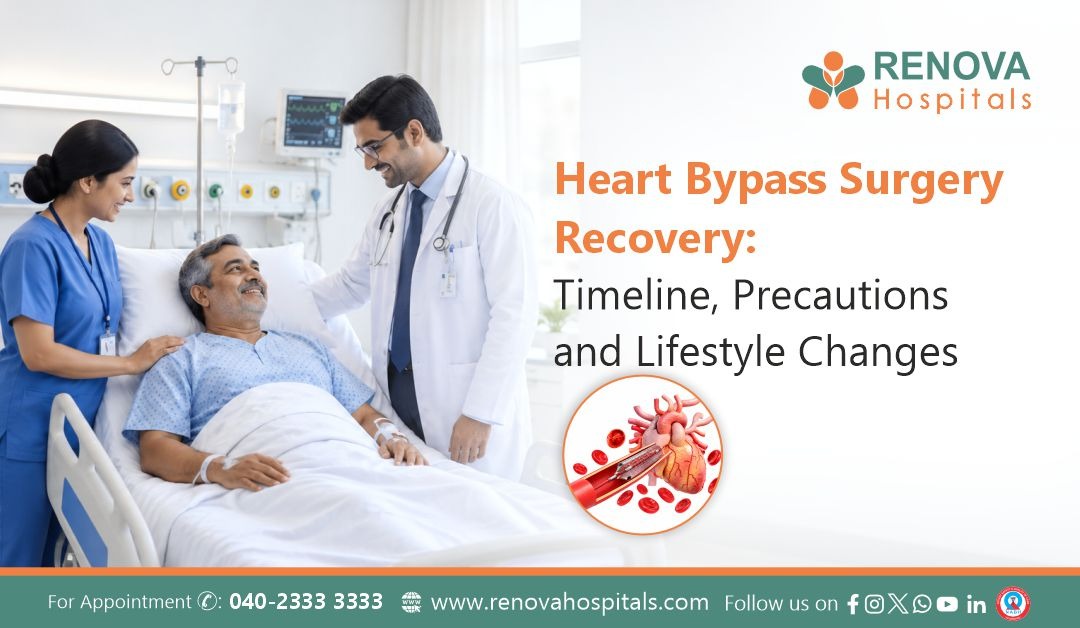
Heart bypass surgery, medically known as coronary artery bypass grafting (CABG), is a major operation, and recovery is a gradual process rather than a single event. Knowing what to expect at each stage, which precautions matter most, and which lifestyle changes genuinely protect long-term heart health can make the recovery period feel far more manageable. This guide, reviewed by
Renova's cardiac surgery team, walks through a typical recovery timeline, key precautions, and the lifestyle changes that support lasting results after bypass surgery.
Key Takeaways
- Hospital stay after CABG is typically four to seven days, depending on the individual case.
- Initial recovery at home generally takes six to eight weeks before resuming most normal activities.
- Full recovery, including a return to more strenuous activity, often takes two to three months.
- The breastbone (sternum) needs time to heal, which shapes many early precautions around lifting and movement.
- Cardiac rehabilitation plays a central role in safe, structured recovery.
- Diet, physical activity, smoking cessation, and medication adherence are key to long-term outcomes.
- Recovery speed varies by age, overall health, and whether other conditions are present.
- Certain symptoms after surgery require prompt medical attention rather than waiting it out.
What Is Heart Bypass Surgery?
Coronary artery bypass grafting (CABG), commonly called heart bypass surgery, redirects blood flow around a blocked or narrowed coronary artery using a healthy blood vessel taken from elsewhere in the body, often the leg, arm, or chest wall.
It is generally recommended when coronary artery disease is significant, particularly when multiple arteries are affected or blockages are in locations not well suited to angioplasty and stenting. The procedure aims to restore adequate blood flow to the heart muscle and relieve symptoms such as chest pain and breathlessness.
Heart Bypass Surgery Recovery Timeline
While every patient's recovery is individual, most people move through a broadly similar sequence of stages after CABG.
In the Hospital: Days 1 to 7
- The first day or so is usually spent in the intensive care unit (ICU) for close monitoring
- Patients are typically moved to a general ward within one to two days, once stable
- Light movement, such as sitting up and short walks, usually begins within a day or two, encouraged by the care team
- Most patients are discharged within four to seven days, depending on recovery progress and any complications
Weeks 1 to 2 at Home
- Rest remains important, alongside short, gentle walks several times a day
- Some fatigue, mild discomfort around the incision, and swelling in the leg (if a vein graft was taken) are common
- Driving is usually not recommended during this period
- Wound care and monitoring for signs of infection are important during this stage
Weeks 3 to 6
- Walking distances are gradually increased, as advised by the care team
- Many patients begin a structured cardiac rehabilitation programme during this period
- Light household activities can often resume, while heavy lifting and strenuous exertion are still avoided
- Energy levels typically continue to improve, though fatigue can still come and go
Weeks 6 to 12
- The breastbone has generally healed enough to allow a wider range of activity, based on medical clearance
- Many patients are able to return to non-physical work during this window, depending on individual recovery
- Cardiac rehabilitation often continues, building exercise tolerance under supervision
- A follow-up review with the cardiac surgeon or cardiologist typically assesses progress at this stage
Beyond 3 Months
By around three months, most patients have returned to most normal activities, including more strenuous exercise, when cleared by their care team. Full recovery of energy and stamina can continue gradually for some months beyond this point, and long-term heart health increasingly depends on the lifestyle changes made during and after this period.
How Long Does It Take to Recover from Bypass Surgery?
Most people can expect an initial recovery period of about six to eight weeks, with fuller recovery over two to three months.
Recovery speed varies based on age, overall health, whether the surgery was planned or urgent, and whether other conditions such as diabetes are present. Your surgical team will give you a timeline tailored to your specific situation.
Key Precautions During Recovery
Certain precautions are particularly important in the weeks after CABG, largely to protect the healing breastbone and support safe recovery.
- Avoid lifting anything heavier than a few kilograms for the first six to eight weeks, or as advised
- Avoid pushing, pulling, or twisting motions that strain the chest, such as vacuuming or moving furniture
- Do not drive until cleared by your surgeon, typically around four to six weeks
- Support your chest with a pillow when coughing, sneezing, or moving
- Keep the incision clean and dry, and monitor for redness, swelling, warmth, or discharge
- Attend all follow-up appointments and cardiac rehabilitation sessions as scheduled
When Can You Fly After Bypass Surgery?
This varies, and should be confirmed with your surgeon.
Many surgeons advise waiting at least four to six weeks before air travel, allowing time for initial healing and to reduce the risk of complications such as blood clots. Longer flights and higher individual risk factors may warrant a longer wait. Always confirm timing with your own care team before booking travel.
What Are Warning Signs to Watch for After Bypass Surgery?
Certain symptoms need prompt medical attention rather than a wait-and-see approach.
- Increasing redness, warmth, swelling, or discharge from the incision
- Fever
- New or worsening chest pain
- Significant shortness of breath
- Irregular or rapid heartbeat
- Sudden swelling in the legs
If you experience any of these, contact your care team promptly or seek
emergency care if symptoms are severe.
The Role of Cardiac Rehabilitation
Cardiac rehabilitation is a structured, medically supervised programme of exercise, education, and support that plays a central role in recovery after bypass surgery.
- Gradually rebuilds physical fitness and confidence in a monitored setting
- Provides education on heart-healthy diet, medication, and risk factor management
- Offers support for emotional adjustment, which is common after major heart surgery
- Is associated with better long-term outcomes when completed as advised
Patients are generally encouraged to attend cardiac rehabilitation programmes fully, rather than skipping sessions once they begin feeling better.
Lifestyle Changes for Long-Term Heart Health
Bypass surgery treats existing blockages, but it does not address the underlying process of coronary artery disease. Lasting benefit depends heavily on lifestyle changes maintained well beyond the recovery period.
Diet After Bypass Surgery
A heart-healthy eating pattern generally supports recovery and reduces the risk of further blockages.
- Emphasise vegetables, fruits, whole grains, and lean protein
- Limit saturated fat, fried foods, and processed meats
- Reduce salt intake, particularly if blood pressure or heart failure is a concern
- Limit added sugar and refined carbohydrates
- Follow any specific dietary guidance from your cardiologist or a clinical dietitian, especially if you also have diabetes or high cholesterol
Physical Activity
Regular physical activity, built up gradually and safely, is one of the most important long-term protective factors after bypass surgery.
Most patients are guided toward regular walking and, over time, broader aerobic activity, with the pace and intensity set by their cardiac rehabilitation team based on individual fitness and recovery progress.
Smoking, Alcohol, and Medication Adherence
- Stopping smoking is one of the single most impactful changes for long-term heart health
- Alcohol is generally advised in moderation, or avoided, based on individual health factors
- Medications such as antiplatelet drugs, statins, and blood pressure medications are usually continued long term and should not be stopped without medical advice
- Managing related conditions such as diabetes, high blood pressure, and high cholesterol supports the durability of surgical results
Do Foods Need to Be Permanently Restricted After Bypass Surgery?
Not entirely restricted, but a lasting shift in overall eating pattern matters more than short-term rules.
Rather than viewing this as a strict, temporary diet, most cardiologists recommend a sustainable, heart-healthy pattern of eating that can be maintained long term, since ongoing dietary habits directly influence the risk of new blockages developing over time.
Emotional Wellbeing After Bypass Surgery
It is common to experience a mix of relief, anxiety, or low mood in the weeks after major heart surgery. Some patients feel more tired or emotional than expected, even when physical recovery is progressing well.
These feelings usually ease as strength and confidence return, particularly with the structure and support that cardiac rehabilitation provides. Persistent low mood or anxiety that interferes with daily life is worth discussing with your care team.
Medical Review
Recovery after heart bypass surgery follows a broadly predictable path, from the initial hospital stay, through weeks of gradually increasing activity, to a fuller return to normal life over two to three months. Precautions in the early weeks largely protect the healing breastbone, while cardiac rehabilitation supports a safe, structured return to fitness.
The lifestyle changes made during and after this period, diet, physical activity, smoking cessation, and consistent medication use, play a defining role in how long the benefits of surgery last.
Consult the Cardiac Surgery Team at Renova Hospitals
If you are preparing for heart bypass surgery, or recovering from one and have questions about your progress, our cardiac team can help guide you through each stage.
At
Renova Hospitals, our
Cardiothoracic Surgery and
Cardiology teams provide comprehensive care from diagnosis through surgery, recovery, and long-term follow-up.
Dr. Praveen Kumar Nandagiri, Cardiothoracic and Vascular Surgeon at Renova Century Hospital with expertise in coronary artery bypass grafting, and the wider cardiac team can help you understand what to expect at your specific stage of recovery.
Request a consultation or call 040 2333 3333.
When to Seek Medical Attention
Contact your care team promptly, or seek emergency care, if you notice:
- Signs of infection at the incision site
- Fever
- New or worsening chest pain
- Significant shortness of breath
- An irregular or rapid heartbeat
- Sudden leg swelling
Early attention to these symptoms supports the best possible recovery.
The Bottom Line
Recovery after heart bypass surgery unfolds over weeks and months, not days: an initial hospital stay, a gradual return to activity over six to eight weeks, and fuller recovery by two to three months. Precautions in the early stages protect the healing breastbone, while cardiac rehabilitation and long-term lifestyle changes, diet, activity, and not smoking, determine how well the results of surgery are sustained.
At Renova Hospitals, our cardiac surgery and cardiology teams support patients through every stage of this journey, from the operating room to long-term heart health.
Medical References
Medically Reviewed & Approved By
Dr. Praveen Kumar Nandagiri
MBBS, MS (General Surgery), MCh (Cardio-Thoracic and Vascular Surgery), MRCS, FRCS (UK)
Cardiothoracic and Vascular Surgeon, Renova Century Hospital, Banjara Hills, Hyderabad
This article has been reviewed and approved by a qualified medical professional to ensure medical accuracy and adherence to current clinical standards.