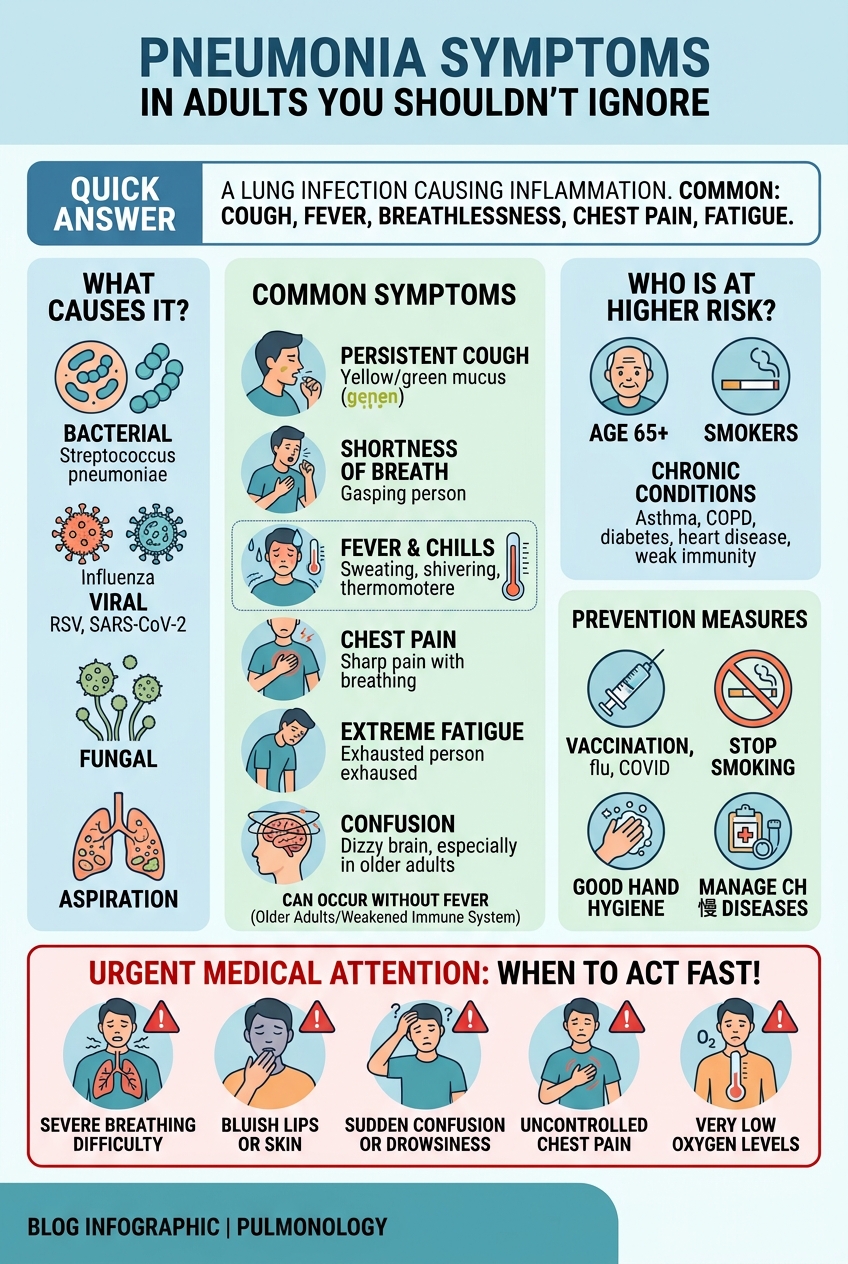
Pneumonia is an infection that causes inflammation in one or both lungs. Common symptoms in adults include cough, fever, chills, chest pain while breathing or coughing, shortness of breath, fatigue, and sometimes mucus production.
Older adults may develop less typical symptoms, such as confusion or unusual weakness. Severe breathlessness, bluish lips or skin, confusion, persistent chest pain, or rapidly worsening symptoms require urgent medical attention.
Key Takeaways
- Pneumonia can be caused by bacteria, viruses, fungi, and other infectious organisms.
- Cough, fever, breathlessness, chest pain, chills, and fatigue are common symptoms.
- Pneumonia does not always cause a high fever, particularly in older adults.
- Older adults may develop confusion, weakness, or reduced alertness instead of typical symptoms.
- People with asthma, COPD, diabetes, heart disease, or weakened immunity may have a greater risk of complications.
- Chest examination, oxygen measurement, chest imaging, and laboratory tests may be required for diagnosis.
- Antibiotics treat bacterial pneumonia but do not treat viral infections.
- Severe breathing difficulty or low oxygen requires urgent medical care.
What Is Pneumonia?
Pneumonia is an infection that affects the lungs.
Inside the lungs are tiny air sacs called alveoli. During pneumonia, these air sacs can become inflamed and may fill with fluid or inflammatory material, making normal oxygen exchange more difficult.
Pneumonia can range from a relatively mild illness to a serious or life-threatening infection.
What Causes Pneumonia in Adults?
Different infectious organisms can cause pneumonia.
Bacterial Pneumonia
Several bacteria can infect the lungs. Streptococcus pneumoniae is a well-known cause of community-acquired bacterial pneumonia.
Bacterial pneumonia may cause:
- Fever
- Productive cough
- Chills
- Chest discomfort
- Shortness of breath
However, symptoms alone cannot reliably determine whether pneumonia is bacterial.
Viral Pneumonia
Respiratory viruses can also cause pneumonia.
These include:
- Influenza viruses
- Respiratory syncytial virus (RSV)
- SARS-CoV-2
- Other respiratory viruses
Influenza can sometimes progress to pneumonia, particularly in older adults and people with underlying medical conditions.
Fungal Pneumonia
Certain fungal infections can cause pneumonia, particularly in people with weakened immune systems or specific environmental exposures.
Fungal pneumonia is less common than bacterial or viral pneumonia in otherwise healthy adults.
Aspiration Pneumonia
Aspiration pneumonia can develop when food, liquid, saliva, or vomit enters the lungs instead of being swallowed normally.
Risk may be greater in people with:
What Are the Common Symptoms of Pneumonia in Adults?
Symptoms vary according to the organism causing the infection, the person's age, and underlying health.
Common pneumonia symptoms include:
- Cough
- Fever
- Chills
- Shortness of breath
- Chest pain
- Fatigue
- Loss of appetite
- Sweating
- Headache
- Muscle aches
- Mucus or phlegm production
Some people develop symptoms suddenly, while others notice gradual worsening over several days.
1. Persistent or Worsening Cough
Cough is one of the most common symptoms of pneumonia.
It may be:
- Dry
- Productive
- Associated with yellow or green mucus
- Occasionally associated with blood-streaked sputum
The colour of mucus alone cannot reliably tell whether an infection is bacterial or whether antibiotics are needed.
A cough that becomes progressively worse, particularly when accompanied by fever, chest pain, or breathlessness, should be medically evaluated.
2. Shortness of Breath
Breathlessness is an important pneumonia symptom.
Inflammation and fluid within the lungs can interfere with normal oxygen exchange.
A person may notice:
- Difficulty taking a full breath
- Faster breathing
- Breathlessness while walking
- Difficulty speaking comfortably because of breathing
- Shortness of breath even at rest in severe cases
Breathlessness should be taken particularly seriously in older adults and people with pre-existing heart or lung disease.
3. Fever and Chills
Pneumonia can cause:
- Fever
- Chills
- Sweating
- Feeling unusually cold
However, not everyone with pneumonia develops a high fever.
Older adults and people with weakened immune systems may have a normal or even lower-than-normal temperature despite significant infection.
Therefore, absence of fever does not completely rule out pneumonia.
4. Chest Pain While Breathing or Coughing
Pneumonia may cause sharp chest pain that becomes worse when:
- Taking a deep breath
- Coughing
- Moving in certain ways
This type of discomfort may occur when inflammation involves the lining surrounding the lungs.
New or severe chest pain should therefore not automatically be attributed to a lung infection.
5. Extreme Fatigue or Weakness
Pneumonia can make adults feel unusually exhausted.
Fatigue may result from:
- Infection
- Fever
- Reduced appetite
- Dehydration
- Poor oxygenation
- The body's immune response
Severe weakness, difficulty standing, or rapidly worsening fatigue may indicate a more serious illness.
6. Confusion or Reduced Alertness
Confusion can be an important warning sign, particularly in older adults.
Instead of developing typical
pneumonia symptoms, an older person may suddenly become:
- Confused
- Drowsy
- Less responsive
- Disoriented
- Unusually weak
Sudden confusion should always be medically evaluated because pneumonia is only one of many possible causes.
7. Rapid Breathing or Fast Heart Rate
The body may compensate for reduced oxygen exchange by increasing breathing and heart rate.
Rapid breathing may indicate more significant lung involvement.
A person who is struggling to breathe, breathing very rapidly, or unable to speak comfortably requires urgent assessment.
Can Pneumonia Occur Without Fever?
Yes.
Although fever is common, pneumonia can occur without a noticeable fever.
This may be more likely in:
- Older adults
- People with weakened immune systems
- People taking certain medications
- Individuals with serious chronic illnesses
Symptoms such as cough, breathlessness, weakness, confusion, or low oxygen should therefore not be dismissed simply because temperature is normal.
Can Pneumonia Feel Like a Common Cold or Flu?
Early pneumonia symptoms can overlap with those of a cold, influenza, COVID-19, or other respiratory infections.
However, pneumonia should be considered when symptoms:
- Become progressively worse
- Cause significant breathlessness
- Produce chest pain
- Cause persistent high fever
- Lead to marked weakness
- Improve initially and then worsen again
A medical examination may be needed to distinguish pneumonia from other respiratory infections.
Who Is at Higher Risk of Severe Pneumonia?
Pneumonia can affect healthy adults, but complications are more likely in certain groups.
Higher-risk individuals include:
- Adults aged 65 years and older
- Smokers
- People with asthma
- People with chronic obstructive pulmonary disease (COPD)
- People with diabetes
- People with chronic heart disease
- People with chronic kidney or liver disease
- People undergoing cancer treatment
- People taking immune-suppressing medicines
- People with other causes of weakened immunity
These patients may require earlier assessment when respiratory symptoms develop.
How Is Pneumonia Diagnosed?
Doctors usually begin with symptoms, medical history, and physical examination.
Oxygen Saturation
A pulse oximeter can measure oxygen saturation.
Low oxygen levels may indicate more significant respiratory involvement.
Chest X-Ray
A chest X-ray may help identify areas of lung inflammation consistent with pneumonia.
Not every respiratory infection requires an X-ray, and the decision depends on the clinical situation.
Blood Tests
Blood tests may be recommended to assess:
- Infection
- Inflammation
- Kidney function
- Overall illness severity
Sputum Testing
In selected patients, mucus may be tested to help identify the organism causing infection.
Other Tests
Depending on severity, doctors may recommend:
- Viral testing
- Blood cultures
- CT chest
- Arterial blood gas testing
- Additional investigations
Testing is individualised according to symptoms and clinical severity.
How Is Pneumonia Treated?
Treatment depends on the cause and severity.
Bacterial Pneumonia
Bacterial pneumonia is treated with appropriate antibiotics.
The antibiotic chosen depends on factors such as:
- Likely organism
- Severity
- Age
- Other medical conditions
- Previous antibiotic exposure
- Local resistance patterns
Patients should not self-start leftover antibiotics.
Viral Pneumonia
Antibiotics do not treat viruses.
Some viral infections may require specific antiviral treatment depending on the virus, timing, and individual risk factors.
Supportive Treatment
Supportive care may include:
- Adequate fluids
- Rest
- Fever management
- Oxygen when required
- Treatment of underlying conditions
Severe pneumonia may require hospitalisation.
How Long Does Pneumonia Take to Recover?
Recovery varies considerably.
Some otherwise healthy adults begin improving within several days of appropriate treatment, while cough and fatigue may persist for weeks.
Recovery may take longer in:
- Older adults
- Smokers
- People with chronic lung disease
- People with diabetes
- Patients with weakened immunity
- People who developed severe pneumonia
Do not stop prescribed antibiotics early simply because symptoms improve unless your treating doctor advises otherwise.
Can Pneumonia Become Dangerous?
Yes.
Severe pneumonia can lead to complications such as:
Respiratory Failure
Severe lung inflammation may prevent enough oxygen from reaching the bloodstream.
Sepsis
Sepsis is a dangerous response to infection that can lead to organ dysfunction and requires urgent treatment.
Pleural Effusion
Fluid can accumulate in the space surrounding the lungs.
In some cases, this fluid may become infected.
Lung Abscess
A localised collection of pus can occasionally develop within lung tissue.
These complications are more likely in people with severe infection or underlying health problems.
Can Pneumonia Be Prevented?
Not every case can be prevented, but several measures can reduce risk.
Vaccination
Vaccination can help protect against some infections that may cause pneumonia.
Depending on age, medical history, and risk factors, vaccination may include:
- Pneumococcal vaccination
- Influenza vaccination
- COVID-19 vaccination where recommended
Vaccination recommendations vary, so discuss your individual needs with a healthcare professional.
Stop Smoking
Smoking damages the respiratory system's natural defences and increases susceptibility to respiratory infections.
Wash Hands Regularly
Good hand hygiene can reduce the spread of respiratory infections.
Manage Chronic Diseases
Good control of diabetes, asthma, COPD, and heart disease can reduce the risk of severe complications.
Maintain Healthy Habits
Adequate nutrition, physical activity, and sleep support overall immune and respiratory health.
What Should Patients Avoid?
- Ignoring worsening breathlessness
- Taking antibiotics without medical advice
- Using leftover antibiotics from a previous illness
- Stopping prescribed antibiotics prematurely
- Assuming green mucus always means bacterial pneumonia
- Assuming pneumonia always causes high fever
- Smoking during a respiratory infection
- Delaying medical evaluation in older adults with sudden confusion
- Treating persistent chest pain only with home remedies
- Ignoring low oxygen readings accompanied by symptoms
Medical Review
Pneumonia symptoms can overlap with several other respiratory and cardiovascular conditions.
A persistent cough alone does not necessarily mean pneumonia, and absence of fever does not rule it out.
Clinical assessment becomes particularly important when cough occurs with breathlessness, chest pain, low oxygen, confusion, persistent fever, or significant deterioration in general health.
Consult a Pulmonology Team at Renova Hospitals
Persistent cough, fever, chest discomfort, breathlessness, or worsening respiratory symptoms should not be ignored.
At Renova Hospitals, our Pulmonology and Internal Medicine specialists evaluate respiratory infections using appropriate clinical examination, oxygen assessment, imaging, and laboratory investigations to determine whether pneumonia or another lung condition is present.
Early evaluation is particularly important for older adults and people with asthma, COPD, diabetes, heart disease, cancer, or weakened immunity.
Request a consultation or call 040 2333 3333.
Need Medical Guidance?
Consult Renova Pulmonology if you have:
- Persistent or worsening cough
- Breathlessness
- Recurrent respiratory infections
- Chest discomfort while breathing
- Persistent fever with respiratory symptoms
- Unexplained low oxygen readings
The correct treatment depends on identifying the likely cause and severity rather than treating every respiratory infection with antibiotics.
When Does Pneumonia Need Emergency Care?
Seek emergency medical attention if you develop:
- Severe difficulty breathing
- Bluish or greyish lips or skin
- New confusion or inability to stay awake
- Severe or persistent chest pain
- Fainting
- Rapidly worsening breathlessness
- Coughing up a significant amount of blood
- Signs of severe dehydration
- Very low oxygen readings, especially with symptoms
- Rapid deterioration in an older or medically vulnerable person
Severe pneumonia can reduce oxygen levels and may lead to respiratory failure or sepsis.
Visit Emergency Medicine or call 040 2333 3333 for urgent assistance.
Early Treatment Can Prevent Pneumonia Complications
Most people recover from pneumonia with appropriate treatment, but the infection can become serious when symptoms are ignored or treatment is delayed.
Recognising warning signs such as worsening breathlessness, chest pain, confusion, low oxygen, and persistent fever can help patients seek care at the right time.
Medical References
Medically Reviewed & Approved By:
Dr. Vivek Toshniwal
MBBS, MD (Pulmonary Medicine) – Consultant Pulmonologist
This article has been reviewed and approved by a qualified medical professional to ensure medical accuracy and adherence to current clinical standards.