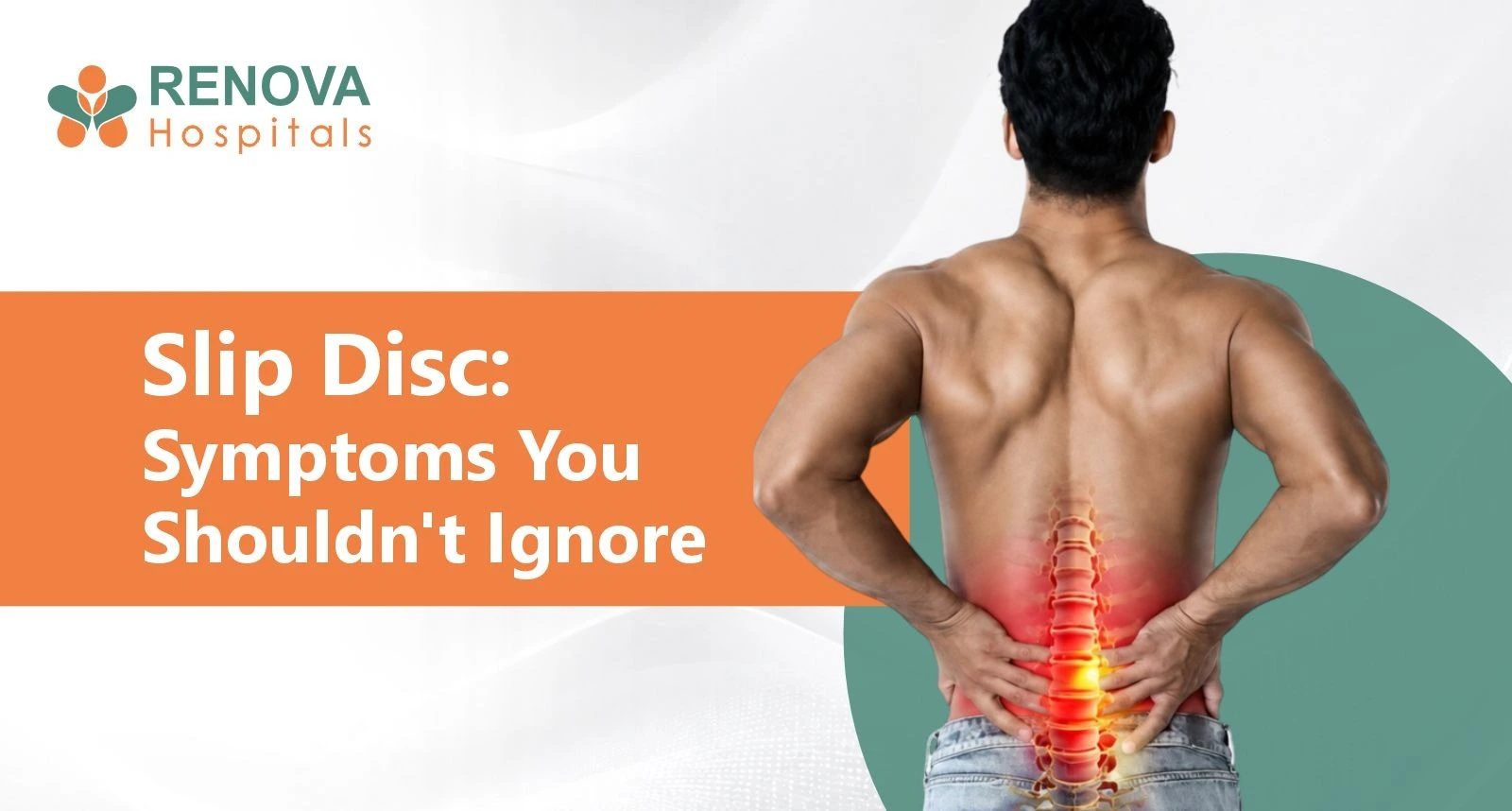
A slip disc, commonly called a herniated or prolapsed disc, occurs when material from a spinal disc bulges or pushes through its outer layer and irritates or compresses nearby nerves. Symptoms can include back or neck pain, pain travelling into an arm or leg, numbness, tingling, or muscle weakness. Seek urgent medical attention for loss of bladder or bowel control, numbness around the groin or inner thighs, rapidly worsening leg weakness, or severe neurological symptoms.
Key Takeaways
- A "slipped disc" does not literally mean that a spinal disc has slipped out of position.
- Herniated discs commonly affect the lower back but can also occur in the neck.
- Nerve compression can cause pain that travels into the leg or arm.
- Tingling, numbness, or muscle weakness may indicate nerve involvement.
- Many people improve with appropriate non-surgical treatment.
- Bed rest for prolonged periods is generally not recommended.
- MRI may be required when neurological symptoms are significant or symptoms persist.
- Surgery is required only in selected cases.
- Bladder or bowel problems, saddle numbness, or rapidly progressing weakness require emergency assessment.
What Is a Slip Disc?
The spine contains individual bones called vertebrae. Between most vertebrae are flexible discs that help:
- Absorb shock
- Distribute pressure
- Allow spinal movement
- Cushion neighbouring vertebrae
Each disc contains a softer central portion surrounded by a tougher outer layer.
When the outer layer weakens or develops a tear, part of the inner disc material can protrude outward.
If this material irritates or compresses a nearby spinal nerve, pain and neurological symptoms may develop.
Where Can a Slip Disc Occur?
A herniated disc can occur in different parts of the spine.
Lumbar Disc Herniation
The lumbar spine, or lower back, is one of the most common locations.
A lumbar disc herniation may cause:
- Lower back pain
- Buttock pain
- Pain travelling down the leg
- Numbness
- Tingling
- Leg or foot weakness
Cervical Disc Herniation
A herniated disc can also develop in the neck.
Symptoms can include:
- Neck pain
- Shoulder pain
- Arm pain
- Tingling in the hand
- Finger numbness
- Arm or hand weakness
What Are the Early Symptoms of a Slip Disc?
Symptoms depend on the location and whether a nerve is being compressed.
Common symptoms include:
- Back or neck pain
- Pain travelling into an arm or leg
- Tingling
- Numbness
- Burning or electric-shock-like pain
- Muscle weakness
- Pain that worsens with certain movements
Some people have a disc bulge or herniation on imaging without experiencing any symptoms.
This is why an MRI finding must always be interpreted together with the patient's symptoms and physical examination.
1. Pain Travelling Down the Leg
Pain that starts in the lower back or buttock and travels down one leg may indicate irritation of a spinal nerve.
This pattern is commonly called
sciatica.
Sciatic pain may feel:
- Sharp
- Burning
- Shooting
- Electric
- Deeply aching
It may travel through the:
- Buttock
- Back or side of the thigh
- Calf
- Foot
Sciatica is a symptom rather than a disease itself, and a herniated disc is one possible cause.
2. Numbness or Tingling
A compressed or irritated nerve can affect sensation.
Patients may notice:
- Pins and needles
- Reduced sensation
- Tingling
- Burning
- Areas of numbness
The location can provide clues about which nerve is affected.
Persistent or progressive numbness deserves medical evaluation.
3. Muscle Weakness
Weakness is more concerning than pain alone because it may indicate significant nerve dysfunction.
A person may experience:
- Difficulty lifting the foot
- Trouble walking on the heels or toes
- Frequent stumbling
- Reduced grip strength
- Difficulty lifting objects
- Weakness while climbing stairs
New or worsening weakness should not be ignored.
4. Pain That Worsens With Coughing or Sneezing
Coughing, sneezing, or straining temporarily increases pressure around the spine.
When a nerve root is already irritated, this may intensify radiating pain.
This symptom alone does not diagnose a disc herniation, but it may provide useful clinical information.
5. Difficulty Sitting for Long Periods
Some patients with lumbar disc problems find prolonged sitting uncomfortable.
Sitting may increase pressure within the lower spinal discs and aggravate symptoms.
Pain may become more noticeable during:
- Long drives
- Desk work
- Travel
- Prolonged bending
Regular position changes may help reduce discomfort.
6. Foot Drop
Foot drop describes difficulty lifting the front part of the foot.
A person may:
- Drag the toes
- Trip frequently
- Lift the knee unusually high while walking
- Have difficulty walking on the heel
A lumbar nerve problem is one possible cause of foot drop.
New foot drop requires prompt medical evaluation.
What Is Cauda Equina Syndrome?
Cauda equina syndrome is a rare but serious neurological emergency caused by severe compression of nerves at the lower end of the spinal canal.
Warning symptoms can include:
- Difficulty starting urination
- Inability to urinate
- Loss of bladder control
- Loss of bowel control
- Numbness around the genitals
- Numbness around the anus or inner thighs
- Severe or worsening weakness in one or both legs
The numbness pattern is sometimes called saddle anaesthesia because it affects areas that would contact a saddle.
Suspected cauda equina syndrome requires emergency assessment because delayed treatment can result in permanent neurological damage.
What Causes a Slip Disc?
Spinal discs naturally change with age.
Over time, discs may:
- Lose water content
- Become less flexible
- Develop small tears
- Become more vulnerable to herniation
A disc problem may develop gradually or occasionally after sudden strain.
Possible contributing factors include:
- Age-related degeneration
- Heavy lifting with poor technique
- Repeated bending and twisting
- Physically demanding work
- Excess body weight
- Smoking
- Prolonged sedentary behaviour
- Genetic susceptibility
Sometimes there is no single identifiable cause.
Can Lifting Heavy Weights Cause a Slip Disc?
Heavy lifting can contribute to disc injury, particularly when combined with twisting or poor lifting technique.
However, this does not mean people should avoid strength training altogether.
Properly supervised strength training can support:
- Muscle strength
- Spinal stability
- Bone health
- Overall physical function
The important factors are appropriate technique, gradual progression, and avoiding loads beyond your current capacity.
Is a Slip Disc the Same as Sciatica?
No.
A slip disc describes a structural problem involving an intervertebral disc.
Sciatica describes symptoms caused by irritation or compression of the sciatic nerve roots.
A lumbar herniated disc can cause sciatica, but other conditions can also produce similar symptoms.
These include:
- Spinal stenosis
- Degenerative spinal changes
- Spondylolisthesis
- Certain injuries
- Less commonly, other neurological or spinal conditions
Is a Disc Bulge the Same as a Herniated Disc?
Not exactly.
"Disc bulge" and "disc herniation" describe different patterns of disc displacement.
Importantly, both can appear on MRI scans in people who have no symptoms.
Therefore, treatment should not be based only on words in an MRI report.
Doctors need to determine whether the imaging abnormality actually matches:
- The patient's pain pattern
- Neurological examination
- Muscle strength
- Reflexes
- Sensory changes
How Is a Slip Disc Diagnosed?
Diagnosis begins with medical history and physical examination.
Your doctor may assess:
- Location of pain
- Pattern of radiating pain
- Muscle strength
- Sensation
- Reflexes
- Walking
- Spinal movement
A straight-leg raise test may also be performed when lumbar nerve irritation is suspected.
Is an MRI Necessary for a Slip Disc?
Not every patient with back pain needs an immediate MRI.
Many episodes of uncomplicated back pain improve with conservative treatment.
MRI becomes more important when there are:
- Significant neurological deficits
- Progressive muscle weakness
- Suspected cauda equina syndrome
- Persistent severe symptoms
- Concern about infection, tumour, or another serious condition
- Symptoms that do not improve as expected
MRI can show:
- Disc herniation
- Nerve compression
- Spinal stenosis
- Other spinal abnormalities
How Is a Slip Disc Treated?
Most people with symptomatic lumbar disc herniation do not immediately require surgery.
Treatment depends on:
- Severity
- Duration
- Neurological symptoms
- Level of pain
- Functional limitations
- Imaging findings when available
1. Stay Appropriately Active
Prolonged bed rest is generally not recommended for uncomplicated disc-related back pain.
Short periods of relative rest may be useful during severe pain, but gradual return to normal movement is usually encouraged.
Activity should remain within tolerable limits.
2. Pain Management
A doctor may recommend appropriate pain-relieving or anti-inflammatory medication depending on the patient's medical history.
Self-medication should be used cautiously, particularly in people with:
- Kidney disease
- Stomach ulcers
- Heart disease
- Blood-thinning medication
3. Physiotherapy
Physiotherapy may help improve:
- Mobility
- Core strength
- Posture
- Movement patterns
- Functional recovery
Treatment should be individualised rather than based on one universal set of exercises.
4. Exercise and Rehabilitation
Once severe pain settles, rehabilitation may gradually include:
- Walking
- Core strengthening
- Mobility exercises
- Postural training
- Progressive strengthening
Exercises that significantly worsen radiating pain, numbness, or weakness should be reviewed by a healthcare professional.
5. Epidural Steroid Injection
For selected patients with significant nerve-related leg or arm pain, an epidural corticosteroid injection may sometimes be considered.
The aim is to reduce inflammation around the affected nerve.
It does not physically "push the disc back into place."
Benefits vary, and injections are not appropriate for every patient.
6. Surgery
Surgery may be considered when:
- Significant weakness develops
- Neurological function worsens
- Severe radiating pain persists despite appropriate non-surgical treatment
- Symptoms significantly limit daily function
- Cauda equina syndrome is suspected or confirmed
One commonly performed procedure is microdiscectomy, in which the portion of disc compressing the nerve is removed.
The decision for surgery should be based on symptoms, neurological findings, imaging, and individual circumstances.
Can a Slip Disc Heal Without Surgery?
Yes.
Many people improve with non-surgical treatment.
The body can sometimes gradually reduce the size of herniated disc material, while inflammation around the nerve may settle.
Pain improvement does not necessarily mean an MRI will become completely normal.
The goal of treatment is primarily to restore:
- Function
- Mobility
- Strength
- Quality of life
rather than simply producing a "perfect" scan.
How Long Does a Slip Disc Take to Recover?
Recovery varies.
Some patients improve substantially within several weeks, while others require several months.
Recovery depends on:
- Size and location of the herniation
- Degree of nerve irritation
- Presence of weakness
- General health
- Activity level
- Rehabilitation
Can Walking Help a Slip Disc?
Gentle walking is often useful once pain allows.
It helps maintain:
- General mobility
- Circulation
- Muscle activity
- Confidence with movement
Start with manageable distances and gradually increase activity.
Severe worsening of leg pain, weakness, or numbness during activity should prompt medical review.
What Should You Avoid With a Slip Disc?
During a painful episode, avoid:
- Heavy lifting without appropriate technique
- Repeated bending and twisting
- Sudden jerking movements
- Prolonged bed rest
- Aggressive spinal manipulation without proper assessment
- Exercises that significantly worsen radiating symptoms
- Ignoring progressive weakness
- Repeated self-medication without diagnosis
The long-term goal should generally be a safe return to normal activity rather than permanent avoidance of movement.
Can a Slip Disc Come Back?
Yes.
A person who has experienced one disc herniation may develop another episode at the same or a different spinal level.
Risk reduction may include:
- Maintaining a healthy weight
- Staying physically active
- Strengthening supporting muscles
- Using appropriate lifting techniques
- Avoiding smoking
- Managing prolonged sitting
- Gradually increasing exercise intensity
No strategy can guarantee that disc problems will never recur.
Medical Review
A herniated disc is common and often improves without surgery.
The most important issue is not simply the severity of pain but whether the nerve is losing function.
Progressive weakness, bladder or bowel dysfunction, saddle numbness, or major neurological changes require much more urgent assessment than uncomplicated back pain.
Consult a Spine and Orthopaedic Team at Renova Hospitals
Back or neck pain accompanied by pain travelling into the arm or leg, numbness, tingling, or weakness may indicate nerve compression and should be appropriately assessed.
At
Renova Hospitals, our
Orthopaedics, Spine Surgery,
Neurosurgery, and Physiotherapy teams evaluate disc problems using clinical examination, neurological assessment, imaging when required, and personalised treatment planning.
Treatment may range from medication and rehabilitation to minimally invasive spine procedures or surgery in selected patients.
Request a consultation or call 040 2333 3333.
Need Medical Guidance?
Consult Renova Orthopaedics or Spine specialists if you experience:
- Persistent back or neck pain
- Pain travelling down an arm or leg
- Numbness or tingling
- Muscle weakness
- Recurrent sciatica
- Difficulty walking
- Symptoms that do not improve with appropriate initial treatment
Early assessment is particularly important when neurological symptoms are progressing.
When Does a Slip Disc Need Emergency Care?
Seek emergency medical attention if you develop:
- Loss of bladder control
- Difficulty starting or passing urine
- Loss of bowel control
- Numbness around the genitals, buttocks, or inner thighs
- Rapidly worsening weakness in one or both legs
- New severe difficulty walking
- Major neurological symptoms after a significant spinal injury
These symptoms may indicate severe nerve compression, including cauda equina syndrome, and require urgent assessment.
Visit Emergency Medicine or call 040 2333 3333 for urgent assistance.
Don't Ignore Numbness or Weakness With Back Pain
Most disc-related back pain does not require surgery and can improve with appropriate treatment and rehabilitation.
However, symptoms such as progressive weakness, persistent numbness, foot drop, or bladder and bowel changes are different from ordinary back pain and should never be ignored.
At Renova Hospitals, multidisciplinary spine care focuses on identifying the exact cause of nerve symptoms and choosing treatment based on clinical findings—not simply an MRI report.
Medical References
Medically Reviewed & Approved By:
Dr. Anoop Reddy Sama
MS Orthopedics, Fellowship in Shoulder Surgery (France), Fellowship in Sports Injuries – Consultant Shoulder & Sports Surgeon
This article has been reviewed and approved by a qualified medical professional to ensure medical accuracy and adherence to current clinical standards.