Renova Hospitals Logo
Home Blogs Tumour Board Approach in Cancer Care: Why Multiple Specialists Matter
Multidisciplinary approach to cancer diagnosis and treatment

By Dr. Srinivas Juluri

September 28, 2026

Tumour Board Approach in Cancer Care: Why Multiple Specialists Matter

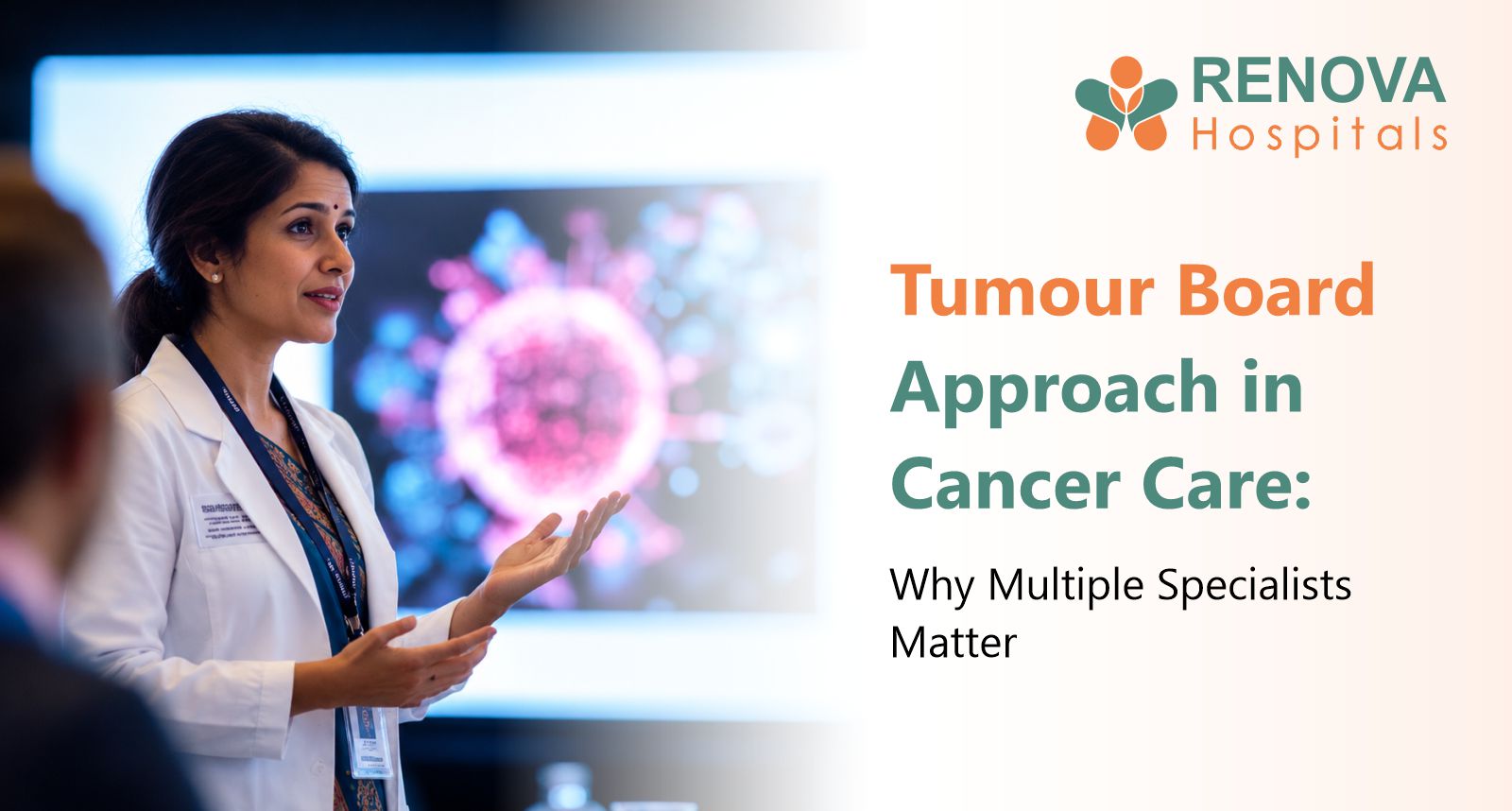
When someone is diagnosed with cancer, it is natural to assume that one doctor decides the treatment plan. In practice, many hospitals use a tumour board, a structured meeting where specialists from different fields come together to discuss a case and agree on the best path forward. This multidisciplinary approach has become a standard of good cancer care, particularly for complex or uncertain cases. This guide, reviewed by Renova's oncology team, explains what a tumour board is, who takes part, and why this team-based approach matters for patients.

Key Takeaways

  • A tumour board is a meeting of multiple specialists who review a cancer case together and agree on a treatment plan.
  • Typical members include medical, surgical, and radiation oncologists, radiologists, and pathologists.
  • This approach helps ensure diagnosis and staging are accurate before treatment begins.
  • It brings together different treatment perspectives, such as surgery, chemotherapy, and radiation, in one discussion.
  • Tumour boards are especially valuable for complex, rare, or borderline cases.
  • Patients do not usually attend the meeting itself, but receive its recommendations through their treating doctor.
  • The tumour board's plan can evolve as treatment progresses and new information becomes available.
  • This structure builds a form of built-in second opinion into standard cancer care.

What Is a Tumour Board?


A tumour board, also called a multidisciplinary team meeting, is a regular gathering of specialists from different areas of cancer care who review individual patient cases together.

Rather than one doctor deciding a treatment plan alone, the case is presented with all relevant scans, pathology results, and clinical details, and the group discusses the diagnosis, stage, and possible treatment approaches before agreeing on a recommended plan.

Who Takes Part in a Tumour Board?


A tumour board typically includes specialists whose combined expertise covers the full range of cancer diagnosis and treatment options.

Common members include:

  • Medical oncologists, who manage chemotherapy, targeted therapy, and immunotherapy
  • Surgical oncologists, who assess and perform cancer surgery
  • Radiation oncologists, who plan and deliver radiation therapy
  • Radiologists, who interpret imaging such as CT, MRI, and PET scans
  • Pathologists, who examine biopsy and tissue samples to confirm diagnosis
  • Other specialists as relevant, such as nuclear medicine physicians, geneticists, or palliative care specialists

This combination means a single meeting can draw on surgical, medical, radiological, and pathological expertise at once, rather than requiring separate consultations across different specialists.

What Is the Difference Between a Medical Oncologist and a Surgical Oncologist?


A medical oncologist manages cancer using drug-based treatments such as chemotherapy, targeted therapy, and immunotherapy.

A surgical oncologist specialises in operating to remove tumours and cancerous tissue. Many patients see both, along with a radiation oncologist, as part of a coordinated treatment plan, which is exactly the kind of coordination a tumour board is designed to support.

Why Does Cancer Treatment Need Multiple Specialists?


Cancer treatment decisions are rarely simple, and different specialities bring different, complementary perspectives to the same case.

  • A radiologist may identify how far a tumour has spread on imaging
  • A pathologist may clarify the exact type and grade of cancer from tissue samples
  • A surgical oncologist may assess whether the tumour can be safely removed
  • A medical oncologist may consider whether chemotherapy should come before or after surgery
  • A radiation oncologist may evaluate whether radiation could improve local control of the disease

Reviewing all of this together, in one discussion, helps the team agree on a sequence of treatment that reflects the full clinical picture, rather than one specialist's view in isolation.

Does Every Cancer Patient Go Through a Tumour Board?


Not always, but many hospitals discuss complex, borderline, or newly diagnosed cases through this process.

Straightforward, early-stage cancers with a clear standard treatment may not always require full board discussion, though many centres still review a broad range of cases this way as routine practice. Rare cancers, cases with uncertain staging, or those where more than one treatment approach is reasonable are especially likely to be discussed by a tumour board.

How Does a Tumour Board Improve Patient Care?


The multidisciplinary approach offers several practical benefits for patients, even though they are not usually present in the room.

  • More accurate diagnosis and staging, since imaging and pathology are reviewed together
  • A treatment plan that considers all reasonable options, not just one specialist's default approach
  • Reduced risk of important details being missed between separate, disconnected consultations
  • Faster coordination between departments once a plan is agreed
  • A built-in additional perspective, similar in spirit to a second opinion, as part of routine care

Is a Tumour Board the Same as Getting a Second Opinion?


Not exactly, though the two share a similar goal.

A tumour board is an internal discussion among the specialists already involved in a hospital's cancer care, while a second opinion typically involves an independent doctor or centre entirely outside the original care team. A thorough tumour board reduces some of the need for an external second opinion, but does not replace the value of an independent view, particularly for rare or highly complex cases.

What Happens During a Tumour Board Meeting?


While formats vary between hospitals, a typical tumour board meeting generally follows a similar pattern.

  • The patient's case is presented, usually by the referring specialist, with relevant history
  • Imaging scans are reviewed and discussed by a radiologist
  • Pathology findings are presented, clarifying the exact diagnosis and grade
  • Each relevant specialist shares their assessment of treatment options
  • The group discusses and agrees on a recommended treatment plan and sequence
  • The plan is documented and communicated back to the patient's treating doctor

Patients themselves do not typically attend this meeting. Instead, their treating doctor explains the agreed plan to them afterward, in a normal consultation setting.

How Renova's Oncology Team Uses This Approach


At Renova Hospitals, cancer cases are reviewed through multidisciplinary discussion involving medical oncology, surgical oncology, radiation oncology, and supporting specialities such as radiology and pathology.

This coordinated structure means that when a patient sees their treating doctor, the recommended plan often already reflects input from several specialists, rather than a single individual view.

Medical Review


Cancer treatment is rarely a single decision made by one doctor in isolation. A tumour board brings together the specialists most relevant to a case, medical, surgical, and radiation oncologists, radiologists, and pathologists, to review the evidence together and agree on a coordinated plan.

For patients, this means the recommendation they receive from their treating doctor often reflects a broader, team-based discussion, which can improve both the accuracy of the diagnosis and the appropriateness of the treatment plan, especially for complex or uncertain cases.

Consult the Oncology Team at Renova Hospitals


If you or a family member has a new cancer diagnosis, or a case involving more than one possible treatment approach, our multidisciplinary oncology team can help.

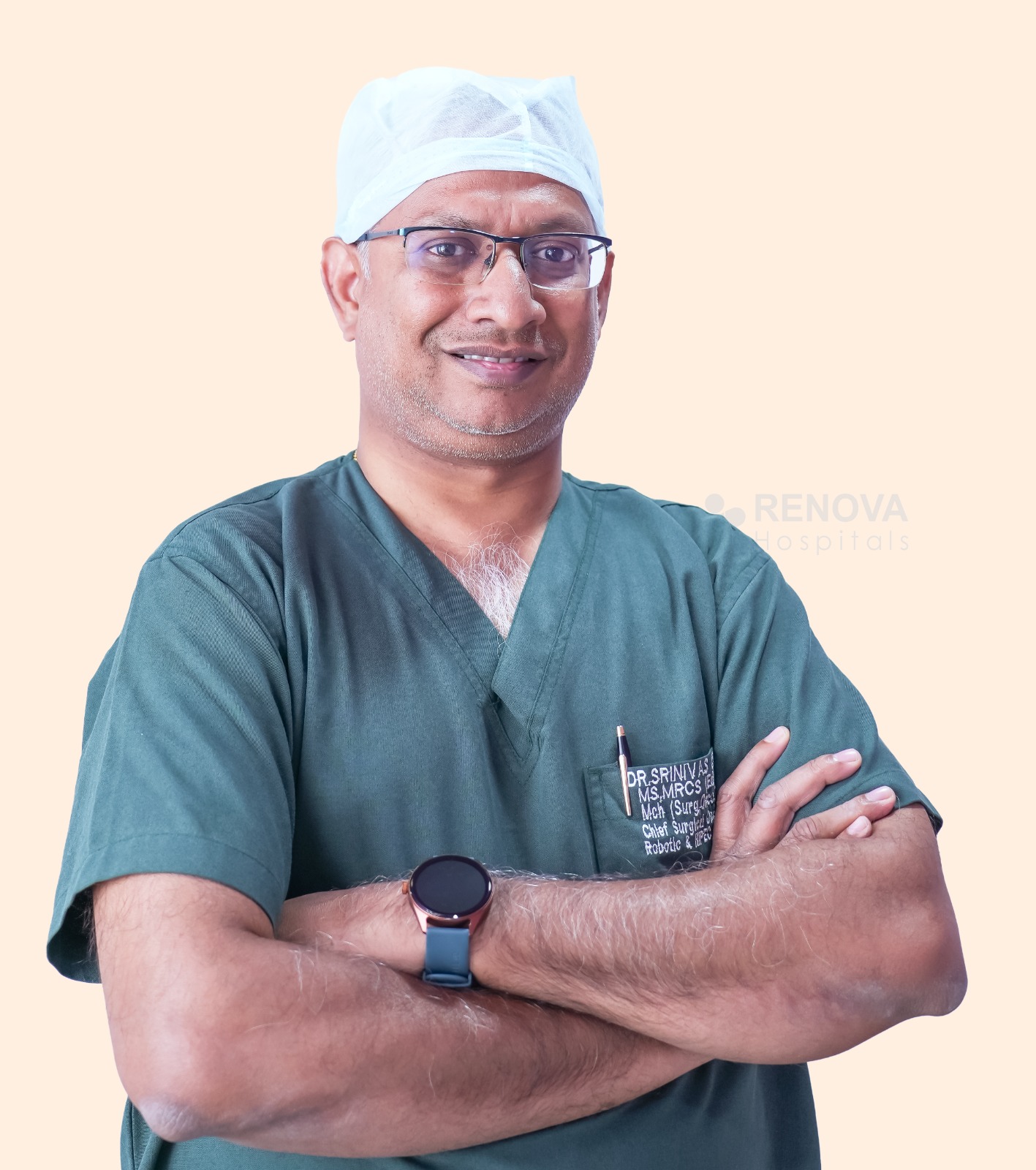
At Renova Hospitals, cancer cases are reviewed through coordinated, multidisciplinary discussion across medical, surgical, and radiation oncology, along with radiology and pathology. Dr. Srinivas Juluri, Chief Consultant Surgical Oncology at Renova Century Hospital, has extensive experience leading and coordinating multidisciplinary tumour boards, and the wider oncology team can help you understand how this approach applies to your specific case.

Request a consultation or call 040 2333 3333.

Questions to Ask Your Oncology Team


It can help to ask your care team directly:

  • Was my case discussed at a tumour board, or will it be?
  • Which specialists were, or will be, involved in reviewing my case?
  • Were more than one treatment approach considered for my situation?
  • How will I be updated if the recommended plan changes over time?

Understanding how your case has been reviewed can help you feel more confident in the plan you are given.

The Bottom Line


A tumour board approach brings multiple cancer specialists together to review a case and agree on treatment, rather than leaving complex decisions to a single doctor working alone. This multidisciplinary structure supports more accurate diagnosis, more considered treatment planning, and a form of built-in second opinion within routine cancer care.

At Renova Hospitals, our oncology teams use this coordinated approach to plan cancer care across specialities, so that patients benefit from combined expertise rather than one isolated viewpoint.

Medical References


Medically Reviewed & Approved By:

Dr. Srinivas Juluri

MBBS, MS (AIIMS), MRCS (Edinburgh, UK), M.Ch (Surgical Oncology, TMH)

Chief Consultant Surgical Oncology, Robotic and HIPEC Surgeon, Renova Century Hospital, Banjara Hills, Hyderabad

This article has been reviewed and approved by a qualified medical professional to ensure medical accuracy and adherence to current clinical standards.

Want to connect with a specialist?

Book your appointment now

Our Panel of Doctors

Our healthcare specialists are equipped with the knowledge and skills to provide you with the support you require. From consultation to diagnosis to treatments, our experts are dedicated to helping you.

Dr. Srinivas Juluri - Best doctor at Renova Hospitals

Dr. Srinivas Juluri

Surgical Oncology, Robotic Surgery

22 years Experience

Telugu, English, Hindi

Renova Century Hospital - Banjara Hills

MBBS, MS (AIIMS), MRCS (Edinburgh, UK) M.Ch (Surgi...

Recent Blogs

Our healthcare specialists are equipped with the knowledge and skills to provide you with the support you require. From consultation to diagnosis to treatments, our experts are dedicated to helping you.

Types of heart valve replacement surgery and recovery process

Valve Replacement Surgery: Types, Benefits and Recovery Process

07 October 2026 | By Dr. Hemanth Kaukuntla

Learn about heart valve replacement surgery, including different valve types, potential benefits, the procedure, recover...

Causes and warning signs of sudden cardiac death

Sudden Cardiac Death: Causes, Warning Signs and Prevention

05 October 2026 | By Dr. B. K. Srinivasa Sastry

Understand the causes and risk factors of sudden cardiac death, recognise potential warning signs, and learn about preve...

Heart bypass recovery timeline and post-surgery precautions
Vascular Surgery

Heart Bypass Surgery Recovery: Timeline, Precautions and Lifestyle Changes

02 October 2026 | By Dr. Praveen Kumar Nandagiri

Learn about heart bypass surgery recovery, including the expected timeline, essential precautions, follow-up care, and l...

Role of AI and robotics in advanced cancer treatment
Radiation Oncology

Advanced Cancer Treatment Technologies: AI, Robotics and Precision Medicine

30 September 2026 | By Dr. Rama Vaghmare

Explore how AI, robotic surgery, and precision medicine are advancing cancer care through more personalised diagnosis, t...

Understanding the duration and stages of cancer treatment
Radiation Oncology

How Long Does Cancer Treatment Take? Understanding Treatment Timelines

25 September 2026 | By Dr. Sandeep Kumar Tula

Understand how long cancer treatment may take, the different stages involved, and the factors that can influence an indi...

Post-cancer treatment care – recovery and survivorship
Medical Oncology

Life After Cancer Treatment: Follow-Up Care, Recovery and Survivorship

23 September 2026 | By Dr. Rajesh Bollam

Learn about life after cancer treatment, including follow-up care, recovery, managing long-term effects, and staying hea...

Frequently Asked Questions

Find quick answers to common questions about our services, doctors, and care at Renova Hospitals. So you can feel informed and confident at every step.

What is a tumour board in cancer care?

Who is usually part of a tumour board?

Why does cancer treatment need input from multiple specialists?

Does every cancer patient go through a tumour board?

Is a tumour board the same as a second opinion?

Do patients attend the tumour board meeting?

What is the difference between a medical oncologist and a surgical oncologist?

How does a tumour board benefit patients?

Call Us Request a
Callback
WhatsApp


Corporate Office

Plot No. 270/A, Padmaja Tower, 2nd Floor, MLA Colony, Road No. 12, Banjara Hills, Hyderabad - 500034

Phone: 040 2333 3333