Renova Hospitals Logo
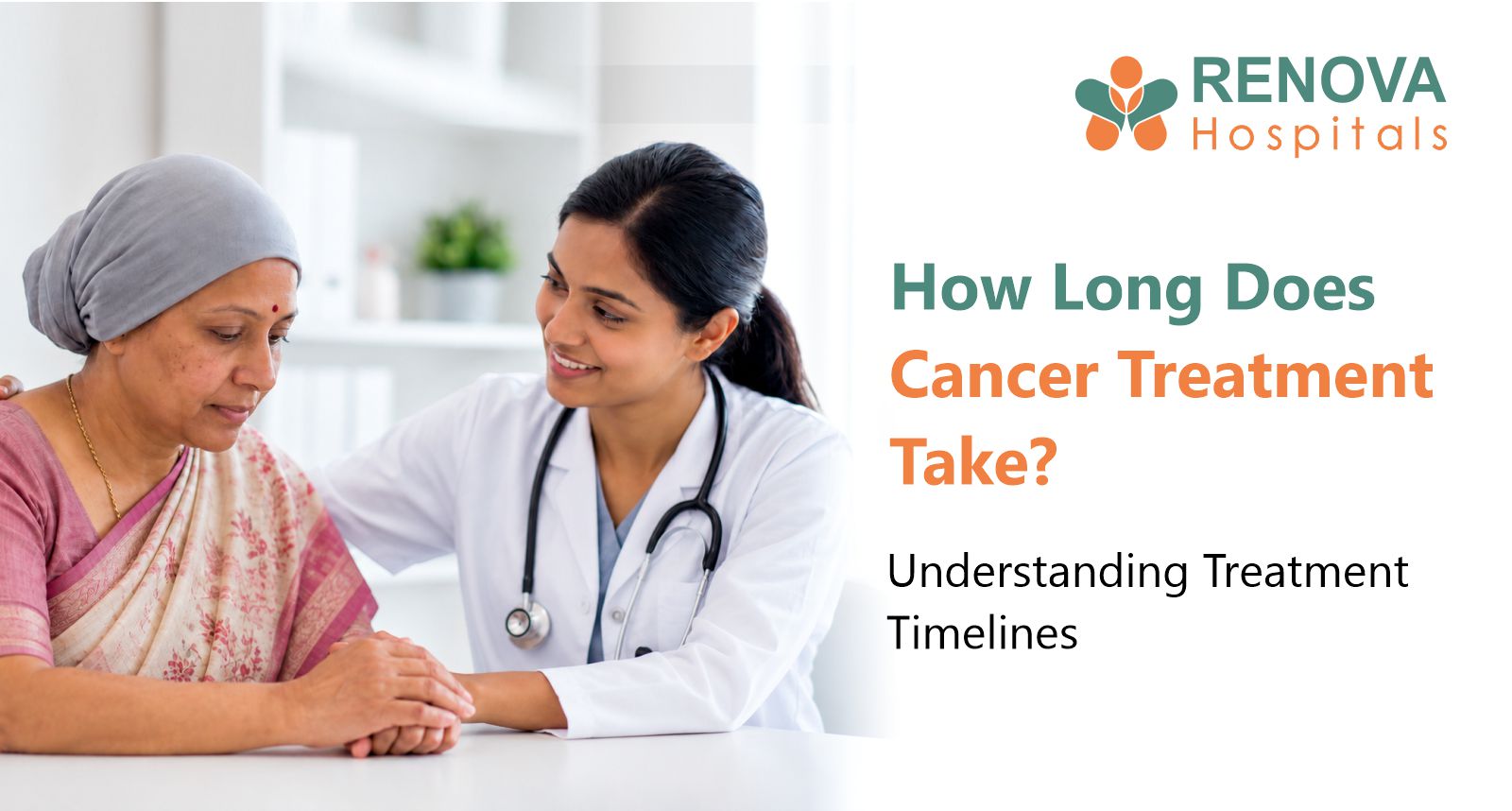
Home Blogs How Long Does Cancer Treatment Take? Understanding Treatment Timelines
Understanding the duration and stages of cancer treatment

By Dr. Sandeep Kumar Tula

September 25, 2026

How Long Does Cancer Treatment Take? Understanding Treatment Timelines

One of the first questions people ask after a cancer diagnosis is simple but important: how long will treatment take? The honest answer is that it varies considerably. Cancer treatment timelines depend on the type of cancer, its stage, the treatments involved, and how an individual responds along the way. Understanding the general timeframes for surgery, chemotherapy, and radiation therapy, and what can extend or shorten them, can help patients and families plan and know what to expect. This guide, reviewed by Renova's oncology team, walks through typical timelines and the factors that influence them.

Key Takeaways

  • Cancer treatment timelines vary widely based on cancer type, stage, and the treatments used.
  • Surgery itself may take a few hours, but full recovery can take weeks.
  • Chemotherapy is usually given in cycles, with a typical course lasting three to six months, sometimes longer.
  • Radiation therapy is often given daily on weekdays, over one to eight weeks depending on the treatment goal.
  • Many patients receive a combination of treatments, which extends the overall timeline.
  • Individual factors such as response to treatment, side effects, and overall health can lengthen or shorten a plan.
  • A personalised treatment plan and timeline is created by a multidisciplinary oncology team.
  • Ongoing follow-up care continues well after active treatment ends.

Why Is There No Single Answer to How Long Cancer Treatment Takes?


Cancer is not one disease but many, and treatment is tailored to the specific type, stage, and biology of each cancer, as well as the patient's overall health.

Some cancers are treated with a single approach, such as surgery alone, while others need a planned combination of surgery, chemotherapy, radiation, and sometimes targeted therapy or immunotherapy delivered in a specific sequence. This is why two people with what sounds like a similar diagnosis can have quite different treatment timelines.

1. Surgery: Timelines for the Procedure and Recovery

Surgery is often used to remove a tumour, and its timeline has two parts: the procedure itself and the recovery period afterward.

Typical timeframes include:

  • The operation itself: commonly one to a few hours, depending on the complexity and extent of surgery
  • Hospital stay: ranging from a day for minor procedures to a week or more for major surgery
  • Initial recovery: generally two to six weeks before resuming normal activities
  • Full recovery: can take several weeks to a few months, particularly after extensive or reconstructive surgery

Minimally invasive approaches, such as robotic-assisted surgery, can sometimes shorten hospital stays and recovery time compared with traditional open surgery, though suitability depends on the individual case.

How Long Does Cancer Surgery Take?


It depends on the type and extent of surgery.

A straightforward tumour removal may take one to two hours, while complex or reconstructive procedures can take considerably longer. Your surgical team will give you a time estimate specific to your planned operation.

2. Chemotherapy: Understanding Cycles and Duration

Chemotherapy is usually not a single session but a series of treatments known as cycles, with rest periods in between to allow the body to recover.

Key aspects of chemotherapy duration include:

  • Cycle length: commonly every two to four weeks, though this varies by drug regimen
  • Number of cycles: often four to eight cycles for a full course, depending on the cancer type and treatment goal
  • Total duration: a typical course of chemotherapy lasts around three to six months, though some regimens are shorter and others continue for a year or more
  • Session length: individual chemotherapy sessions can range from under an hour to several hours, depending on the drugs used

Chemotherapy may be given before surgery (neoadjuvant), after surgery (adjuvant), or as the main treatment, and each approach can have a different timeline.

How Many Cycles of Chemotherapy Are Usually Needed?


This depends on the type of cancer and the specific chemotherapy regimen.

Many standard regimens involve four to eight cycles, but some plans involve fewer or more, based on how the cancer responds and how well the treatment is tolerated. Your medical oncologist will outline the planned number of cycles at the start of treatment, while remaining ready to adjust it if needed.

How Long Is a Chemotherapy Session?


Session length varies by drug and dose.

Some chemotherapy infusions are completed in under an hour, while others, particularly combination regimens, can take several hours in a single visit. Oral chemotherapy, taken as tablets at home, does not require hospital visits for each dose, though regular monitoring is still needed.

3. Radiation Therapy: How Long Does It Take?

Radiation therapy is typically delivered in small daily doses, known as fractions, over a set number of weeks, allowing healthy tissue time to recover between sessions.

General timelines include:

  • Daily sessions: usually given once a day, five days a week, with weekends off
  • Course length: commonly one to eight weeks, depending on the cancer type and treatment goal
  • Session duration: each session is often brief, typically 15 to 30 minutes including setup time
  • Palliative radiation: shorter courses, sometimes just a few sessions, may be used to relieve symptoms rather than to cure

Advanced techniques delivered by Renova's Radiation Oncology team, such as IMRT, IGRT, and SBRT, allow precise targeting of tumours, which can sometimes shorten the overall number of sessions needed for certain cancers.

How Long Does a Radiation Therapy Session Take?


Most individual sessions are brief.

A typical radiation therapy appointment, including positioning and the treatment itself, usually takes 15 to 30 minutes, though the actual radiation delivery is often just a few minutes of that time. The full course, however, is completed over several weeks of daily visits.

4. Combination Treatment: Why Timelines Extend

Many cancers are treated with more than one approach, planned in a specific sequence by a multidisciplinary tumour board.

Common combinations and their effect on timelines include:

  • Surgery followed by chemotherapy and or radiation: adds the recovery period from surgery before further treatment begins
  • Chemotherapy before surgery (neoadjuvant): used to shrink a tumour first, extending the timeline before the operation
  • Chemotherapy combined with radiation (chemoradiation): often given concurrently, which can affect side effects and scheduling
  • Maintenance or ongoing therapy: some cancers require continued treatment, such as hormone therapy, for months or years after the main course

Because of this sequencing, an overall cancer treatment plan can span anywhere from a few months to well over a year, particularly for cancers requiring multiple modalities.

5. What Can Make Treatment Take Longer or Shorter?

Several factors can influence how long a specific treatment plan actually takes, beyond the general timelines above.

  • Cancer stage and extent: more advanced or widespread cancers often need longer or more intensive treatment
  • Response to treatment: if a tumour shrinks well, some plans may be shortened; if response is slower, treatment may be extended
  • Side effects: significant side effects can require breaks or dose adjustments, extending the overall timeline
  • Overall health: other medical conditions can affect how quickly a patient can proceed through a planned schedule
  • Type of cancer: some cancers are treated with brief, intensive protocols, while others need longer, more gradual courses


Can Cancer Treatment Be Paused or Delayed?


Yes, and this is not unusual.

Treatment may be paused briefly to manage side effects, allow blood counts to recover, or address an infection or other health issue. Short pauses are a normal part of many treatment plans and are managed by your care team to keep treatment as safe and effective as possible.

6. What Happens After Active Treatment Ends?

Completing the planned course of surgery, chemotherapy, or radiation is a major milestone, but it is usually not the end of care.

Most patients move into a phase of structured follow-up, which may include regular check-ups, scans, and, for some cancers, ongoing treatments such as hormone therapy that continue for months or years.

How Your Oncology Team Builds Your Treatment Timeline


Your specific timeline is developed by your treating team based on your diagnosis, staging, and overall health, often discussed through a multidisciplinary tumour board bringing together medical, surgical, and radiation oncology perspectives.

At the start of treatment, your oncologist will typically outline:

  • The overall treatment plan and the order of treatments
  • An estimated timeline for each phase
  • Expected visit frequency and what each visit will involve
  • How progress will be assessed along the way

This plan can be adjusted as treatment progresses, based on how you respond and how you are tolerating treatment.

Medical Review


There is no universal answer to how long cancer treatment takes, because timelines are shaped by the specific cancer, its stage, the treatments involved, and each person's individual response. Surgery, chemotherapy, and radiation each have their own typical timeframes, and many patients receive a planned combination of these.

Understanding these general patterns can help patients and families prepare, while recognising that only their treating oncology team can provide a timeline specific to their own diagnosis and plan.

Consult the Oncology Team at Renova Hospitals


If you or a family member has been diagnosed with cancer and want to understand what your treatment timeline might look like, our oncology team can help explain the plan clearly.

At Renova Hospitals, our Medical Oncology, Surgical Oncology, and Radiation Oncology teams work together through multidisciplinary tumour board planning to create a personalised treatment timeline. Dr. Jyothi Jonnadula, Senior Consultant Radiation Oncologist at Renova Century Hospital, and the wider oncology team can help you understand what to expect at each stage of your treatment journey.

Request a consultation or call 040 2333 3333.

Questions to Ask Your Oncology Team


It can help to ask your care team directly:

  • What is the overall plan and expected timeline for my treatment?
  • How many cycles or sessions are planned, and how long does each one take?
  • What might cause this timeline to change?
  • What does follow-up care look like once active treatment ends?

Clear answers to these questions can make the treatment journey feel more predictable and manageable.

The Bottom Line


Cancer treatment timelines vary widely: surgery may involve a few hours in the operating room and weeks of recovery, chemotherapy is usually given in cycles over three to six months or longer, and radiation therapy often runs daily on weekdays for one to eight weeks. Many patients receive a combination of these, planned and sequenced by a multidisciplinary oncology team.

At Renova Hospitals, our oncology teams build individualised treatment plans and explain the expected timeline clearly, so patients and families know what to expect at every stage.

Medical References


Medically Reviewed & Approved By:

Dr. Sandeep Kumar Tula

Radiation Oncology
MD (Radiation Oncology), PGI Chandigarh
 

Senior Consultant Radiation Oncologist, Renova Century Hospital, Banjara Hills, Hyderabad

This article has been reviewed and approved by a qualified medical professional to ensure medical accuracy and adherence to current clinical standards.

Want to connect with a specialist?

Book your appointment now

Our Panel of Doctors

Our healthcare specialists are equipped with the knowledge and skills to provide you with the support you require. From consultation to diagnosis to treatments, our experts are dedicated to helping you.

Dr. Sandeep Kumar Tula - Best doctor at Renova Hospitals

Dr. Sandeep Kumar Tula

Radiation Oncology

10 years Experience

English, Hindi, Telugu

Renova Soumya Cancer Centre - Secunderabad

MD (Radiation Oncology), PGI Chandigarh

Recent Blogs

Our healthcare specialists are equipped with the knowledge and skills to provide you with the support you require. From consultation to diagnosis to treatments, our experts are dedicated to helping you.

Causes and warning signs of sudden cardiac death

Sudden Cardiac Death: Causes, Warning Signs and Prevention

05 October 2026 | By Dr. B. K. Srinivasa Sastry

Understand the causes and risk factors of sudden cardiac death, recognise potential warning signs, and learn about preve...

Heart bypass recovery timeline and post-surgery precautions
Vascular Surgery

Heart Bypass Surgery Recovery: Timeline, Precautions and Lifestyle Changes

02 October 2026 | By Dr. Praveen Kumar Nandagiri

Learn about heart bypass surgery recovery, including the expected timeline, essential precautions, follow-up care, and l...

Role of AI and robotics in advanced cancer treatment
Radiation Oncology

Advanced Cancer Treatment Technologies: AI, Robotics and Precision Medicine

30 September 2026 | By Dr. Rama Vaghmare

Explore how AI, robotic surgery, and precision medicine are advancing cancer care through more personalised diagnosis, t...

Multidisciplinary approach to cancer diagnosis and treatment
Surgical Oncology

Tumour Board Approach in Cancer Care: Why Multiple Specialists Matter

28 September 2026 | By Dr. Srinivas Juluri

Understand how a tumour board brings together multiple cancer specialists to review complex cases, discuss treatment opt...

Post-cancer treatment care – recovery and survivorship
Medical Oncology

Life After Cancer Treatment: Follow-Up Care, Recovery and Survivorship

23 September 2026 | By Dr. Rajesh Bollam

Learn about life after cancer treatment, including follow-up care, recovery, managing long-term effects, and staying hea...

Understanding cancer recurrence after successful treatment
Medical Oncology

Cancer Recurrence: Why Does Cancer Come Back After Treatment?

21 September 2026 | By Dr. Rajesh Bollam

Understand why cancer may recur after treatment, the factors that can contribute to recurrence, and the importance of re...

Frequently Asked Questions

Find quick answers to common questions about our services, doctors, and care at Renova Hospitals. So you can feel informed and confident at every step.

How long does cancer treatment usually take?

How long does chemotherapy usually last?

How many cycles of chemotherapy are usually needed?

How long does radiation therapy take?

How long does cancer surgery take?

Can cancer treatment be paused or delayed?

Why do some cancer treatment plans take longer than others?

What happens after active cancer treatment ends?

Call Us Request a
Callback
WhatsApp


Corporate Office

Plot No. 270/A, Padmaja Tower, 2nd Floor, MLA Colony, Road No. 12, Banjara Hills, Hyderabad - 500034

Phone: 040 2333 3333