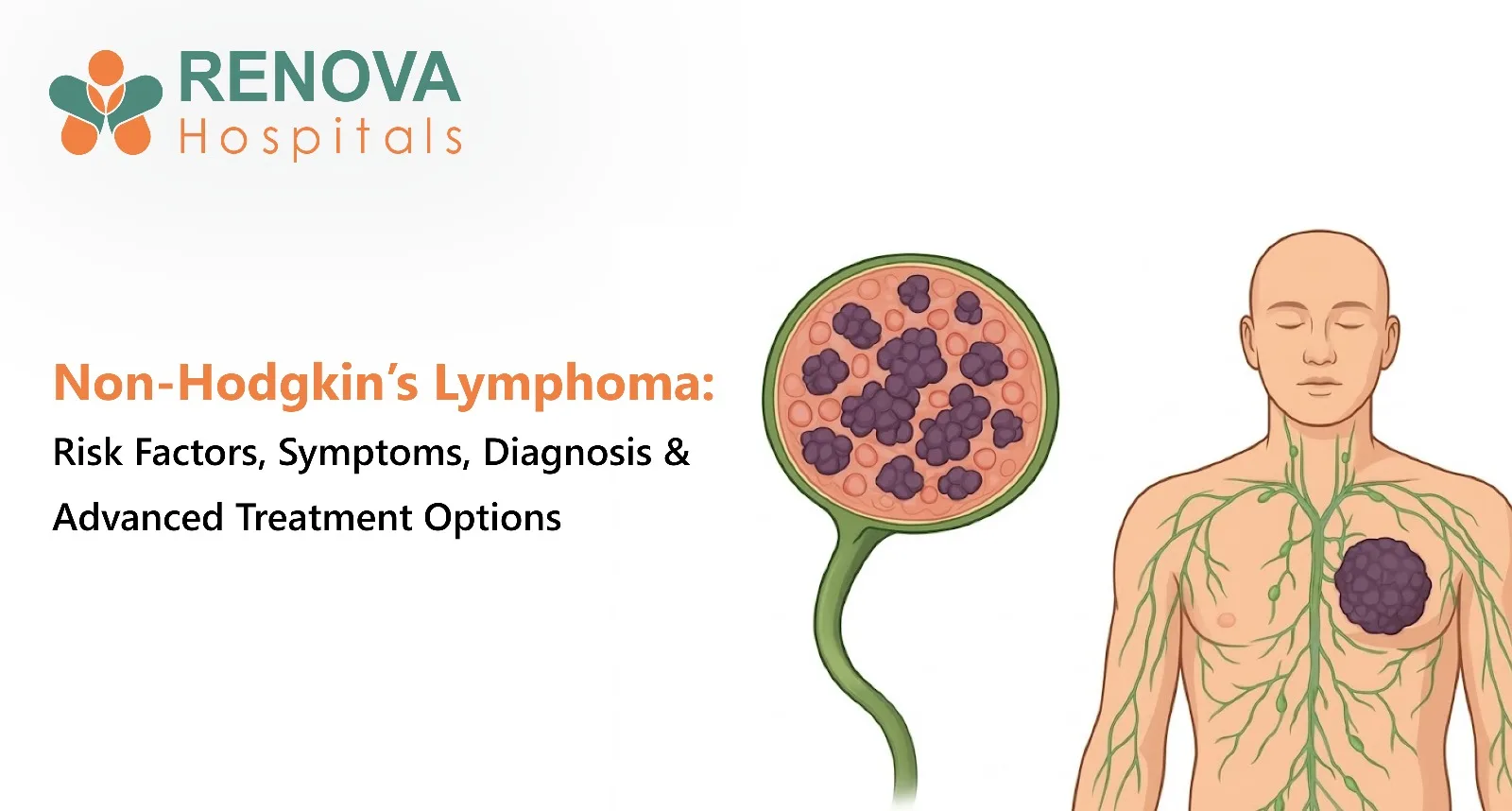
Non-Hodgkin’s Lymphoma (NHL) is a type of blood
cancer that originates in the lymphatic system, a critical part of the body’s immune defence. It develops when lymphocytes (a type of white blood cell) grow abnormally and multiply uncontrollably, affecting the body’s ability to fight infections.
At Renova Hospitals, Hyderabad, we provide comprehensive
lymphoma care, combining early diagnosis, precision oncology, and advanced therapies such as immunotherapy and CAR T-cell therapy to deliver better outcomes.
If you are searching for causes of lymph node swelling, blood cancer symptoms, or the best lymphoma treatment in Hyderabad, this guide provides clear, evidence-based answers.
Key Takeaways
- Non-Hodgkin’s Lymphoma is a cancer of lymphocytes affecting the immune system
- It includes 60+ subtypes, broadly classified into B-cell and T-cell lymphomas
- Common warning signs include painless lymph node swelling, fever, night sweats, and weight loss
- Early diagnosis significantly improves survival and treatment success
- Advanced treatments like targeted therapy, immunotherapy, and CAR T-cell therapy have improved outcomes
- Many patients today achieve long-term remission or cure with modern oncology care
What is Non-Hodgkin’s Lymphoma?
Non-Hodgkin’s Lymphoma is a group of cancers that develop in the lymphatic system, including lymph nodes, spleen, bone marrow, and lymphatic tissues. It occurs when abnormal lymphocytes multiply uncontrollably, replacing healthy immune cells and weakening the body’s defence mechanisms.
Unlike Hodgkin’s lymphoma, NHL does not involve Reed-Sternberg cells and differs in its spread and treatment response. The disease can range from slow-growing (indolent) to highly aggressive forms requiring urgent intervention.
Types of Non-Hodgkin’s Lymphoma:
- B-cell lymphomas (85–90% of cases)
- T-cell lymphomas (less common but often aggressive)
- Indolent lymphomas – slow progression
- Aggressive lymphomas – rapid growth, require immediate treatment
Why is Early Diagnosis Important in NHL?
Early diagnosis plays a crucial role in improving survival outcomes in Non-Hodgkin’s Lymphoma. Since early symptoms are often mild or mistaken for infections, delays in diagnosis are common. Identifying the disease early allows treatment before widespread involvement, increasing the likelihood of remission and reducing treatment intensity.
Benefits of Early Detection:
- Higher survival rates
- Better response to therapy
- Reduced complications
- Lower treatment burden
- Improved quality of life
What are the Risk Factors for Non-Hodgkin’s Lymphoma?
The exact cause of NHL is not always clear, but several risk factors have been identified that increase susceptibility. These factors often involve immune dysfunction, environmental exposure, or infections.
Common Risk Factors:
- Age above 60 years
- Male gender
- Weakened immune system (HIV/AIDS, organ transplant recipients)
- Viral infections (Epstein-Barr virus, HTLV-1)
- Exposure to pesticides, chemicals, or radiation
- Family history of lymphoma
- Previous chemotherapy or radiation
What are the Signs and Symptoms of NHL?
Symptoms of Non-Hodgkin’s Lymphoma can vary widely depending on the location and spread of the disease. Many patients initially ignore symptoms, assuming they are due to minor infections. However, persistent symptoms should never be overlooked.
Common Symptoms:
- Painless swelling of lymph nodes (neck, armpits, groin)
- Unexplained weight loss
- Persistent fever
- Night sweats
- Fatigue and weakness
Other Symptoms:
- Abdominal pain or swelling
- Chest pain or difficulty breathing
- Frequent infections
- Loss of appetite
How is Non-Hodgkin’s Lymphoma Diagnosed?
Diagnosis involves a combination of clinical evaluation, imaging, and laboratory tests. A biopsy is essential to confirm the diagnosis and determine the subtype, both of which directly influence treatment decisions.
Diagnostic Tests:
- Physical examination
- Blood tests
- Lymph node biopsy (gold standard)
- CT, PET, or MRI scans
- Bone marrow biopsy
Accurate staging helps doctors decide the best treatment strategy.
What do research and statistics say about Non-Hodgkin’s Lymphoma?
Non-Hodgkin’s Lymphoma represents a significant global cancer burden, but outcomes have improved due to advances in treatment and early detection.
- 553,389 new NHL cases worldwide in 2022
- 250,679 deaths globally due to NHL
In India, lymphoma remains a notable cancer burden, especially among older adults.
- More than 50% of NHL patients are aged 65 or older
According to
SEER (Surveillance, Epidemiology, and End Results Program):
- Overall 5-year survival rate: 74.3%
- Stage I survival: 87.6%
- Stage IV survival: 63.6%
These statistics clearly show that early diagnosis significantly improves survival, underscoring the importance of awareness and timely consultation.
What are the Treatment Options for NHL?
Treatment depends on the type, stage, and overall health of the patient. Modern oncology focuses on targeted and personalised therapies to improve outcomes and reduce side effects.
Common Treatment Options:
1. Chemotherapy
The backbone of treatment for many NHL types.
2. Targeted Therapy
Drugs like rituximab specifically attack cancer cells without harming healthy cells.
3. Immunotherapy
Enhances the body’s immune system to fight cancer.
4. Radiation Therapy
Used for localised lymphoma.
5. Stem Cell Transplant
For relapsed or aggressive cases.
6. CAR T-Cell Therapy
A breakthrough treatment where immune cells are modified to attack lymphoma cells.
In some slow-growing lymphomas, doctors may recommend keeping an eye on its growth instead of immediate treatment.
What is the Prognosis of Non-Hodgkin’s Lymphoma?
The prognosis varies widely depending on the subtype and stage at diagnosis. Many indolent lymphomas can be managed for years, while aggressive lymphomas may be curable with timely treatment.
Factors Affecting Prognosis:
- Type of lymphoma
- Stage at diagnosis
- Age and general health
- Response to treatment
With modern therapies, survival rates have significantly improved.
Can You Live a Normal Life After NHL Treatment?
Yes, many patients return to normal life after successful treatment. With regular follow-up and lifestyle changes, long-term survival and good quality of life are achievable.
Post-Treatment Care Includes:
- Regular follow-up scans
- Blood tests
- Monitoring for recurrence
- Emotional and mental health support
- Healthy lifestyle and infection prevention
When Should You See a Doctor?
You should consult a doctor if symptoms persist for more than a few weeks or worsen over time. Early evaluation can prevent complications and improve treatment success.
Warning Signs:
- Persistent lymph node swelling
- Unexplained weight loss
- Continuous fever or fatigue
- Night sweats
Why Choose Renova Hospitals for Lymphoma Treatment in Hyderabad?
Renova Hospitals offers advanced cancer care with a multidisciplinary approach, ensuring every patient receives personalised, evidence-based treatment.
Renova Advantages:
- Advanced oncology infrastructure
- Experienced medical oncologists
- Access to the latest therapies (immunotherapy, targeted therapy)
- Comprehensive diagnostic and treatment support
- Patient-first, compassionate care
Early Detection and Advanced Care Make the Difference
Non-Hodgkin’s Lymphoma is a serious condition, but it is highly treatable with early diagnosis and modern therapies. Awareness of symptoms, timely medical consultation, and access to advanced treatment can significantly improve outcomes.
At Renova Hospitals, Hyderabad, we are committed to delivering precision oncology care with compassion, helping patients move from diagnosis to recovery with confidence.
This article is reviewed and approved by Dr. Rajesh Bollam, Senior Medical Oncologist, ensuring accurate, research-backed, and patient-focused information on Non-Hodgkin’s Lymphoma.