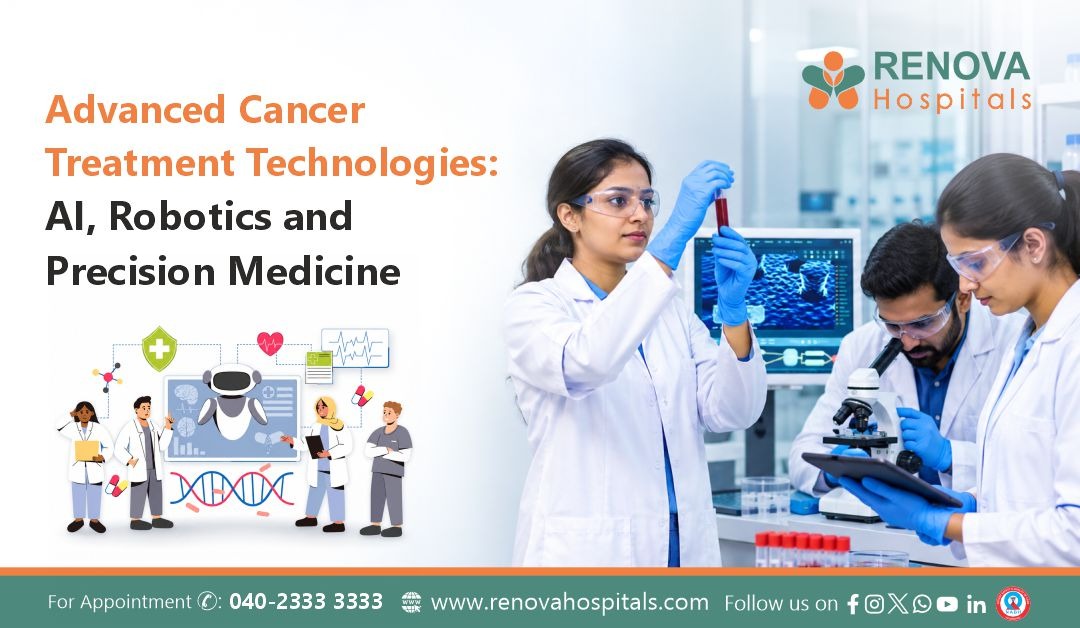
Cancer treatment has evolved dramatically. For decades, oncologists treated cancers based primarily on where they originated in the body, breast, lung, or colon. While effective for many patients, this "one-size-fits-all" approach has significant limitations.
Today, precision oncology changes everything. At Renova Hospitals, patients receive personalised cancer treatment tailored to the genetic makeup of their tumour, not just its location.
Targeted therapies mean fewer side effects and better survival outcomes
Effective across breast, lung, leukemia, melanoma and many more cancer types
Genetic testing guides treatment selection and detects resistance over time
AI + liquid biopsy are making cancer detection and monitoring faster and smarter
What Is Precision Oncology?
Precision oncology, also called personalised cancer treatment or targeted cancer therapy, is a medical approach where treatment is customised based on the unique biological and genetic characteristics of each patient's cancer.
Instead of using the same treatment for every patient with a given cancer type, precision oncology identifies the specific genetic mutations and molecular changes driving tumour growth, then selects therapies designed to target those exact drivers.
Treatment decisions are based on:
Genetic mutations present in the tumour
Molecular markers and biomarker testing results
Patient's overall health and medical history
Simple answer: Precision oncology treats the biology of your cancer, not just its location.
How Does Personalised Cancer Treatment Work?
Precision oncology relies on advanced diagnostic tools that reveal the molecular makeup of a patient's cancer.
Key diagnostic technologies include:
Next-generation sequencing (NGS) - maps the full genetic profile of a tumour
Molecular profiling - identifies specific cancer-driving mutations
Liquid biopsy - detects cancer DNA through a simple blood test
Tumour biomarker testing - flags molecular targets for therapy
Once testing identifies specific mutations, oncologists select therapies that block the molecular pathways cancer cells depend on. Studies show that around 80% of precision oncology drugs rely on genomic biomarkers detectable through next-generation sequencing, making molecular testing essential for selecting the right treatment.
Real-world examples of targeted therapy:
HER2-targeted therapy in breast cancer
EGFR inhibitors in non-small cell lung cancer
BRAF inhibitors in melanoma
FLT3 inhibitors in leukemia
Precision oncology also helps determine which patients are most likely to benefit from immunotherapy or combination treatments, making every treatment decision smarter and more individualised.
What Are the Benefits of Precision Oncology?
1. More Effective Treatment
Targeted therapies attack specific cancer cell mechanisms while sparing healthy tissue. Because treatment is selected based on molecular characteristics, it is often significantly more effective than generalised approaches.
2. Fewer Side Effects
Traditional chemotherapy affects healthy cells throughout the body. Precision therapies focus on cancer-specific pathways, reducing systemic toxicity and improving the patient's experience during treatment.
3. Better Survival Outcomes
Studies consistently show improved survival rates in patients treated with molecularly guided therapy. Identifying the right treatment earlier in the cancer journey leads to better disease control and long-term outcomes.
4. Smarter Clinical Decision-Making
Precision oncology helps oncologists determine:
Which patients will respond to immunotherapy
Who needs chemotherapy versus targeted therapy
Who can safely avoid aggressive treatment
This avoids unnecessary toxicity and allows for more patient-friendly treatment planning. In some precision medicine trials, over 30% of patients responded to personalised therapies compared with about 5% receiving non-personalised treatments, highlighting the impact of matching treatment to tumour genetics.
Which Cancers Can Be Treated with Precision Oncology?
Precision oncology is used across many cancer types, but has shown the strongest results in cancers where specific genetic mutations are well characterised.
As the number of targeted therapies increases, the proportion of cancer patients eligible for genome-guided treatments has steadily grown, from about 5% in 2006 to over 8% by 2018, and continues to rise as new drugs and biomarkers are discovered.
Cancers commonly treated with precision oncology:
Breast cancer (HER2+, BRCA-mutated)
Lung cancer (EGFR, ALK, ROS1 mutations)
Colorectal cancer (KRAS, MSI-H testing)
Ovarian cancer
Prostate cancer
Leukaemia and lymphoma
Multiple myeloma
The oncology teams at Renova Hospitals integrate precision medicine strategies into treatment planning whenever clinically appropriate, ensuring patients benefit from the latest advances in cancer science.
What Is the Role of Genetic Testing in Cancer Care?
Genetic testing is the cornerstone of precision oncology. It allows oncologists to study both inherited mutations and tumour-specific genetic changes that directly influence treatment decisions.
Identify inherited cancer syndromes (such as BRCA1/BRCA2)
Predict how a patient will respond to specific therapies
Detect resistance mutations that develop over time
Guide targeted therapy selection and sequencing
Why does this matter? Cancers can develop resistance to certain treatments. Genetic testing identifies when this happens, allowing doctors to pivot to more effective alternatives quickly.
In 2026, comprehensive genetic profiling has become a standard component of advanced oncology care worldwide. Early molecular testing means the right therapy is chosen at the right time, improving outcomes and reducing wasted treatment cycles.
Current advancements shaping the future of precision oncology include:
Artificial intelligence (AI) - analysing vast genomic datasets to identify patterns and predict treatment responses
Liquid biopsy - enabling non-invasive early cancer detection and monitoring
Next-generation targeted therapy - new drugs hitting previously undruggable cancer targets
Immunotherapy combinations - pairing precision targeted therapy with immune checkpoint inhibitors for stronger results
These technologies are making cancer treatment more accurate, less toxic, and increasingly individualised. Over the next decade, AI-driven oncology and real-time tumour monitoring through liquid biopsies are expected to fundamentally transform how cancer is diagnosed and treated.
Personalised Cancer Care at Renova Hospitals
At Renova Hospitals, every cancer patient receives a treatment plan built around their unique disease, not a standard protocol.
The oncology teams at Renova Hospitals are committed to:
Evidence-based precision oncology - treatments grounded in the latest clinical research
Comprehensive molecular evaluation - full genetic and biomarker profiling for every appropriate patient
Individualised treatment planning - no two patients receive identical plans
Compassionate, patient-centred care - supporting the whole person through every stage of treatment
Access to advanced cancer treatment options - targeted therapies, immunotherapy, and clinical trial opportunities
By thoroughly evaluating each patient's tumour biology and overall health, Renova Hospitals' oncology specialists ensure that every treatment decision is made with precision, purpose, and the patient's best interests at the centre.
Final Thoughts
Precision oncology is not the future of cancer care, it is the present.
By understanding the genetic makeup of each tumour, oncologists can now select smarter, more targeted treatments that are more effective and less harmful than traditional approaches.
If you or a loved one is facing a cancer diagnosis, personalised cancer treatment at Renova Hospitals offers the most advanced, evidence-based approach available today.
Consult the oncology specialists at Renova Hospitals to explore precision oncology options and receive expert, individualised guidance for your cancer care journey.
Our healthcare specialists are equipped with the knowledge and skills to
provide you with the support you require. From consultation to diagnosis to treatments, our experts are
dedicated to helping you.
Dr. Rajesh Bollam
Medical Oncology, Head & Neck Oncology
14 years Experience
Telugu, English, Hindi, Kannada
Renova Century Hospital - Banjara Hills, Renova Soumya Cancer Centre - Secunderabad, Renova Bannu Hospitals - Warangal
Our healthcare specialists are equipped with the
knowledge and skills to provide you with the support you require. From consultation to diagnosis to
treatments, our experts are dedicated to helping you.
Gynaecologists – When can you see one, what to expect, common procedures
04 March 2026
|
By
Our first reaction to the words “gynaecology,” “reprodu...
Find quick answers to common questions about our services, doctors, and care at Renova Hospitals. So you can feel informed and confident at every step.
What is precision oncology?
A treatment approach that targets the genetic mutations driving your tumour, not just the cancer type.
How is it different from chemotherapy?
Chemo attacks all rapidly dividing cells; precision oncology targets only cancer-specific pathways, causing fewer side effects.
Which cancers can be treated with precision oncology?
Breast, lung, colorectal, ovarian, prostate, leukaemia, lymphoma, and melanoma, among many others.
What tests are needed before starting treatment?
Molecular profiling, next-generation sequencing (NGS), biomarker testing, and in some cases, a liquid biopsy.
Does it work for early-stage cancer, too?
Yes, molecular testing increasingly guides treatment decisions in both early-stage and advanced cancers.
What happens if my cancer becomes resistant to treatment?
Genetic testing can detect resistance mutations as they develop, allowing your oncologist to switch to a more effective therapy quickly.
How does Renova Hospitals approach precision oncology?
Renova's oncology specialists conduct comprehensive molecular evaluations for every appropriate patient, building fully individualised treatment plans backed by the latest evidence, with a strong focus on patient safety and quality of life.