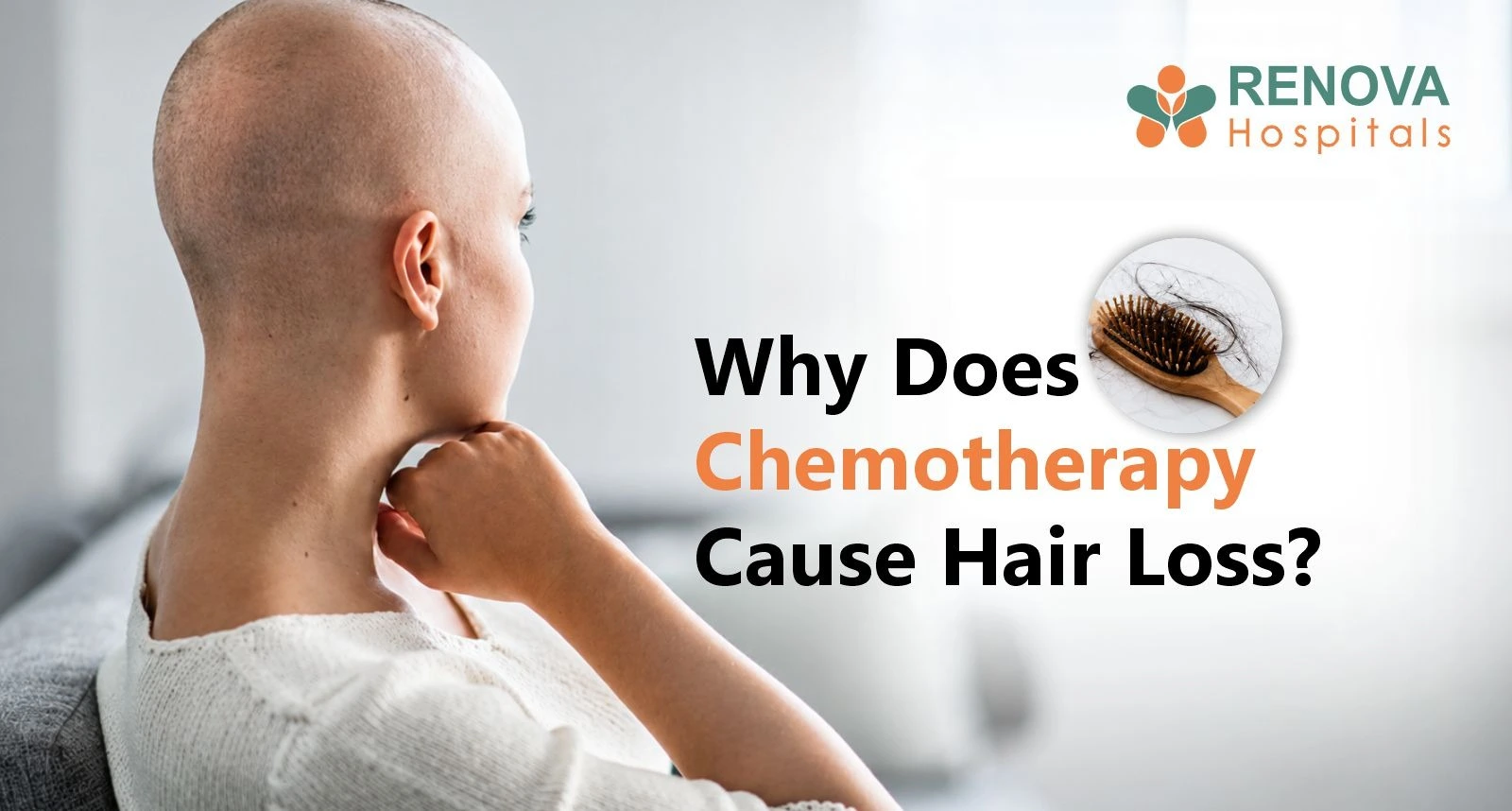
Chemotherapy can cause
hair loss because many
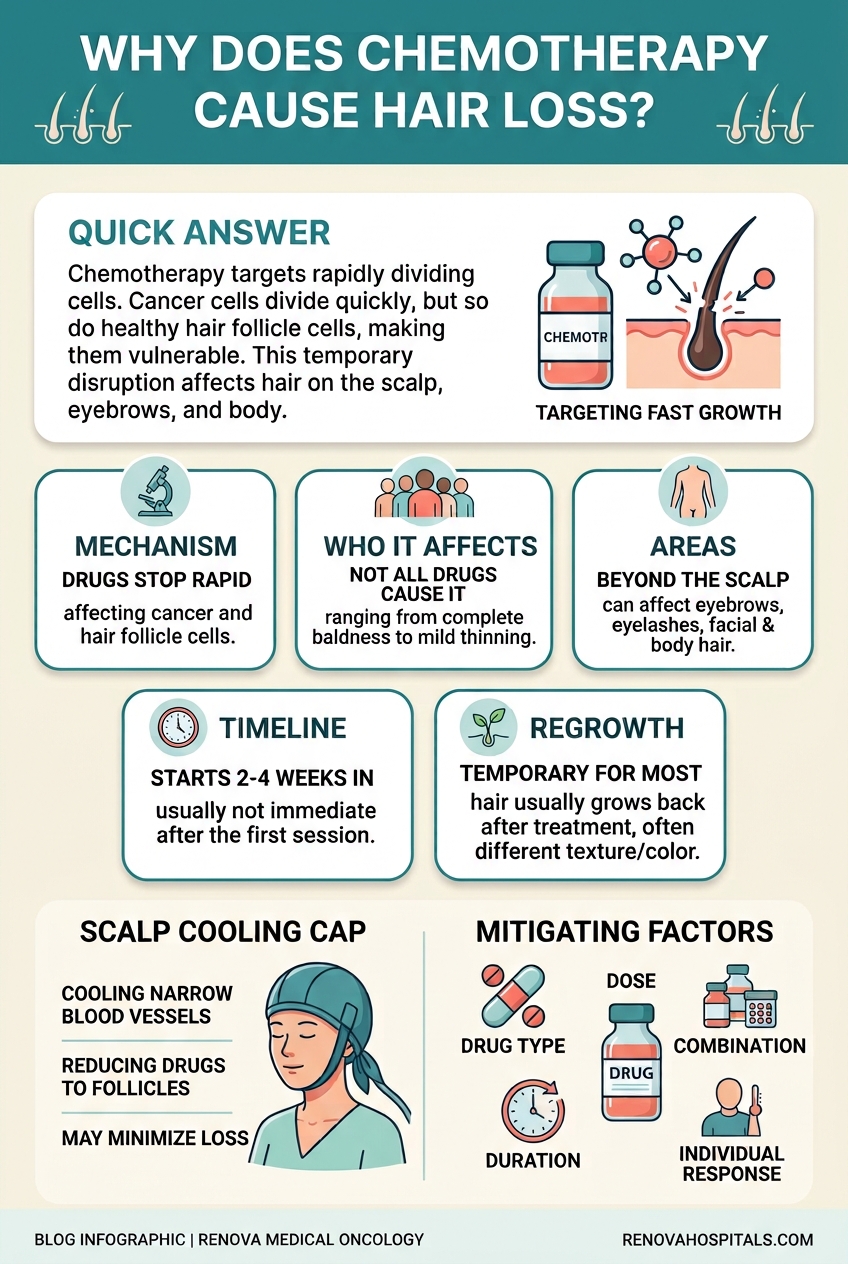
chemotherapy medicines target rapidly dividing cells. Cancer cells divide quickly, but cells in the hair follicles also grow rapidly, making them vulnerable to certain chemotherapy drugs. Hair loss may affect the
scalp, eyebrows, eyelashes, and body hair. Not every chemotherapy treatment causes complete hair loss, and in most cases, hair begins to grow back after treatment ends.
Key Takeaways
- Chemotherapy targets rapidly dividing cancer cells but can also affect healthy hair-follicle cells.
- Not every chemotherapy medicine causes hair loss.
- Hair loss may range from mild thinning to complete scalp hair loss.
- Eyebrows, eyelashes, facial hair, and body hair may also be affected.
- Hair loss often begins within the first few weeks after starting certain chemotherapy treatments.
- Hair usually begins growing back after chemotherapy is completed.
- New hair may temporarily look or feel different from the hair you had before treatment.
- Scalp cooling may reduce chemotherapy-related hair loss for some patients and treatment regimens.
Why Does Chemotherapy Affect Hair Follicles?
Chemotherapy medicines are designed to destroy or slow the growth of rapidly dividing cells.
Cancer cells often multiply quickly, which makes them vulnerable to chemotherapy. However, chemotherapy cannot always distinguish cancer cells from certain healthy cells that also divide rapidly.
Hair follicles contain some of the fastest-growing cells in the body.
When particular chemotherapy medicines reach these follicles, they can temporarily disrupt the normal hair-growth cycle. The hair becomes weaker and eventually falls out.
Does Every Chemotherapy Patient Lose Their Hair?
No.
One of the most common misconceptions about chemotherapy is that everyone undergoing treatment will become completely bald.
The likelihood and severity of hair loss depend on several factors, including:
- Type of chemotherapy medicine
- Combination of medicines used
- Dose
- Treatment schedule
- Route of administration
- Duration of treatment
- Individual response to treatment
Some chemotherapy medicines cause almost complete hair loss, while others cause only mild or moderate thinning.
Some treatments may cause very little noticeable hair loss.
Your medical oncologist can usually explain the likelihood of hair loss before treatment begins based on the planned chemotherapy regimen.
When Does Hair Loss Start After Chemotherapy?
Hair loss does not usually begin immediately after the first chemotherapy session.
For treatments known to cause alopecia, noticeable shedding often begins approximately 2 to 4 weeks after treatment starts, although timing varies between patients and chemotherapy regimens.
Some people first notice:
- More hair on their pillow
- Increased hair in the shower
- Hair coming out while brushing
- Scalp tenderness or sensitivity
- Rapid thinning over several days
Hair loss may occur gradually or relatively quickly.
Does Chemotherapy Only Cause Scalp Hair Loss?
No.
Chemotherapy-related hair loss can affect hair anywhere on the body.
Depending on the medicines used, patients may lose or experience thinning of:
- Scalp hair
- Eyebrows
- Eyelashes
- Facial hair
- Underarm hair
- Arm and leg hair
- Pubic hair
Different areas may lose hair at different times.
Why Do Some Chemotherapy Drugs Cause More Hair Loss Than Others?
Chemotherapy medicines work through different biological mechanisms.
Some strongly affect rapidly dividing hair-follicle cells, while others have a smaller effect on them.
Hair-loss risk may also increase when several chemotherapy medicines are combined.
Therefore, two patients receiving chemotherapy for different cancers may have completely different experiences with hair loss.
The presence or absence of hair loss does not indicate whether chemotherapy is working.
Does More Hair Loss Mean Chemotherapy Is Working Better?
No.
The amount of hair a patient loses is not a measure of how effectively chemotherapy is treating cancer.
A person can have:
- Significant hair loss with an effective treatment
- Minimal hair loss with an equally effective treatment
- No hair loss with certain effective cancer medicines
Treatment response is assessed using appropriate clinical evaluation, blood tests, imaging,
tumour markers when relevant, and other cancer-specific investigations.
Hair loss should never be used to judge treatment success.
Is Chemotherapy Hair Loss Permanent?
In most patients, chemotherapy-related hair loss is temporary.
Hair follicles usually recover after chemotherapy exposure decreases or treatment ends.
Permanent hair loss is uncommon but may occur with certain medicines, very high cumulative doses, or particular treatment situations.
Your
oncologist can explain whether your specific treatment carries any risk of long-term hair changes.
When Does Hair Grow Back After Chemotherapy?
Hair may begin growing again within several weeks after chemotherapy is completed, although the timing varies.
At first, new hair may be:
- Very fine
- Soft
- Different in colour
- Curlier than before
- Straighter than before
- Different in texture
Some patients experience temporary curls commonly called "chemo curls."
As the hair-growth cycle normalises, texture and colour may gradually move closer to their previous appearance, although some changes can persist.
Why Does Hair Sometimes Grow Back Differently?
Chemotherapy temporarily affects the cells responsible for producing and shaping hair.
As follicles recover, they may initially produce hair differently.
This can temporarily change:
- Thickness
- Texture
- Curl pattern
- Colour
These changes do not usually indicate a health problem.
Can Chemotherapy Cause Scalp Pain or Tenderness?
Some patients experience scalp tenderness, tingling, itching, or sensitivity shortly before or during hair loss.
The scalp may also become more sensitive once the protective layer of hair is gone.
Patients can reduce discomfort by:
- Using mild shampoo
- Avoiding very hot water
- Using a soft towel
- Protecting the scalp from direct sunlight
- Wearing soft hats or scarves
- Avoiding harsh chemicals
Persistent scalp rashes, sores, swelling, or signs of infection should be reported to the cancer care team.
Can Hair Loss From Chemotherapy Be Prevented?
It cannot always be prevented.
However,
scalp cooling may reduce hair loss in selected patients receiving certain chemotherapy regimens.
What Is Scalp Cooling?
Scalp cooling involves wearing a specialised cooling cap before, during, and sometimes after chemotherapy.
Cooling causes blood vessels in the scalp to narrow temporarily, potentially reducing the amount of chemotherapy reaching hair follicles.
It may also reduce the metabolic activity of follicle cells.
Scalp cooling does not work equally well for every patient or chemotherapy regimen and is not suitable in every clinical situation.
Discuss its suitability with your medical oncologist before treatment.
Should You Cut Your Hair Before Chemotherapy?
Cutting hair before chemotherapy is a personal choice.
Some patients prefer a shorter hairstyle because:
- Shedding may feel easier to manage.
- Hair care becomes simpler.
- The transition to significant hair loss may feel less sudden.
- Wigs, scarves, or caps may be easier to use.
Others prefer keeping their usual hairstyle for as long as possible.
There is no medically correct choice.
Should You Shave Your Head Before Chemotherapy?
You do not have to shave your head.
Some patients choose to shave once significant shedding begins because they find it emotionally or practically easier.
If shaving, avoid extremely close razor shaving because small cuts may irritate the scalp or increase infection risk, particularly when immunity is reduced during chemotherapy.
An electric clipper may be a gentler option.
How Should You Care for Your Hair During Chemotherapy?
Hair becomes more fragile during treatments that affect the follicles.
Gentle hair care may reduce unnecessary breakage.
Use Mild Products
Choose gentle shampoos and avoid aggressive scalp scrubbing.
Avoid Excessive Heat
Limit:
- Hair dryers on high heat
- Straighteners
- Curling irons
- Hot rollers
Avoid Harsh Chemical Treatments
Ask your oncology team before using:
- Hair dyes
- Bleach
- Chemical straightening
- Perms
Brush Gently
Use a wide-toothed comb or soft brush and avoid pulling or tugging.
Protect Your Scalp
After hair loss, protect exposed skin from:
- Strong sunlight
- Cold temperatures
- Excessive dryness
Use suitable head coverings and sun protection when outdoors.
Can Hair Dye Be Used During Chemotherapy?
Hair and scalp may become more sensitive during
chemotherapy.
Hair colouring, bleaching, straightening, and other chemical treatments may increase irritation or breakage.
It is best to discuss hair treatments with your oncology team before using them during chemotherapy or immediately after treatment.
Can Vitamins or Supplements Stop Chemotherapy Hair Loss?
There is no vitamin or supplement proven to reliably prevent chemotherapy-induced hair loss.
Patients should be cautious about products advertised as:
- "Chemotherapy hair-loss cures"
- "Cancer detox supplements"
- "Natural chemotherapy protectors"
- High-dose antioxidant supplements
Some supplements can interact with cancer treatment.
Do not start vitamins, herbal medicines, or nutritional supplements during chemotherapy without discussing them with your
oncologist.
What Should Patients Avoid?
- Stopping or delaying chemotherapy because of hair loss without discussing it with the oncologist
- Taking unverified hair-growth supplements
- Using harsh chemical treatments on a sensitive scalp
- Excessive heat styling
- Aggressive brushing
- Scratching an irritated scalp
- Assuming hair loss means chemotherapy is working better
- Assuming absence of hair loss means treatment has failed
- Using medications for hair growth without oncology approval
How Can Patients Cope With Chemotherapy Hair Loss?
Hair loss can have a significant emotional impact.
For many patients, it is one of the most visible reminders of cancer treatment.
Practical options include:
- Wigs
- Scarves
- Caps
- Turbans
- Short hairstyles
- Scalp cooling when appropriate
Some patients prefer discussing hair loss with family members before it occurs, particularly when young children are involved.
Psychological support or cancer-support groups can also help patients who find changes in appearance particularly difficult.
Emotional wellbeing is an important part of comprehensive cancer care.
Medical Review
Chemotherapy-related hair loss is usually temporary and occurs because some cancer medicines affect rapidly dividing hair-follicle cells along with cancer cells.
The extent of hair loss varies considerably according to the chemotherapy regimen.
Patients should discuss expected hair changes with their medical oncologist before treatment so they can understand
what to expect and explore scalp cooling or other supportive options when appropriate.
Consult a Medical Oncology Team at Renova Hospitals
Hair loss is only one of the many concerns patients may experience during cancer treatment. Understanding expected side effects before chemotherapy begins can make treatment easier to prepare for and manage.
At
Renova Hospitals, our
Medical Oncology specialists provide personalised chemotherapy planning, side-effect management, nutritional guidance, supportive care, and ongoing monitoring throughout the cancer treatment journey.
Request a consultation or call 040 2333 3333.
Need Medical Guidance?
Consult Renova Medical Oncology if you are preparing to begin chemotherapy and want to understand your expected side effects, including hair loss, nausea, fatigue, infection risk, or changes in appetite.
Your oncology team can explain which side effects are likely with your specific treatment rather than relying on general information about chemotherapy.
When Do Chemotherapy Side Effects Need Urgent Care?
Contact your cancer care team promptly or seek urgent medical attention if you develop:
- Fever during chemotherapy
- Difficulty breathing
- Severe or persistent vomiting
- Uncontrolled diarrhoea
- Unusual bleeding
- Severe weakness or confusion
- Signs of dehydration
- Severe mouth sores preventing eating or drinking
- Redness, swelling, pus, or significant infection of the scalp or skin
- Any rapidly worsening symptom after chemotherapy
Hair loss itself is usually not a medical emergency, but chemotherapy can cause other side effects that require prompt treatment.
Hair Loss Is Temporary for Most Patients — Cancer Treatment Remains the Priority
Chemotherapy-related hair loss can be emotionally difficult, but for most patients, it is temporary.
Knowing what to expect, caring gently for the scalp, considering supportive options such as wigs or scalp cooling when appropriate, and discussing concerns openly with the oncology team can make this stage of treatment easier to manage.
At Renova Hospitals, cancer care focuses not only on treating the disease but also on helping patients manage the physical and emotional effects of treatment.
Medical References
Medically Reviewed & Approved By:
Dr. Rajesh Bollam
MBBS (Gold Medalist) DNB - General Medicine DM - Medical Oncology ECMO - European Certified Medical Oncologist
This article has been reviewed and approved by a qualified medical professional to ensure accuracy, credibility, and adherence to current clinical standards.