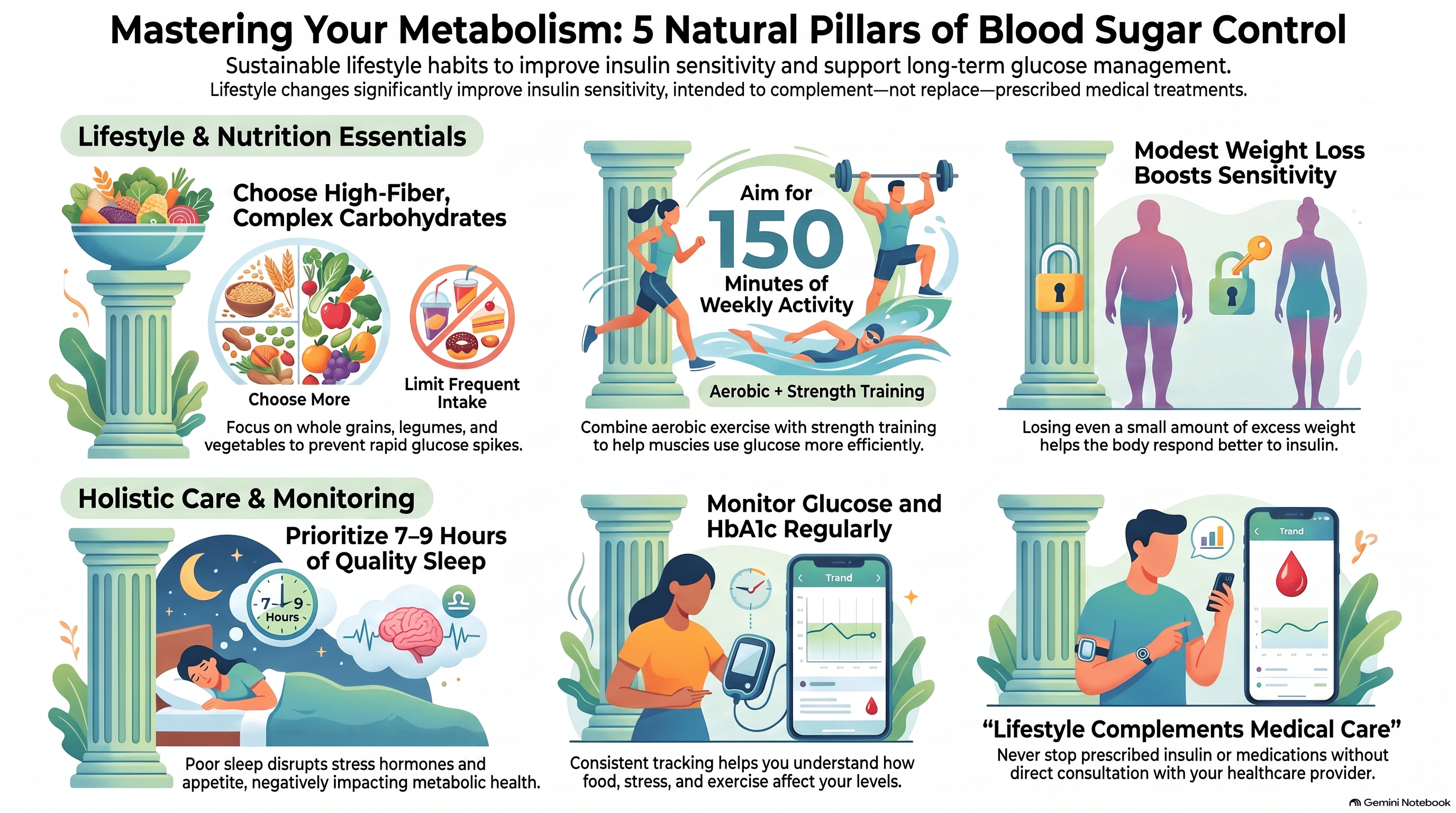
Blood sugar can often be managed more effectively through healthy eating, regular physical activity, weight management, adequate sleep, and consistent monitoring. These habits improve insulin sensitivity and support better glucose control. However, lifestyle changes should complementโnot replaceโprescribed diabetes medicines or insulin. People with diabetes should make major changes to diet, exercise, or medication in consultation with their healthcare provider.
Key Takeaways
- Choose high-fibre, minimally processed foods and control carbohydrate portions.
- Regular physical activity helps the body use glucose more efficiently.
- Losing excess weight can improve insulin sensitivity.
- Adequate sleep and stress management support better metabolic health.
- Monitor blood glucose as recommended to understand how lifestyle changes affect you.
- Never stop diabetes medicines or insulin without medical advice.
- There is no single food, herb, or home remedy that can cure diabetes.
Why Is Blood Sugar Control Important?
Glucose is an essential source of energy, but persistently high blood glucose can gradually damage blood vessels, nerves, kidneys, eyes, and other organs.
Poorly controlled diabetes increases the risk of:
- Heart disease
- Stroke
- Kidney disease
- Nerve damage
- Diabetic foot problems
- Eye disease
- Delayed wound healing
The goal is not simply to lower a single glucose reading. Effective diabetes management aims to keep blood sugar within an individualised target range while also managing
blood pressure, cholesterol,
body weight, and other cardiovascular risks.
1. Choose Carbohydrates Wisely
Carbohydrates have the greatest immediate effect on blood glucose, but this does not mean people with diabetes need to eliminate them completely.
The type, quantity, and combination of carbohydrates matter.
Choose More
- Whole grains
- Vegetables
- Whole fruits
- Lentils
- Beans
- Chickpeas
- Nuts and seeds
- High-fibre foods
Limit Frequent Intake Of
- Sugary drinks
- Sweets
- Refined bakery products
- Highly processed snacks
- Sweetened breakfast cereals
- Large portions of refined carbohydrates
Combining carbohydrates with vegetables, protein, and fibre can create a more balanced meal.
Should People With Diabetes Stop Eating Rice?
Not necessarily.
Rice can be included in an appropriate
diabetes meal plan. Portion size, the type of rice, what it is eaten with, total carbohydrate intake, and individual glucose response all matter.
Instead of eliminating a single food, focus on the overall quality and balance of your diet.
2. Exercise Regularly
Physical activity is one of the most effective lifestyle measures for improving blood glucose control.
During exercise, muscles use glucose for energy. Regular activity can also improve insulin sensitivity, meaning the body responds more effectively to insulin.
Adults are generally encouraged to aim for around 150 minutes of moderate-intensity aerobic activity per week, depending on their overall health.
Options include:
- Brisk walking
- Cycling
- Swimming
- Dancing
- Jogging
- Sports
Strength training can also be beneficial because maintaining muscle supports glucose metabolism.
Avoid Sitting for Long Periods
Even if you exercise regularly, prolonged sitting can negatively affect metabolic health.
Try to stand, walk, or move periodically throughout the day, particularly if you have a desk-based job.
People using insulin or medicines that can cause low blood glucose should discuss exercise planning with their healthcare provider.
3. Maintain a Healthy Weight
Excess body fat, particularly around the abdomen, is strongly associated with insulin resistance.
For people who are overweight or obese, losing even a modest amount of weight may improve:
- Insulin sensitivity
- Blood glucose
- Blood pressure
- Cholesterol
- Overall cardiovascular risk
Weight loss should be gradual and sustainable.
Avoid crash diets, extreme fasting, or unverified weight-loss supplements.
A healthier approach combines:
- Balanced nutrition
- Appropriate portions
- Regular physical activity
- Adequate sleep
- Long-term behavioural changes
People who are already at a healthy weight should focus on maintaining muscle, staying active, and eating a balanced diet rather than attempting unnecessary weight loss.
4. Prioritise Sleep and Manage Stress
Blood sugar management is not only about food.
Sleep and stress can also influence glucose regulation.
Get Enough Sleep
Most adults should aim for approximately 7โ9 hours of quality sleep each night.
Poor or irregular sleep may affect:
- Insulin sensitivity
- Appetite
- Food choices
- Stress hormones
- Body weight
Persistent loud snoring, pauses in breathing during sleep, morning headaches, or excessive daytime sleepiness may indicate sleep apnoea and should be evaluated.
Manage Chronic Stress
During periods of stress, hormones such as cortisol and adrenaline can affect blood glucose.
Healthy stress-management strategies may include:
- Regular exercise
- Yoga
- Meditation
- Breathing exercises
- Spending time outdoors
- Maintaining social connections
- Taking regular breaks from work
- Maintaining consistent sleep habits
Stress management should complement appropriate diabetes treatment rather than replace it.
5. Monitor Your Blood Sugar Regularly
Blood glucose monitoring helps you understand how food, exercise, medicines, illness, stress, and sleep affect your glucose levels.
Depending on your diabetes type and treatment, your doctor may recommend:
- Fasting blood glucose
- Post-meal glucose testing
- HbA1c
- Self-monitoring with a glucose meter
- Continuous glucose monitoring in selected individuals
What Is HbA1c?
HbA1c provides an estimate of average blood glucose over approximately the previous two to three months.
Your target should be individualised according to factors such as:
- Age
- Type and duration of diabetes
- Pregnancy
- Kidney function
- Other medical conditions
- Risk of hypoglycaemia
- Current medications
Do not compare your glucose targets directly with another person's treatment plan.
Can Drinking More Water Lower Blood Sugar?
Adequate hydration is important for overall health and can help prevent
dehydration when blood glucose is elevated.
However, drinking excessive water is not a treatment for diabetes and cannot replace medication, insulin, healthy eating, or medical evaluation.
Persistent excessive thirst may itself be a symptom of uncontrolled blood glucose.
Are There Foods That Naturally Lower Blood Sugar?
No single food can rapidly or reliably lower blood glucose in the way prescribed diabetes treatment can.
Foods such as vegetables, whole grains, legumes, nuts, seeds, and other high-fibre options can support healthier glucose control as part of an overall balanced eating pattern.
Be cautious of claims that cinnamon, fenugreek, bitter gourd, herbal powders, juices, or other home remedies can "cure" diabetes.
Some products may interact with medicines or cause unpredictable changes in glucose.
Can Diabetes Be Controlled Without Medicine?
Some people with early type 2 diabetes or
prediabetes may achieve significant improvements through lifestyle changes, particularly when excess weight is reduced.
However, many people require medication, and some require insulin.
Whether medicines can be reduced depends on:
- Type of diabetes
- HbA1c
- Duration of diabetes
- Pancreatic function
- Body weight
- Other medical conditions
- Response to lifestyle changes
Medication should never be stopped solely because home glucose readings temporarily improve.
What Should People With Diabetes Avoid?
- Stopping medicines without medical advice
- Skipping meals while taking glucose-lowering medication
- Following extreme fasting plans without supervision
- Drinking sugary beverages regularly
- Taking unverified herbal diabetes remedies
- Assuming "sugar-free" automatically means carbohydrate-free
- Ignoring consistently high glucose readings
- Ignoring repeated episodes of low blood sugar
- Using another person's diabetes medication
- Delaying medical care for diabetic wounds or infections
Medical Review
Lifestyle measures are fundamental to diabetes management, but "natural blood sugar control" should never be interpreted as avoiding appropriate medical treatment.
Diabetes management should address glucose, blood pressure, cholesterol, kidney health, eye health, foot health, nutrition, physical activity, and cardiovascular risk together.
Consult a Diabetes Care Team at Renova Hospitals
Managing diabetes effectively requires more than simply avoiding sugar.
At
Renova Hospitals, our Endocrinology and Diabetology specialists can assess your blood glucose, HbA1c, weight, medications, diet, and other metabolic risk factors to develop an individualised diabetes management plan.
Request a consultation or call 040 2333 3333.
Need Medical Guidance?
Consult Renova
Endocrinology or Diabetology if your fasting or post-meal blood glucose remains elevated, your HbA1c is above your recommended target, or you experience frequent fluctuations despite following your current treatment plan.
When Does High or Low Blood Sugar Need Urgent Care?
Seek urgent medical attention if you develop:
- Severe weakness or confusion
- Loss of consciousness
- Seizures
- Persistent vomiting
- Severe dehydration
- Difficulty breathing
- Very high blood glucose with worsening symptoms
- Severe or persistent hypoglycaemia
- Inability to eat or drink
- New diabetic foot infection with fever or spreading redness
Severe high or low blood glucose can become a medical emergency and should not be managed solely with home remedies.
Better Blood Sugar Control Starts With the Right Plan
Healthy food, regular exercise, weight management, good sleep, and consistent glucose monitoring are powerful tools for diabetes management.
At Renova Hospitals, our diabetes care team can help identify what is affecting your blood glucose and create a personalised plan that combines lifestyle changes with appropriate medical treatment.
Medical References
Medically Reviewed & Approved By:
Dr K. Krishna Prabhakar
Internal Medicine, Critical Care, Geriatric Medicine
MBBS โ Dr. NTR University of Health Sciences, Andhra Pradesh (2006) MD (Internal Medicine) โ Dr. NTR University of Health Sciences, Andhra Pradesh (2010)
This article has been reviewed and approved by a qualified medical professional to ensure accuracy, credibility, and adherence to current clinical standards.