By Renova Hospitals
February 21, 2026
Skin Cancer: Symptoms, Stages and Modern Treatment Options in Hyderabad
Key Takeaways
- Skin cancer is the most common cancer worldwide, largely driven by ultraviolet (UV) radiation exposure.
- It is broadly classified into melanoma and non-melanoma skin cancer (NMSC).
- Basal cell carcinoma (BCC) is the most common type, while melanoma is the most aggressive.
- When detected early, survival rates are extremely high often close to 99%.
- Routine skin checks and proper sun protection can greatly lower the risk.
- Modern treatments such as Mohs surgery, immunotherapy, targeted therapy, and precision radiation are available in Hyderabad.
What Is Skin Cancer?
Skin cancer is being diagnosed more often today than in the past, and doctors are seeing more cases each year due to increased ultraviolet (UV) exposure, lifestyle changes, and environmental factors. Most skin cancers respond very well to treatment when identified early, certain types particularly melanoma can become life-threatening if diagnosis is delayed.
At Renova Hospitals, Hyderabad, we provide complete skin cancer screening, accurate diagnosis, modern surgical management, immunotherapy, targeted therapy, and precision radiation therapy with a team of experienced cancer specialists working together. Detecting the condition early and starting the appropriate treatment greatly improves recovery and long-term health.
Types of Skin Cancer
Skin cancer is classified into two major categories:
1. Non-Melanoma Skin Cancer (NMSC)
This accounts for nearly 99% of all skin cancers.
Basal Cell Carcinoma (BCC)
- Most common skin cancer worldwide
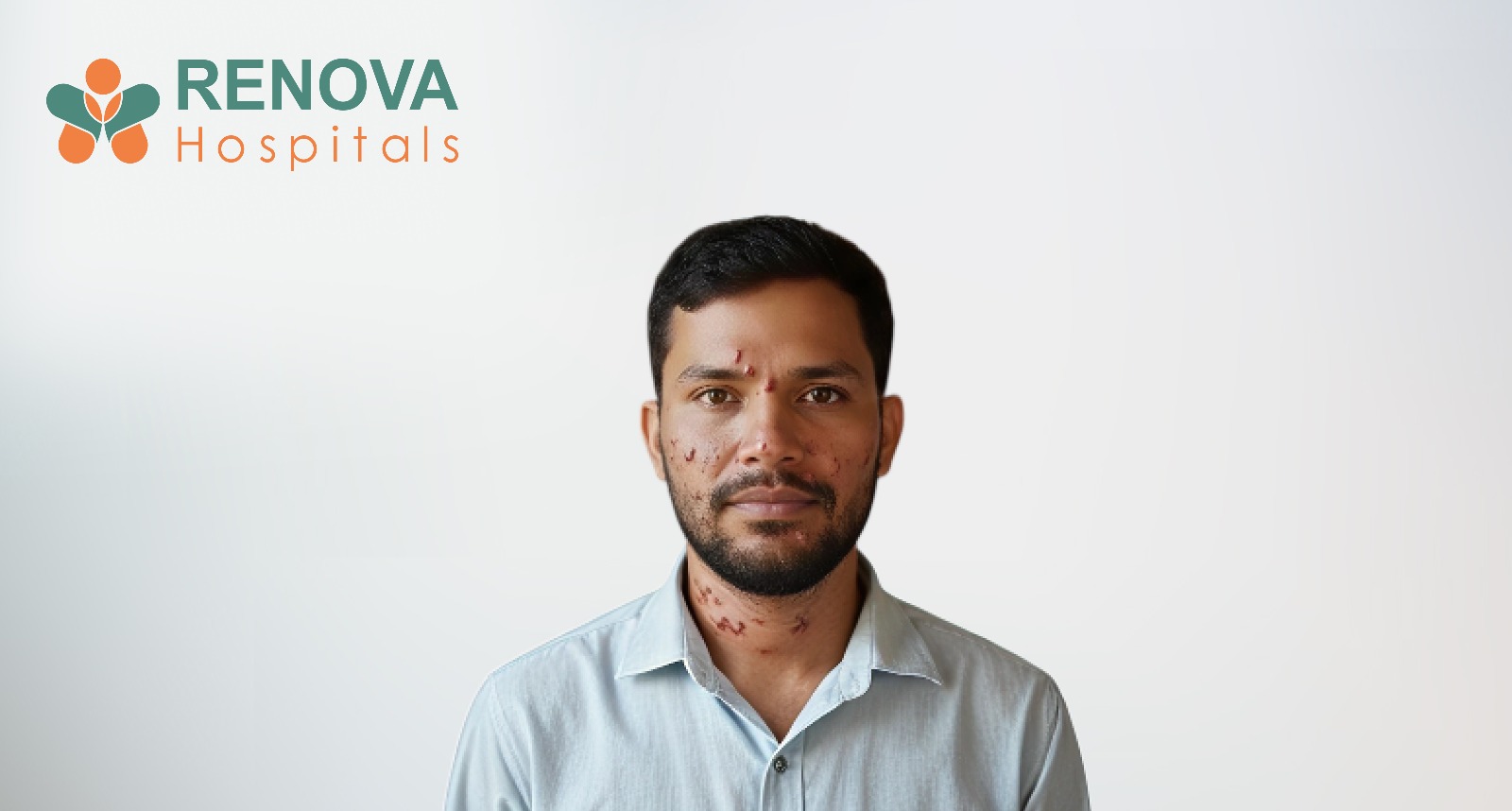
- Appears as a pearly bump, pink patch, or non-healing sore
- It usually does not spread to other organs, but if ignored, it can damage nearby skin and tissue.
Squamous Cell Carcinoma (SCC)
- It tends to behave more aggressively than basal cell carcinoma.
- Appears as a red, scaly patch or crusted lesion
- Can spread to lymph nodes if untreated
NMSC incidence is 18 to 20 times higher than melanoma globally.
2. Melanoma (Melanoma Skin Cancer – MSC)
Melanoma develops from melanocytes, the cells responsible for skin pigmentation. It is less common but far more dangerous.
Main Subtypes:
- Superficial Spreading Melanoma (60–70%)
- Nodular Melanoma
- Lentigo Maligna Melanoma
- Acral Lentiginous Melanoma (common in darker skin tones)
Melanoma has the potential to spread through lymph nodes and the bloodstream if not treated in time.
What Causes Skin Cancer?
Long-term exposure to strong sunlight is the leading cause of skin cancer. UV rays damage DNA in skin cells and interfere with tumour suppressor genes such as p53.
Other factors that may increase the risk include:
- Fair skin that burns easily
- History of repeated sunburns
- Age above 50 years
- Male gender
- Family history of skin cancer
- Weakened immune system (HIV, transplant patients)
- Radiation exposure
- Arsenic exposure
- Certain genetic syndromes
People with darker skin can also develop skin cancer and should have any unusual skin changes checked.
Skin Cancer Statistics: Global and Indian Perspective
Globally:
- Skin cancer accounts for 1 in 3 diagnosed cancers.
- Non-melanoma skin cancers exceed 1000000 new cases annually.
- Melanoma cases continue to rise worldwide.
In India, although incidence rates are lower than in Western countries, delayed diagnosis often leads to higher mortality. In cities like Hyderabad, doctors are observing more cases of skin-related cancers:
- Higher UV exposure
- Occupational sun exposure
- Lifestyle changes
- Increased awareness and improved diagnostic facilities
Regular screening plays an important role in preventing serious complications.
What Are the Early Signs of Skin Cancer?
Use the ABCDE Rule for Melanoma:
- A – Asymmetry
- B – Border irregularity
- C – Color variation
- D – Diameter >6 mm
- E – Evolving (changing shape or size)
Other warning signs:
- A sore that does not heal
- A pearly or waxy bump
- Scaly red patches
- Bleeding or crusting lesions
- Rapidly growing dark mole
If you notice any unusual or changing skin lesions, it is advisable to seek medical evaluation without delay.
How Is Skin Cancer Diagnosed?
Diagnosis typically involves:
- Clinical skin examination
- Dermoscopy
- Skin biopsy (shave, punch, incisional, or excisional)
- Histopathological evaluation
For melanoma, staging is based on:
- Breslow thickness
- TNM classification
- Lymph node involvement
- Imaging (CT, PET, ultrasound if advanced)
Stages of Skin Cancer
Melanoma Stages:
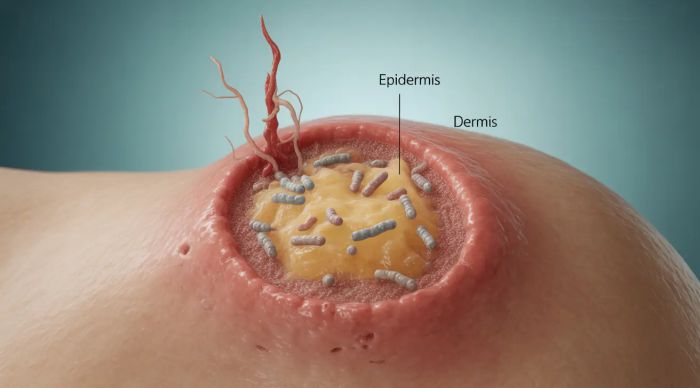
- Stage 0: In situ (confined to epidermis)
- Stage I-II: Localized, increasing thickness
- Stage III: Spread to lymph nodes
- Stage IV: Metastasis to distant organs
Early-stage melanoma survival rate: 98%, Advanced Stage IV survival drops significantly.
Treatment Options for Skin Cancer in Hyderabad
1. Surgery
- Simple excision
- Mohs micrographic surgery
- Curettage and electrodesiccation
- Cryotherapy
2. Radiation Therapy
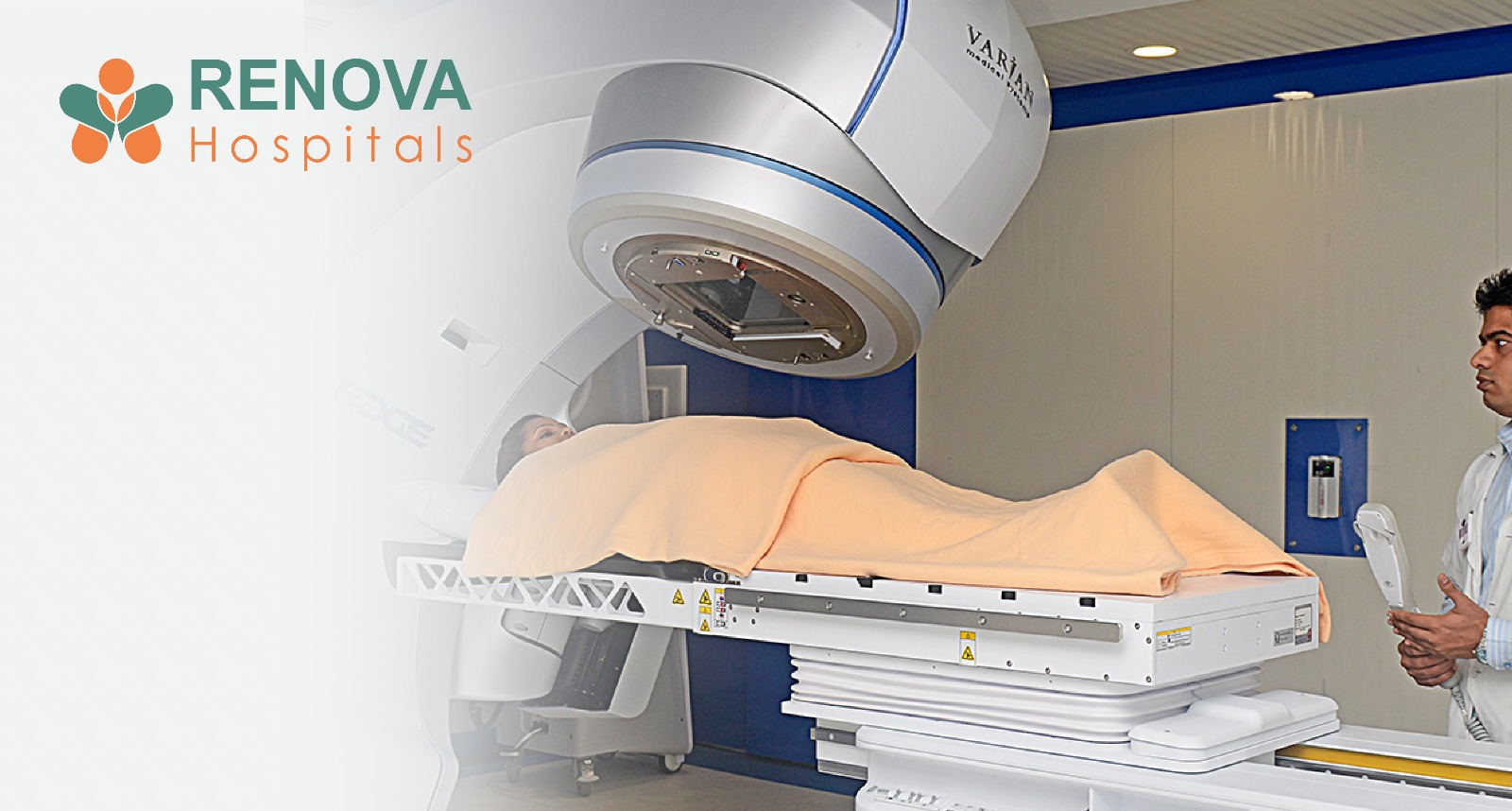
This may be recommended when surgery is not possible or when the tumour carries a higher risk of recurrence.
3. Immunotherapy
- PD-1 inhibitors (Cemiplimab, Pembrolizumab)
- Immune checkpoint inhibitors
4. Targeted Therapy
- BRAF inhibitors
- MEK inhibitors
- Hedgehog pathway inhibitors (Vismodegib for BCC)
5. Photodynamic Therapy (PDT)
For superficial lesions.
Can Skin Cancer Be Prevented?
Yes. Preventive measures can greatly lower the chances of developing skin cancer.
Sun Protection Guidelines:
- Avoid direct sun exposure between 10 AM to 4 PM
- Use SPF 30+ broad-spectrum sunscreen
- Reapply every 2 hours
- Wear protective clothing and hats
- Avoid tanning beds
- Conduct monthly self-exams
- Annual dermatologist screening in sunny regions like Hyderabad
Recent Advances in Skin Cancer Treatment
- Immunotherapy now the first-line for advanced melanoma
- Targeted therapy for BRAF mutations
- Alpha DaRT therapy trials for SCC
- AI-assisted dermoscopy for early detection
- Improved precision radiation therapy
Ongoing research is exploring:
- Cancer vaccines
- Genetic profiling
- Tele-dermatology for rural India
Why Early Detection Matters
Detecting skin cancer at an early stage provides several benefits:
- Higher cure rates
- Less aggressive treatment
- Lower risk of recurrence
- Better cosmetic outcomes
- Improved long-term survival
Most basal cell and early squamous cell cancers can be completely treated when identified at an early stage.
Medical Disclaimer
This content is for educational purposes only and does not replace professional medical advice. Diagnosis and treatment should be guided by a qualified oncologist or dermatologist.
Category
- Joint Replacement
- Joint Replacement