Kawasaki disease is a rare but serious childhood illness that inflames blood vessels — and if not treated promptly, it can affect the heart. A high fever lasting more than five days, along with rash and red eyes, is a key warning sign. Here's what parents should watch for, and why early diagnosis and treatment are so important.
Kawasaki disease is rare, but when it occurs, it demands urgent medical attention. What often begins as a simple fever can silently progress to severe heart damage if not treated on time.
This condition is now recognised as the leading cause of acquired heart disease in children in developed nations. Early awareness, rapid diagnosis, and expert hospital care can significantly improve outcomes.
At Renova Hospitals, early intervention and structured follow-up form the foundation of care for children with Kawasaki disease.
What is Kawasaki disease?
Kawasaki disease is a rare inflammatory illness seen primarily in young children. It causes inflammation of blood vessels throughout the body, a condition known as vasculitis.
The disease is hazardous because it can affect the coronary arteries that supply the heart with blood. If left untreated, this inflammation can lead to long-term cardiac damage.
Kawasaki disease affects:
- Small and medium-sized blood vessels
- Coronary arteries of the heart
- Lymph nodes
- Skin and mucous membranes
Because of this widespread involvement, Kawasaki disease is considered a pediatric medical emergency.
How Common Is Kawasaki disease? (Statistics)
Although uncommon, Kawasaki disease has significant clinical importance worldwide. It is now recognised as the leading cause of acquired heart disease in children in developed nations.
Global statistics show:
- 10–20 cases per 100,000 children under 5 in Western countries
- 50–250 cases per 100,000 children in East Asia
- Increasing recognition in India due to better diagnosis
Without treatment, 25% of children develop coronary artery aneurysms. With early treatment, this risk decreases to less than 6%, underscoring the critical importance of timely care.
Kawasaki disease Pathophysiology
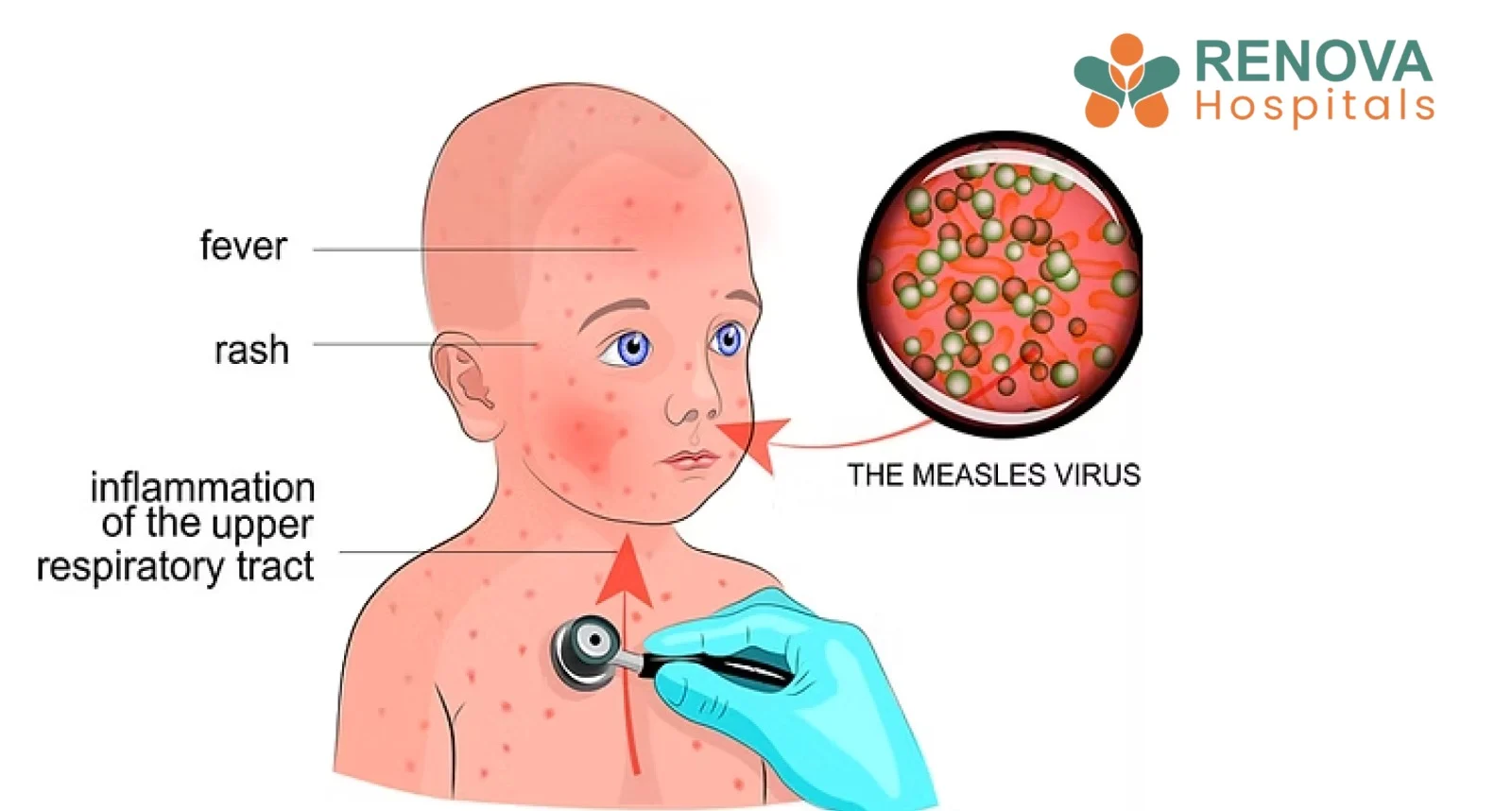
The Kawasaki disease pathophysiology involves an abnormal immune response. Rather than protecting the body, the immune system induces inflammation in blood vessel walls.
This inflammation weakens the vessels and disrupts normal blood flow. Over time, this can affect the heart and other organs.
The immune-mediated process leads to:
- Swelling and inflammation of the arteries
- Weakening and stretching of vessel walls
- Narrowing or clot formation in the coronary arteries
Because inflammation is systemic, many Kawasaki disease features also occur outside the heart.
Kawasaki disease Causes – Is It Infectious?
Parents often ask whether Kawasaki disease is infectious or transmissible from one child to another. This concern is understandable, especially when fever and rash are involved.
Current medical evidence confirms:
- Kawasaki disease causes are unknown
- The disease is not contagious
- It does not spread through contact
Researchers believe a genetic tendency combined with an environmental trigger may be responsible, but no single infection has been identified.
Kawasaki disease Risk Factors
While Kawasaki disease can occur in any child, certain factors increase the likelihood. Recognising these helps clinicians diagnose the condition earlier.
Known Kawasaki disease risk factors include:
- Age below 5 years
- Male gender
- Asian or Pacific Islander ancestry
- Family history of the disease
Notably, the absence of risk factors does not rule out the disease.
Kawasaki disease Early Symptoms
Kawasaki disease early symptoms often resemble common childhood infections. This makes early diagnosis challenging.
Persistent fever is the earliest and most consistent sign. When a fever does not respond to usual treatment, further evaluation is essential.
Early symptoms include:
- High fever lasting more than 3 days
- Extreme irritability
- Reduced appetite and activity
These early signs should prompt medical review.
Classic Kawasaki disease Symptoms
As the disease progresses, more characteristic symptoms appear. These define classic Kawasaki disease symptoms used in diagnosis.
Typical features include:
- Fever lasting 5 days or more
- Red eyes without discharge
- Red, cracked lips and strawberry tongue
- Rash over the trunk or groin
- Swollen hands and feet
Together, these are known as classic Kawasaki disease features.
Other Associated Symptoms
Not all symptoms manifest simultaneously. Some children develop additional signs that can confuse diagnosis.
Other symptoms may include:
- Abdominal pain
- Vomiting or diarrhea
- Joint pain
- Fatigue and fussiness
Parents should report all symptoms, even those that have already improved.
Signs of Kawasaki disease That Need Urgent Care
Sure signs of Kawasaki disease indicate significant inflammation and possible heart involvement. These require immediate medical evaluation.
Warning signs include:
- Fever persisting beyond 3 days
- Skin peeling around fingers or toes
- Swelling of palms or soles
- Red eyes combined with mouth changes
Early evaluation can prevent serious complications.
Kawasaki disease Mnemonic
Doctors use a simple Kawasaki disease mnemonic to remember key features, especially in emergency settings.
The mnemonic “CRASH and burn” includes:
- C – Conjunctivitis
- R – Rash
- A – Adenopathy
- S – Strawberry tongue
- H – Hand and foot changes
- Burn – Persistent fever
This tool supports faster recognition and referral.
Stages of Kawasaki disease
Kawasaki disease progresses through predictable phases. Understanding the stages of Kawasaki disease helps in monitoring and treatment planning.
Stage 1 – Acute Phase
This stage is marked by high fever and inflammation. Most symptoms appear during this period.
- Fever
- Rash
- Red eyes and lips
- Swollen lymph nodes
Stage 2 – Subacute Phase
Although the fever improves, internal risks increase during this stage.
- Skin peeling on hands and feet
- Joint and abdominal pain
- The highest risk of coronary artery aneurysms
Stage 3 – Convalescent Phase
Symptoms gradually resolve, but monitoring remains essential.
- Fatigue
- Normalising lab values
- Possible late heart complications
Incomplete and Atypical Kawasaki disease
Incomplete Kawasaki disease
Incomplete Kawasaki disease occurs when children have prolonged fever but fewer classic symptoms. Despite this, the risk of heart disease remains high.
Key points include:
- Fever ≥5 days
- Fewer than four classic signs
- Requires the same urgent treatment
Atypical Kawasaki disease
Atypical Kawasaki disease presents with unusual organ involvement.
These cases may include:
- Liver inflammation
- Lung symptoms
- Neurological signs
Expert evaluation is essential to avoid delayed diagnosis.
Kawasaki disease in Adults
Although rare, Kawasaki disease in adults does occur. Adult cases are often misdiagnosed as infections or autoimmune disorders.
Adults may experience:
- Prolonged unexplained fever
- Rash and joint pain
- Heart inflammation
Delayed treatment increases complication risk.
Kawasaki disease Investigations
There is no single test for diagnosis. Kawasaki disease investigations support clinical findings and assess heart involvement.
Common investigations include:
- Blood tests showing inflammation
- Urine examination
- ECG
- Echocardiogram
- CT or MR angiography when needed
Diagnosis is based on overall clinical judgment.
Kawasaki disease Treatment
IVIG Treatment for Kawasaki disease
IVIG treatment for Kawasaki disease is the cornerstone of therapy. High-dose Kawasaki disease immunoglobulin rapidly reduces inflammation.
Benefits include:
- Fever resolution within 24–48 hours
- Reduced coronary artery damage
- Improved long-term outcomes
Additional Kawasaki disease Treatment
Supportive therapies are often required.
These include:
- Aspirin therapy
- IV fluids
- Steroids or biologics in resistant cases
- Anticoagulants if the coronary arteries are involved
Timely Kawasaki disease treatment is critical within the first 10 days.
Kawasaki disease Side Effects of Treatment
Most children tolerate therapy well. However, Kawasaki disease side effects may occur.
Possible side effects include:
- Mild IVIG infusion reactions
- Temporary anemia
- Increased bleeding risk with aspirin
Children are closely monitored in the hospital.
Kawasaki disease Complications
Without early treatment, Kawasaki disease complications can be severe and lifelong.
Potential complications include:
- Coronary artery aneurysms
- Blood clots
- Heart valve disease
- Heart failure or heart attack
Long-term cardiology follow-up is essential for affected children.
Is There a Kawasaki disease Cure?
There is no definitive Kawasaki disease cure. However, early diagnosis and treatment effectively control the disease in most children.
With proper care, most individuals recover fully and lead everyday lives.
Treatment at Renova Hospitals
A Kawasaki disease specialist should be consulted immediately if fever persists or symptoms worsen.
Renova Hospitals provides coordinated pediatric and cardiac care, supported by advanced diagnostics and long-term follow-up.
Persistent fever in a child should never be ignored. Early recognition of Kawasaki disease protects the heart and saves lives: trust expert evaluation, timely treatment, and structured follow-up for the best outcomes.
FAQs
1. What is Kawasaki disease, and why is it serious?
Kawasaki disease is a condition characterised by inflammation of blood vessels, particularly the coronary arteries of the heart. It is serious because delayed treatment can lead to permanent heart damage in children.
2. What are the early signs and symptoms of Kawasaki disease?
Kawasaki disease early symptoms usually start with a high fever lasting more than 3–5 days. Other early signs of Kawasaki disease may include irritability, red eyes, red lips, rash, and swelling of hands or feet.
3. Is Kawasaki disease infectious or contagious?
No. Infectious spread of Kawasaki disease does not occur. It does not pass from one child to another and is not caused by poor hygiene or close contact.
4. What causes Kawasaki disease?
The exact Kawasaki disease causes are still unknown. Doctors believe it may involve an abnormal immune response triggered by environmental or genetic factors, but no specific virus or bacteria have been identified.
5. What is incomplete or atypical Kawasaki disease?
Incomplete Kawasaki disease occurs when a child has a prolonged fever but fewer classic symptoms. Atypical Kawasaki disease may involve unusual symptoms like liver, lung, or neurological involvement. Both forms still carry a risk of heart complications.
6. How is Kawasaki disease diagnosed?
There is no single test. Kawasaki disease investigations include blood tests, urine tests, ECG, and echocardiography to assess inflammation and check the heart, especially the coronary arteries.
7. What is the primary treatment for Kawasaki disease?
The standard Kawasaki disease treatment is high-dose IVIG treatment for Kawasaki disease, also known as Kawasaki disease immunoglobulin, along with aspirin. Early treatment significantly reduces heart complications.
8. Are there side effects from Kawasaki disease treatment?
Most children tolerate treatment well. Possible Kawasaki disease side effects include mild IVIG reactions, temporary anaemia, or increased bleeding tendency from aspirin. These are monitored closely in the hospital.
9. What complications can occur if Kawasaki disease is untreated?
Untreated Kawasaki disease complications include coronary artery aneurysms, blood clots, heart valve problems, and, in rare cases, heart attack or heart failure. Early treatment significantly reduces these risks.
10. Is there a cure for Kawasaki disease, and will my child fully recover?
There is no permanent Kawasaki disease cure, but with early diagnosis and treatment, most children recover completely. Some children may need long-term heart follow-up, especially if the coronary arteries were affected.