Key Takeaways
- Colorectal cancer is the third most common cancer worldwide.
- It often develops from precancerous polyps in the colon or rectum.
- Diet, lifestyle habits, obesity, smoking, and alcohol increase risk.
- Early symptoms may include blood in the stool, changes in bowel habits, and fatigue.
- Screening after age 45 helps detect and prevent colorectal cancer early.
Early diagnosis and treatment significantly improve survival outcomes.
Colorectal cancer is one of the most common cancers worldwide and a growing health concern in India. It develops in the colon or rectum, which are parts of the large intestine that absorb water and store waste before elimination. Globally, colorectal cancer ranks as the third most common cancer and the second leading cause of cancer-related deaths. According to global cancer estimates,
more than 1.9 million new cases and nearly 900,000 deaths were reported in 2020.
In India, colorectal cancer is the fourth most common cancer, with
64,863 new cases and over 38,000 deaths reported in 2022. With rapid urbanisation and changing dietary habits, the number of cases is expected to increase significantly in the coming decades. In cities like Hyderabad,
healthcare specialists are witnessing a gradual rise in colorectal cancer cases, particularly among younger adults. Catching the disease early through screening and awareness makes a massive difference in survival rates.
At Renova Hospitals, our cancer specialists, including expert gastroenterologists and oncologists, work together to build a care plan tailored to your exact needs, using advanced diagnostic tools. We focus heavily on finding the disease early and treating it with the most effective methods available.
What Is Colorectal Cancer?
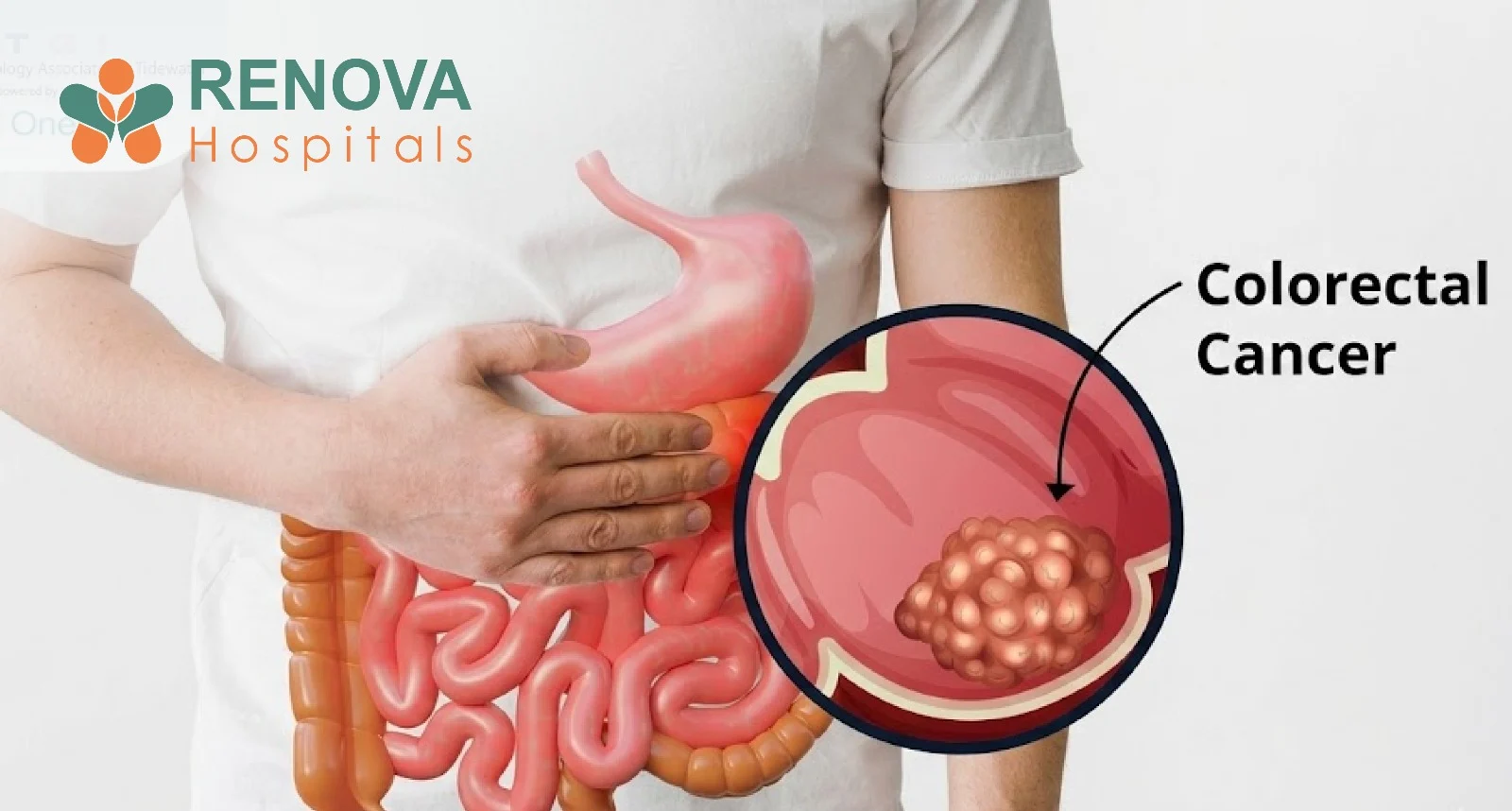
Colorectal
cancer refers to cancer that develops in the colon or rectum, which together form the large intestine. Most colorectal cancers begin as small non-cancerous growths called polyps. Over time, some of these polyps can turn into cancer if they are not detected and removed early.
Types of colorectal cancer include:
- Colon cancer, a cancer that starts in the large intestine
- Rectal cancer is a cancer that develops in the last part of the colon (rectum)
- Adenocarcinoma, the most common type, accounts for nearly 90–95% of cases
Colorectal cancer usually develops slowly over several years, which makes regular screening highly effective in preventing the disease.
Colorectal Cancer in India: Why Cases Are Rising
Although India historically had lower colorectal
cancer rates compared to Western countries, recent studies show a steady increase in cases, particularly in urban populations.
Key statistics include:
- India reported 64,863 colorectal cancer cases in 2022
- Approximately 38,367 deaths were linked to the disease.
- The risk is estimated at 1 in 149 for men and 1 in 250 for women.
- Incidence is higher in urban regions than in rural areas.
Doctors link this rise to everyday lifestyle changes, including
- Westernised diets
- High consumption of processed food
- Sedentary lifestyles
- Rising obesity and diabetes
- Increased alcohol and tobacco use
Healthcare providers in Hyderabad have also reported an increase in early-onset colorectal cancer among people below 50 years, highlighting the need for greater awareness and preventive screening.
Risk Factors for Colorectal Cancer
Colorectal cancer risk is influenced by both modifiable (lifestyle) and non-modifiable (genetic or biological) factors.
Lifestyle and Modifiable Risk Factors
Several lifestyle habits significantly increase the risk of colorectal cancer.
Common risk factors include:
- A diet high in red meat and processed meat
- Low fibre intake
- Sedentary lifestyle
- Obesity
- Smoking
- Alcohol consumption
- High intake of processed and sugary foods
Studies suggest that diets rich in fibre, fruits, vegetables, and whole grains may significantly reduce the risk of colorectal cancer. Regular physical activity has also been shown to
reduce colorectal cancer risk by up to 25–30%.
Non-Modifiable Risk Factors
Some risk factors cannot be changed, but can help identify individuals who need earlier screening.
These include:
- Age above 50 years
- Family history of colorectal cancer
- Genetic syndromes such as Lynch syndrome or Familial Adenomatous Polyposis (FAP)
- Personal history of colorectal polyps
- Inflammatory bowel disease (IBD), such as Crohn’s disease or ulcerative colitis
- Previous abdominal or pelvic radiation therapy
If you relate to any of these risk factors, our preventive oncology team at Renova Hospitals is here to guide you through a personalised screening plan.
Symptoms of Colorectal Cancer
Colorectal cancer is often called a 'silent' disease because it rarely shows clear symptoms in the beginning. However, as it grows, you might notice:
Common symptoms include:
- Blood in stool (bright red or dark)
- Persistent changes in bowel habits
- Diarrhoea or constipation
- Narrow or thin stools
- Abdominal pain or cramps
- Unexplained weight loss
- Fatigue and weakness
- Iron deficiency anaemia
These symptoms can also occur in non-cancerous conditions. However, persistent symptoms should always be evaluated by a specialist.
Stages of Colorectal Cancer
Doctors stage colorectal cancer to describe how far it has grown. This helps our oncology team decide the best and most effective treatment plan for you.
Stage 0
- Cancer is limited to the inner lining of the colon or rectum.
Stage I
- Cancer grows into the colon or rectal wall but has not spread outside it.
Stage II
- Cancer extends through the wall but has not reached nearby lymph nodes.
Stage III
- Cancer spreads to nearby lymph nodes.
Stage IV
- Cancer spreads to distant organs such as the liver or lungs.
Early-stage colorectal cancer has a much higher survival rate, which is why early diagnosis is extremely important.
How Is Colorectal Cancer Diagnosed?
The Advanced Diagnostics Centre at Renova Hospitals utilises the latest imaging and high-definition endoscopic technologies for the precise, early detection of colorectal cancer.
Colonoscopy
Colonoscopy is the most effective screening test for colorectal cancer. During the procedure, doctors examine the colon using a flexible camera and can remove suspicious polyps.
Stool-Based Tests
These include:
- Faecal Immunochemical Test (FIT)
- Faecal Occult Blood Test (FOBT)
- Stool DNA tests
These tests detect hidden blood or abnormal DNA in stool samples.
Imaging Tests
Advanced imaging methods help determine cancer spread:
- CT scans
- MRI scans
- PET scans
- CT colonography
Biopsy
If a suspicious growth is detected, a tissue sample (biopsy) is examined under a microscope to confirm the diagnosis.
Treatment Options for Colorectal Cancer
Your doctor will recommend a treatment path based on the cancer’s stage, its location, and your overall health.
Surgery
Surgery is the primary treatment for early colorectal cancer.
Common surgical procedures include:
- Polypectomy – removal of polyps during colonoscopy
- Colectomy – removal of part of the colon
- Proctectomy – removal of the rectum
Minimally invasive techniques, such as laparoscopic and robotic-assisted surgeries offered at Renova Hospitals, are widely used by our surgical oncologists to achieve faster recovery times, less scarring, and reduced postoperative pain.
Chemotherapy
Chemotherapy uses drugs to destroy cancer cells and is often recommended for Stage II, III, and IV cancers.
Radiation Therapy
Radiation therapy is mainly used for rectal cancer to shrink tumours before surgery or reduce recurrence risk.
Targeted Therapy
Targeted drugs focus on specific cancer pathways. These therapies are particularly useful for advanced colorectal cancer with specific genetic markers.
Immunotherapy
Patients with MSI-H or mismatch repair-deficient (dMMR) tumours may benefit from immunotherapy.
Latest Advances in Colorectal Cancer Treatment
Recent research has led to several promising advancements in colorectal cancer care.
New treatment strategies include:
- Total Neoadjuvant Therapy (TNT)
- HIPEC (Hyperthermic Intraperitoneal Chemotherapy)
- AI-assisted colonoscopy screening
- Targeted biomarker-driven therapy
- Advanced immunotherapy combinations tailored for specific genetic markers (like MSI-H/dMMR)
These developments are helping improve survival outcomes for patients with advanced colorectal cancer.
Can Colorectal Cancer Be Prevented?
While not all cases can be prevented, you can significantly lower your risk of developing colorectal cancer through healthy lifestyle choices and proactive early screening.
Key prevention strategies include:
- Eating a high-fibre diet rich in fruits and vegetables
- Limiting red and processed meat consumption
- Maintaining a healthy body weight
- Exercising regularly
- Avoiding smoking
- Limiting alcohol intake
- Undergoing regular screening tests after age 45
Screening allows doctors to detect and remove precancerous polyps before they develop into cancer.
Importance of Early Screening
- Annual FIT or FOBT tests
- Stool DNA test every 3 years
- Sigmoidoscopy every 5 years
- Colonoscopy every 10 years
Individuals with a family history or high-risk conditions may require earlier and more frequent screening.
If it’s time for your routine check-up, the gastroenterology team at Renova Hospitals in Hyderabad is equipped with the latest screening tools to detect early warning signs, giving you peace of mind and better treatment options.
When Should You See a Doctor?
- Persistent blood in stool
- Unexplained weight loss
- Ongoing abdominal pain
- Long-term bowel habit changes
- Fatigue or anaemia
Early medical evaluation can lead to timely diagnosis and better treatment outcomes.
Conclusion
Colorectal cancer is a growing health concern worldwide and in India. Although the disease can be serious, early detection and preventive screening significantly improve survival rates. Lifestyle choices such as maintaining a balanced diet, staying physically active, and avoiding tobacco and alcohol can reduce the risk of developing colorectal cancer.
Making time for regular screenings after age 45 is one of the most powerful steps you can take to protect your health and catch precancerous polyps before they become dangerous. At
Renova Hospitals, a multidisciplinary team of specialists provides comprehensive colorectal cancer care, from screening and diagnosis to advanced treatment options, ensuring patients receive personalised and effective medical support.
Medical Disclaimer
The information provided on this page is for educational purposes only and should not replace professional medical advice. Always consult a qualified oncologist or healthcare provider at Renova Hospitals for an accurate diagnosis and a personalised treatment plan.