Introduction: A Common Yet Often Misunderstood Skin Condition
Scabies is a contagious
skin condition caused by tiny mites that burrow into the upper layer of the skin. It usually causes intense itching and a rash, and it can affect people of any age.
Although
scabies is common worldwide, it is often misunderstood. Many people assume it is linked to poor hygiene, but that is not true. Scabies can affect anyone, regardless of cleanliness or lifestyle. Understanding this helps reduce stigma and encourages people to seek timely care.
What makes scabies important from a healthcare perspective is its high contagiousness, especially in crowded environments such as households, hostels, and care facilities. Early recognition and timely treatment are crucial to prevent its spread and avoid complications. Early recognition and timely treatment can help control its spread.
Key Takeaways
- Scabies is a contagious skin condition caused by mites and spreads through close contact.
- It is not related to personal hygiene and can affect anyone
- Intense itching, especially at night, is the most common symptom
- Early diagnosis and treatment help prevent the spread and complications
- All close contacts should be treated together to avoid reinfection
- Simple hygiene measures and timely care can help control and prevent scabies
What Is Scabies?
Scabies occurs when microscopic mites burrow into the skin, creating tunnels where they live and lay eggs. The body reacts to these mites, causing itching and skin irritation.
Scabies is not caused by dirt or poor hygiene. It is a medical condition that spreads mainly through close physical contact with an infected person. The condition may take a few weeks to show symptoms after the first exposure. However, in people who have had scabies before, symptoms can appear much faster.
Common Signs and Symptoms of Scabies
One of the most common signs of scabies is intense itching, which often becomes worse at night.
Typical symptoms include:
- Persistent itching, especially at night
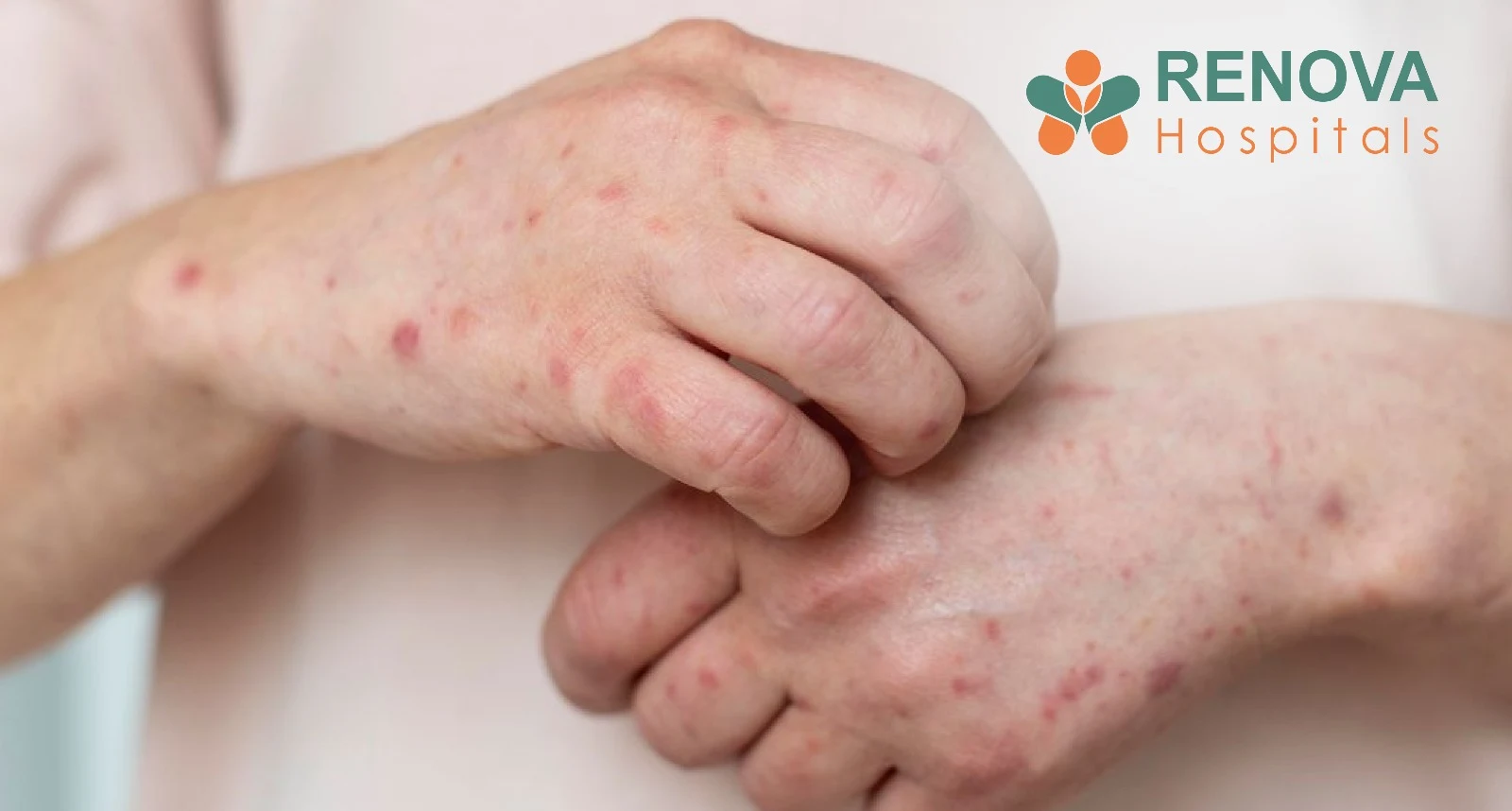
- Small red bumps or rash
- Thin, irregular lines on the skin (burrows)
- Sores caused by scratching
Common areas affected:
- Between the fingers
- Wrists and elbows
- Waistline and buttocks
- Around the genitals
- Under the breasts
In children and infants, scabies can also affect the scalp, face, palms, and soles. In some cases, scratching can lead to secondary bacterial infections, which may require additional treatment. If left untreated, scabies can lead to complications, so timely care is important.
What Causes Scabies?
Scabies is caused by a microscopic mite that lives in the skin. The female mite lays eggs under the skin, which leads to further spread of the condition.
How it spreads:
- Prolonged skin-to-skin contact
- Sharing clothes, towels, or bedding (less common)
- Close contact in crowded living conditions
It commonly spreads among
- Family members
- People living in shared spaces
- Sexual partners
- Healthcare and caregiving settings
Scabies is not related to personal hygiene, and anyone can get it.
Why Scabies Is Common in India
Scabies is more frequently seen in
regions where:
- People live in proximity
- Awareness about early symptoms is limited
- Access to healthcare may be delayed
In India,
outbreaks can occur in hostels, schools, and densely populated households. Warm and humid climates can also contribute to the spread. Understanding the symptoms early and seeking treatment can help effectively control its spread.
Types of Scabies You Should Know
1. Classic Scabies
The most common form is characterised by itching and a rash in typical areas, such as the fingers and wrists.
2. Infantile Scabies
Seen in babies and young children, often affecting the face, scalp, palms, and soles.
3. Crusted Scabies
A more severe form that may occur in people with
weakened immunity. It can involve changes in the skin and requires medical attention.
Risk Factors for Scabies
Certain groups are more likely to develop scabies:
- People living in crowded environments
- Children and school-going individuals
- Elderly individuals in care homes
- Healthcare workers
- People with weakened immune systems
However, it is important to note that anyone can get scabies through close contact.
How Is Scabies Diagnosed?
Healthcare professionals usually diagnose scabies through:
- Physical examination of the skin
- Identifying typical rash patterns
- In some cases, examining a small skin sample under a microscope
Early diagnosis helps prevent complications and limits the spread to others.
Treatment Options for Scabies
Scabies is treatable with proper medical care. Treatment focuses on eliminating the mites and relieving symptoms.
Common treatment methods:
1. Topical Medications
- Permethrin cream is commonly prescribed
- Applied over the body and washed off after several hours
- May need to be repeated after a week
2. Oral Medications
- Used in certain cases, such as severe or widespread infections
- Prescribed by a doctor based on an individual's condition
3. Symptom Relief
- Antihistamines to reduce itching
- Moisturisers or soothing creams
- Mild steroid creams are recommended
Home Care and Hygiene Measures
To prevent reinfection and spread:
- Wash clothes, bedding, and towels in hot water
- Dry items using heat
- Avoid sharing personal items
- Keep nails short to reduce skin damage from scratching
Items that cannot be washed can be kept aside for several days to ensure mites do not survive.
How to Prevent Scabies
While there is no vaccine for scabies, you can reduce the risk by taking simple precautions:
- Avoid close contact until treatment is complete
- Maintain personal hygiene
- Do not share clothing or bedding
- Seek early medical care if symptoms appear
In community settings, early detection and
treatment help prevent outbreaks.
How Renova Hospitals Can Help
At
Renova Hospitals, we understand how uncomfortable and stressful skin conditions like scabies can be.
- Accurate diagnosis
- Personalised treatment plans
- Guidance on preventing spread
- Follow-up care to ensure complete recovery
If you notice persistent itching or a rash that does not improve, seeking timely medical care can be a reassuring step towards effective treatment and peace of mind.
Conclusion: Donโt Ignore Persistent Itching
Scabies is a common condition, but it should not be ignored. With timely treatment and proper care, it can be effectively managed.
Take the Right Steps Early
- Recognise symptoms
- Avoid close contact if infected
- Follow the complete treatment
- Seek professional medical advice
Early action not only helps you recover faster but also protects those around you.
Medical Disclaimer
This content is for informational purposes only and should not be considered medical advice. Please consult a qualified healthcare professional for diagnosis and treatment.