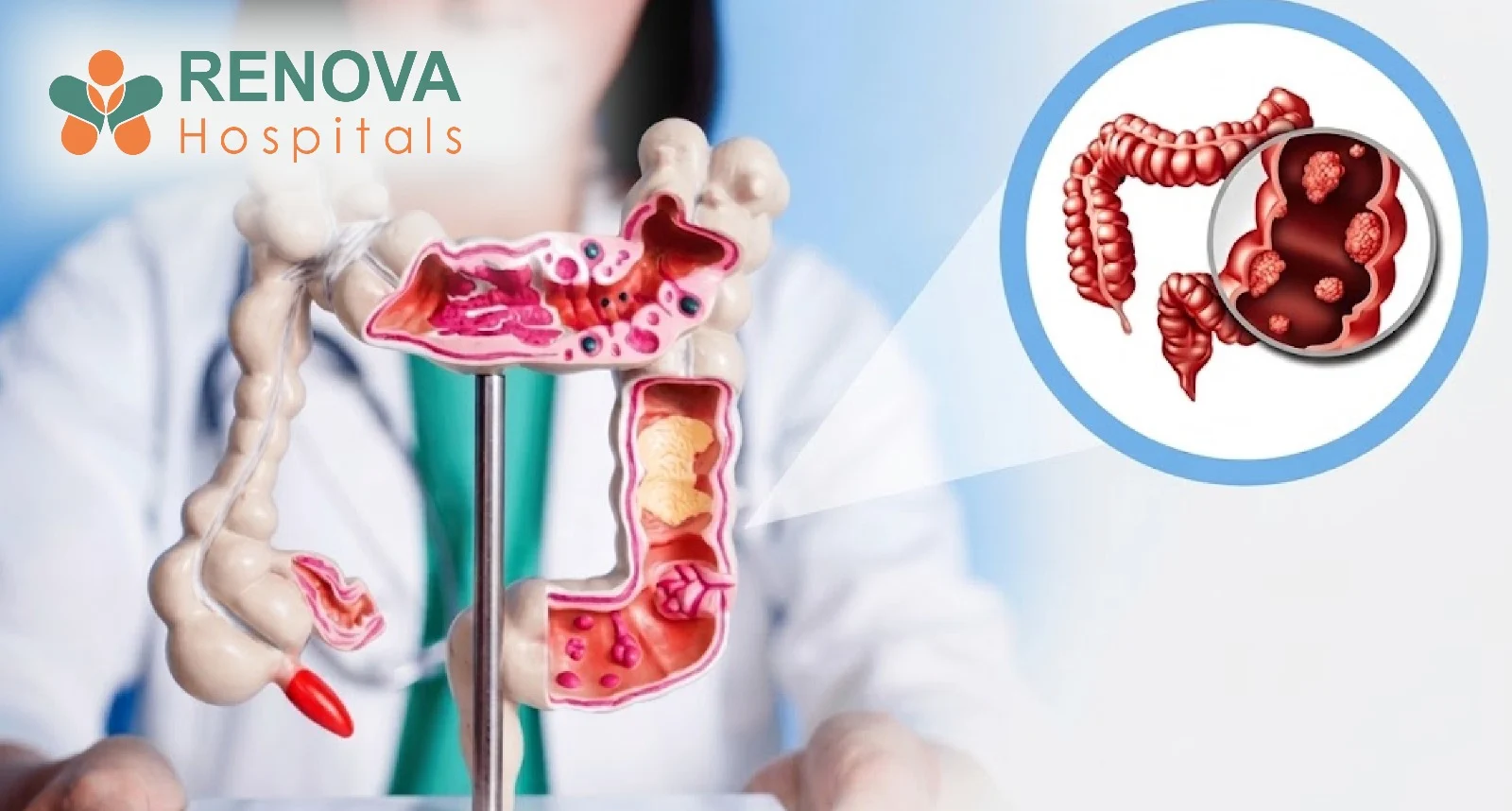
Colon cancer is no longer a disease of old age. Across India and around the world,
colorectal cancer (CRC) is rising sharply in adults under 50 and younger patients are consistently diagnosed at more advanced stages, when treatment is far more difficult. If you are under 50 and experiencing persistent digestive symptoms, this article is for you.
Key Takeaways:
- It's not just an older person's disease. CRC is rising 3% per year in adults aged 20–49.
- Most young adults are caught too late. 75% of under-50 diagnoses are already at an advanced stage.
- Early detection saves lives. Survival is 91.5% when caught early — it falls to 16.2% once it spreads.
- Start screening at 45. Earlier, if you have a family history, a known genetic condition, or symptoms.
- More than half of the cases are preventable. Diet, weight, exercise, smoking, and alcohol are the biggest levers.
The Alarming Trend: Why This Is a Growing Concern
For decades, colon cancer was considered a condition that mainly affected people over 65. That assumption is dangerously outdated.
According to the American Cancer Society's 2026 Colorectal Cancer Statistics report, CRC incidence is now rising by 3% per year in adults aged 20 to 49, even as it continues to decline in those over 65. Screening and awareness gains in older populations have not translated to younger ones.
Today, 1 in 5 colorectal cancer diagnoses is in someone under 55.
The Colorectal Cancer Alliance reports that about 75% of CRC cases in adults under 50 are diagnosed at an advanced, regional or distant stage, meaning the cancer has already spread and treatment is significantly more complex. And
the National Cancer Institute notes that nearly 10% of all new colorectal cancers worldwide now occur in people under the age of 50.
Why Is Colon Cancer Increasing in Young Adults?
There is no single cause; researchers describe the rise as multifactorial. A consistent set of dietary, lifestyle, genetic, and environmental contributors has emerged from the evidence.
1. Ultra-Processed and Low-Fibre Diets
A diet high in processed foods, red meat, refined grains, and sugary drinks, combined with chronically low fibre intake, disrupts gut health and drives chronic inflammation.
Research presented at the American Society of Clinical Oncology's 2024 annual conference found that young adults who develop colorectal cancer are, on average, biologically 15 years older than their chronological age, a phenomenon strongly linked to Western dietary patterns.
This means a 35-year-old with the disease may have the cellular ageing profile of a 50-year-old.
2. Sedentary Lifestyle and Obesity
Physical inactivity and excess body weight independently increase the risk of colorectal cancer by contributing to chronic inflammation, insulin resistance, and hormonal imbalances.
A meta-analysis of 13 cohort studies published in the journal PMC found that every 5 kg of weight gain was associated with a 3% increased risk of CRC, and that obesity and inactivity compound each other's effects, not merely add to them.
3. Gut Microbiome Disruption
The trillions of bacteria in your gut play a critical role in immune regulation, inflammation control, and digestive health. Poor diet, frequent antibiotic use, and chronic stress can destabilise the microbiome and increase susceptibility to cancerous changes in the colon lining. This is one of the most actively researched areas in early-onset CRC today.
4. Genetic Factors and Family History
Inherited conditions, most notably Lynch syndrome and Familial Adenomatous Polyposis (FAP), significantly elevate risk, sometimes causing cancer to develop before age 40. A family history of colorectal cancer or colon polyps in a first-degree relative also meaningfully raises personal risk.
The Cancer Research Institute notes that individuals with these conditions should discuss earlier and more frequent
screening with their doctor.
5. Smoking, Alcohol, and Environmental Exposure
Symptoms of Colon Cancer in Young Adults: Warning Signs You Should Never Ignore
The key warning signs to watch for include:
- Blood in the stool or rectal bleeding — the most commonly reported early symptom in young adults, and one that should never be attributed to haemorrhoids without proper investigation.
- Persistent abdominal pain, cramping, or bloating — especially if it is new, recurring, or worsening over time.
- Unexplained weight loss — particularly when it is sudden and not linked to changes in diet or exercise.
- Changes in bowel habits — new-onset constipation, loose stools, or unusually narrow stools lasting more than two to three weeks.
- Fatigue or weakness — caused by anaemia (iron deficiency) that results from slow internal bleeding.
Diagnosis and Screening: When Should You Get Tested?
The single most effective thing you can do to protect yourself is to get screened at the right time. Screening guidelines have been updated in recent years precisely because of the rising trend in younger adults. The American Cancer Society lowered its recommended starting age from 50 to 45 in 2018, and the US Preventive Services Task Force followed in 2021.
If you are an average-risk adult, start at 45. If you have a first-degree relative who was diagnosed with colorectal cancer,
current guidelines recommend starting at 40 or 10 years before the age at which your relative was diagnosed — whichever comes first. If you have a known inherited condition such as Lynch syndrome or FAP, your gastroenterologist may recommend screening as early as your 20s.
The primary diagnostic tools available include:
- Colonoscopy — the gold standard. It allows direct visualisation of the entire colon, biopsy of suspicious tissue, and removal of polyps in the same procedure. Recommended every 10 years for average-risk individuals.
- Stool-based tests — including the Faecal Occult Blood Test (FOBT), Faecal Immunochemical Test (FIT), and stool DNA testing. These are non-invasive and can be done at home, though a positive result must be followed up with a colonoscopy.
- CT Colonography — a non-invasive imaging method also known as a virtual colonoscopy.
- Blood-based CRC screening — in 2024, the FDA approved the first blood test for colorectal cancer screening, offering an additional option for those reluctant to undergo colonoscopy.
Why does early detection matter so much?
The NCI SEER Programme reports a 5-year survival rate of 91.5% for localised colon cancer, a cancer that has not spread beyond the colon wall.
For young adults under 50, that figure can reach up to 95%. Once cancer has spread to distant organs, the same survival rate drops to 16.2%. Early detection is not merely helpful; it is the single most powerful variable in survival.
Advanced Treatment Options at Renova Hospitals
Treatment for colon cancer has advanced considerably, and outcomes continue to improve. At Renova Hospitals, multidisciplinary
oncology teams deliver personalised care plans, from diagnosis through recovery and long-term surveillance.
Surgery is the primary treatment for early-stage disease and is increasingly performed using minimally invasive laparoscopic or robotic-assisted techniques that reduce recovery time, post-operative pain, and complication risk.
For advanced-stage or high-risk cases, chemotherapy and targeted therapy are used to control disease progression. Targeted agents work on specific molecular pathways in tumour cells, offering more precision than traditional chemotherapy with fewer side effects.
Immunotherapy has become a powerful option for a specific subgroup of patients, those whose tumours carry microsatellite instability-high (MSI-H) genetics.
Research published by the National Cancer Institute in 2025 identifies immunotherapy combinations as a preferred initial treatment for this subtype.
Precision oncology, including genetic profiling of the tumour, allows the care team to tailor treatment to the individual patient rather than applying a one-size-fits-all protocol. At Renova Hospitals, this approach is integrated into the management of every advanced colon cancer case.
Prevention: What You Can Do to Reduce Your Risk
The American Cancer Society estimates that more than half of all colorectal cancers are attributable to modifiable lifestyle factors — meaning there is meaningful room for prevention. While no single change is a guarantee, the following are evidence-backed strategies that collectively reduce risk.
Avoiding smoking, limiting alcohol consumption, and managing chronic stress are all relevant. Stress, in particular, affects gut microbiome composition, which is increasingly recognised as a contributing factor to CRC risk. And finally, getting screened at the appropriate age remains the most reliably effective preventive action available. Colonoscopy does not just detect cancer, it prevents it, by identifying and removing polyps before they have the chance to become malignant.
For expert consultation, colorectal cancer screening, and advanced cancer care, connect with our specialists at Renova Hospitals. Call 040 2333 3333 or visit your nearest Renova Hospitals centre.
Medical Disclaimer: This article is for educational purposes only and does not constitute medical advice. Please consult a qualified healthcare professional for a personalised diagnosis and treatment.