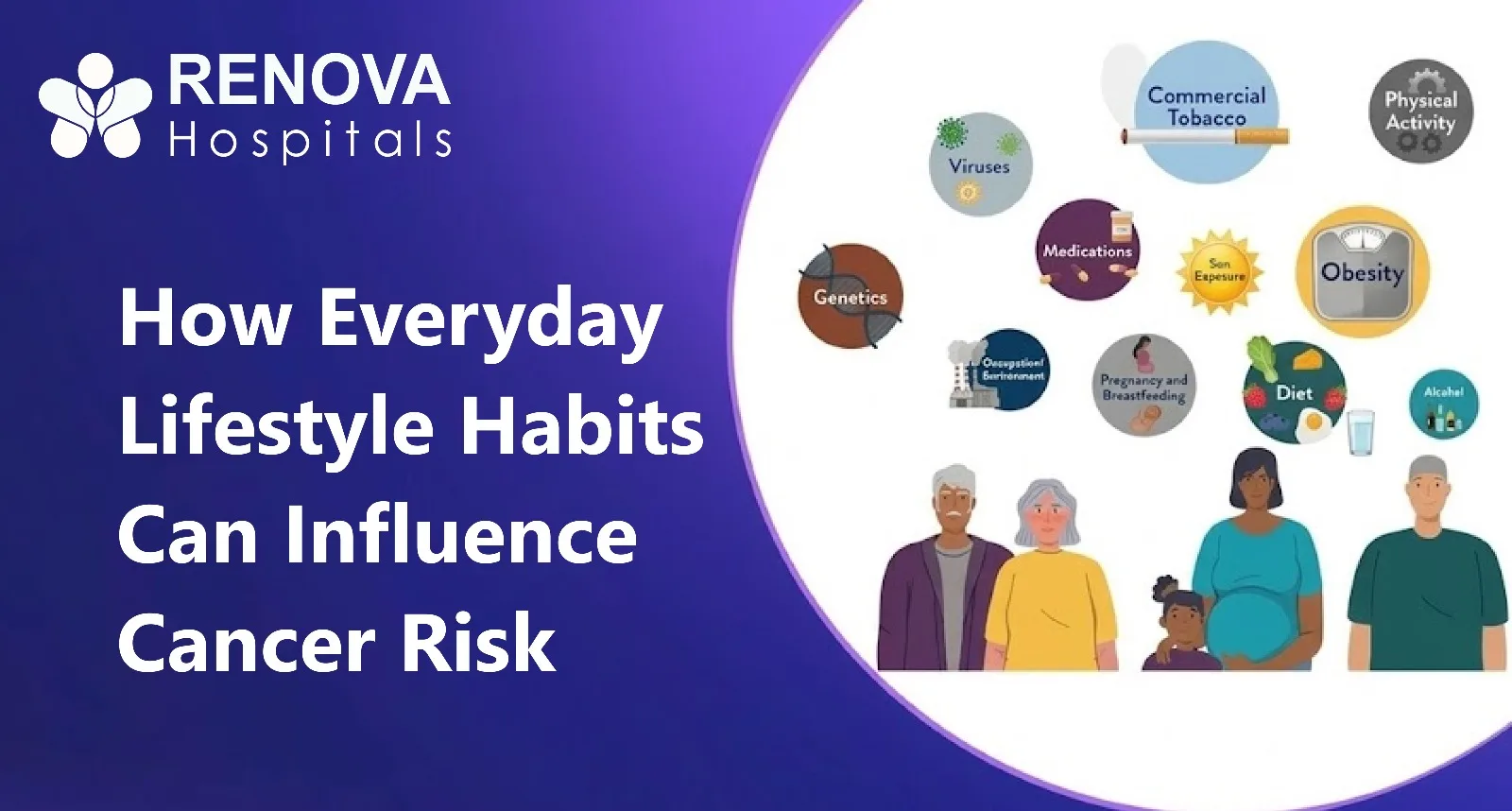
Cancer is one of the leading causes of death worldwide, but many people do not realise that everyday lifestyle habits can influence
cancer risk. While genetic factors contribute to some cancer cases, a large proportion of cancers are linked to habits that can be modified.
Recent global research analysing 18.7 million cancer cases across 185 countries found that nearly 37.8% of
new cancer cases are associated with lifestyle-related risk factors such as tobacco use, alcohol consumption, obesity, poor diet, and physical inactivity. This suggests that a large number of cancer cases could potentially be prevented through healthier lifestyle habits and
timely screening.
At
Renova Hospitals, Hyderabad, our specialists emphasise preventive healthcare and early detection. Understanding these risk factors can help people make informed choices that support long-term health.
Key Takeaways
- Nearly 40% of cancers are linked to lifestyle factors, meaning many cases are preventable.
- Tobacco use is the leading preventable cause of cancer, especially lung and oral cancers.
- Alcohol consumption increases the risk of several cancers, including breast, liver, and colorectal cancer.
- Unhealthy diet, obesity, and physical inactivity raise cancer risk by causing inflammation and hormonal imbalance.
- Environmental factors like pollution and UV exposure also contribute to cancer development.
- Healthy habits and regular cancer screening can significantly reduce the risk of cancer.
Understanding Lifestyle-Related Cancer Risk
Lifestyle-related cancers develop when long-term habits expose the body to carcinogens or conditions that damage cells and DNA. Over time, these changes can lead to uncontrolled cell growth and tumour formation. Research has
identified several modifiable risk factors that significantly contribute to cancer development.
The most important lifestyle factors linked to cancer include:
- Tobacco use (smoking and smokeless tobacco)
- Alcohol consumption
- Unhealthy diet and poor nutrition
- Obesity and excess body weight
- Physical inactivity
- Ultraviolet (UV) radiation exposure
- Chronic stress and poor sleep
- Environmental pollution
These factors often interact and may increase the risk of multiple cancers simultaneously.
Global and Indian Cancer Trends
Cancer cases are
increasing globally, partly due to changing lifestyles, urbanisation, and environmental factors.
A global study led by the World Health Organisation (WHO) found that:
- Nearly four in ten cancers are linked to modifiable lifestyle factors
- Tobacco is responsible for about 15% of all cancer cases
- Alcohol contributes to over 3% of cancer cases globally
Three cancer types, lung cancer, stomach cancer, and cervical cancer, account for almost half of preventable cancer cases globally.
Cancer in India
India reports more than 1.4 million new cancer cases each year, and lifestyle changes are contributing to the increasing cancer burden.
Some of the most common cancers linked to lifestyle factors in India include:
- Breast cancer
- Oral cancer
- Lung cancer
- Colorectal cancer
In urban regions such as Hyderabad, rising pollution levels, sedentary lifestyles, and dietary changes are increasing the incidence of several cancers. Studies suggest that breast
cancer affects approximately 54 women per 100,000 in Hyderabad, highlighting the importance of early detection and prevention.
Tobacco Use: The Largest Preventable Cause of Cancer
Tobacco use is the single most significant lifestyle risk factor for cancer worldwide. Both smoking and smokeless tobacco expose the body to more than 70 known carcinogenic chemicals, which can damage DNA and trigger cancer development.
Tobacco is strongly linked to cancers of the:
- Lung
- Oral cavity (mouth)
- Throat
- Esophagus
- Pancreas
- Bladder
- Kidney
Studies show that heavy smokers can have up to a 17-fold higher risk of developing lung cancer compared with non-smokers.
Even light smoking increases cancer risk significantly. In India, smokeless tobacco products such as gutka, paan, khaini, and zarda are widely used and are major contributors to oral and throat cancers.
Alcohol Consumption and Cancer Risk
Many people associate alcohol with liver disease, but do not realise that alcohol is also classified as a carcinogen. The
World Health Organisation states that alcohol consumption increases the risk of several cancers.
Alcohol is associated with cancers of the:
- Mouth
- Pharynx (throat)
- Esophagus
- Liver
- Breast
- Colorectum
Heavy
alcohol consumption is associated with a significantly higher risk of oral and oesophageal cancers. Even moderate drinking may increase cancer risk.
Why alcohol increases cancer risk
Alcohol contributes to cancer development through several biological mechanisms:
- It is converted into acetaldehyde, a toxic chemical that damages DNA.
- It increases oxidative stress, which harms cells.
- It promotes inflammation in tissues.
- It interferes with the body’s ability to repair damaged DNA.
When alcohol consumption is combined with smoking, the cancer risk becomes even higher.
Unhealthy Diet and Cancer Risk
Diet is one of the most important lifestyle factors influencing cancer risk.
Modern dietary patterns often include high amounts of:
- Processed foods
- Red and processed meats
- Sugary beverages
- High-fat fast foods
- Refined carbohydrates
These
foods can increase cancer risk by promoting inflammation, obesity, and oxidative stress.
Diets high in processed foods are linked to cancers such as:
- Colorectal cancer
- Breast cancer
- Stomach cancer
Low intake of fruits and vegetables also reduces the intake of protective antioxidants.
Foods that help reduce cancer risk include:
- Fruits and vegetables
- Whole grains
- Legumes
- Fibre-rich foods
- Nuts and seeds
Experts recommend eating at least 2.5 cups of fruits and vegetables daily as part of a cancer-preventive diet.
Obesity and Excess Body Weight
Obesity is an increasing public health concern and is linked to a higher risk of several cancers. A Body Mass Index (BMI) of 30 or higher is associated with an increased risk of at least 13 different types of cancer.
Obesity-related cancers include:
- Breast cancer (after menopause)
- Colorectal cancer
- Pancreatic cancer
- Kidney cancer
- Liver cancer
- Endometrial cancer
Excess body fat promotes cancer development through:
- Hormonal imbalances, particularly increased estrogen levels
- Chronic inflammation
- Insulin resistance
- Increased oxidative stress
Maintaining a healthy weight through diet and exercise is one of the most effective ways to reduce cancer risk.
Physical Inactivity and Sedentary Lifestyle
Sedentary lifestyles have become more common due to desk jobs, screen use, and reduced outdoor activity. Lack of physical activity affects metabolism and hormonal balance, increasing cancer risk.
Physical inactivity is linked to cancers such as:
- Colon cancer
- Breast cancer
- Lung cancer
- Endometrial cancer
Regular exercise provides multiple protective benefits:
- Improves immune function
- Reduces inflammation
- Regulates hormone levels
- Helps maintain a healthy body weight
The American Cancer Society recommends:
- At least 150 minutes of moderate exercise per week, or
- 75 minutes of vigorous physical activity weekly
Even small amounts of daily physical activity can significantly reduce cancer risk.
UV Radiation and Skin Cancer
Excessive exposure to ultraviolet (UV) radiation from sunlight or tanning devices is a major cause of skin cancer. More than 80% of
skin cancers are linked to UV radiation exposure. UV radiation damages the DNA of skin cells and can cause mutations that lead to cancer.
Ways to protect your skin include:
- Using sunscreen with a high SPF
- Wearing protective clothing and hats
- Avoiding direct sun exposure during peak hours
- Avoiding tanning beds
These simple preventive steps can greatly reduce the risk of skin cancer and melanoma.
Chronic Stress and Cancer Risk
Chronic stress has become more common in modern life due to work pressures and demanding daily schedules. While stress alone does not directly cause cancer, it can create biological conditions that support cancer growth.
Long-term stress increases the production of cortisol, which can:
- Suppress immune function
- Increase inflammation
- Disrupts hormone balance
- Promote oxidative stress
Poor sleep patterns and mental stress may also impair the body’s ability to repair damaged cells. Managing stress through healthy coping strategies can improve overall well-being and may reduce cancer risk.
Stress-management techniques include:
- Meditation and mindfulness
- Regular exercise
- Adequate sleep
- Social support
- Relaxation practices such as yoga
Environmental Pollution and Urban Cancer Risk
Environmental factors also play an important role in cancer risk. Air pollution contains harmful particles and chemicals that can damage cells and increase the risk of cancer. Fine particulate matter known as PM2.5 can penetrate deep into the lungs and bloodstream.
Several studies suggest that long-term exposure to higher levels of PM2.5
air pollution may increase the risk of certain cancers, including breast cancer. Urban areas experiencing rapid development often face increased exposure to pollutants, pesticides, and industrial chemicals. This makes regular health screening and lifestyle awareness even more important in cities such as Hyderabad.
How Lifestyle Changes Can Help Prevent Cancer
The positive news is that many cancer risk factors can be modified through lifestyle changes, meaning individuals can take steps to reduce their risk. Experts from the American Cancer Society (ACS) and World Cancer Research Fund (WCRF) recommend several lifestyle strategies for
cancer prevention.
Important lifestyle changes for cancer prevention include:
Avoid tobacco products
- Do not smoke or use smokeless tobacco.
Limit alcohol consumption
- Limiting or avoiding alcohol can help reduce the risk of several cancers.
Maintain a healthy weight.
- Aim for a BMI below 25 through balanced nutrition and physical activity.
Adopt a healthy diet
- Eat more fruits, vegetables, whole grains, and plant-based foods.
Stay physically active
- Aim for at least 30 minutes of exercise daily.
Protect your skin from UV radiation
- Use sunscreen and protective clothing.
Manage stress
- Practice mindfulness and maintain healthy sleep patterns.
Importance of Early Cancer Screening
Lifestyle changes can reduce risk, but early detection remains critical for successful
cancer treatment. Routine screening helps detect cancer at early stages when treatment is more effective.
Important cancer screenings include:
- Breast cancer screening (mammography)
- Colonoscopy from age 45
- Oral cancer screening for tobacco users
- Regular health check-ups
Early diagnosis significantly improves survival rates.
Cancer Care and Screening at Renova Hospitals, Hyderabad
At
Renova Hospitals, our oncology specialists provide comprehensive cancer care, including prevention, early detection, and advanced treatment.
Our services include:
- Cancer screening programs
- Early diagnostic services
- Multidisciplinary oncology care
- Surgical oncology
- Chemotherapy and targeted therapy
- Personalised treatment planning
If you are concerned about your cancer risk or would like guidance on preventive screening, you can consult the oncology specialists at Renova Hospitals.
Medical Disclaimer:
The information provided in this article is intended for general educational and informational purposes only. It should not be considered a substitute for professional medical advice, diagnosis, or treatment. Always consult a qualified healthcare professional or specialist if you have concerns about your health or symptoms related to cancer. Never ignore professional medical advice or delay seeking treatment because of something you have read in this article.