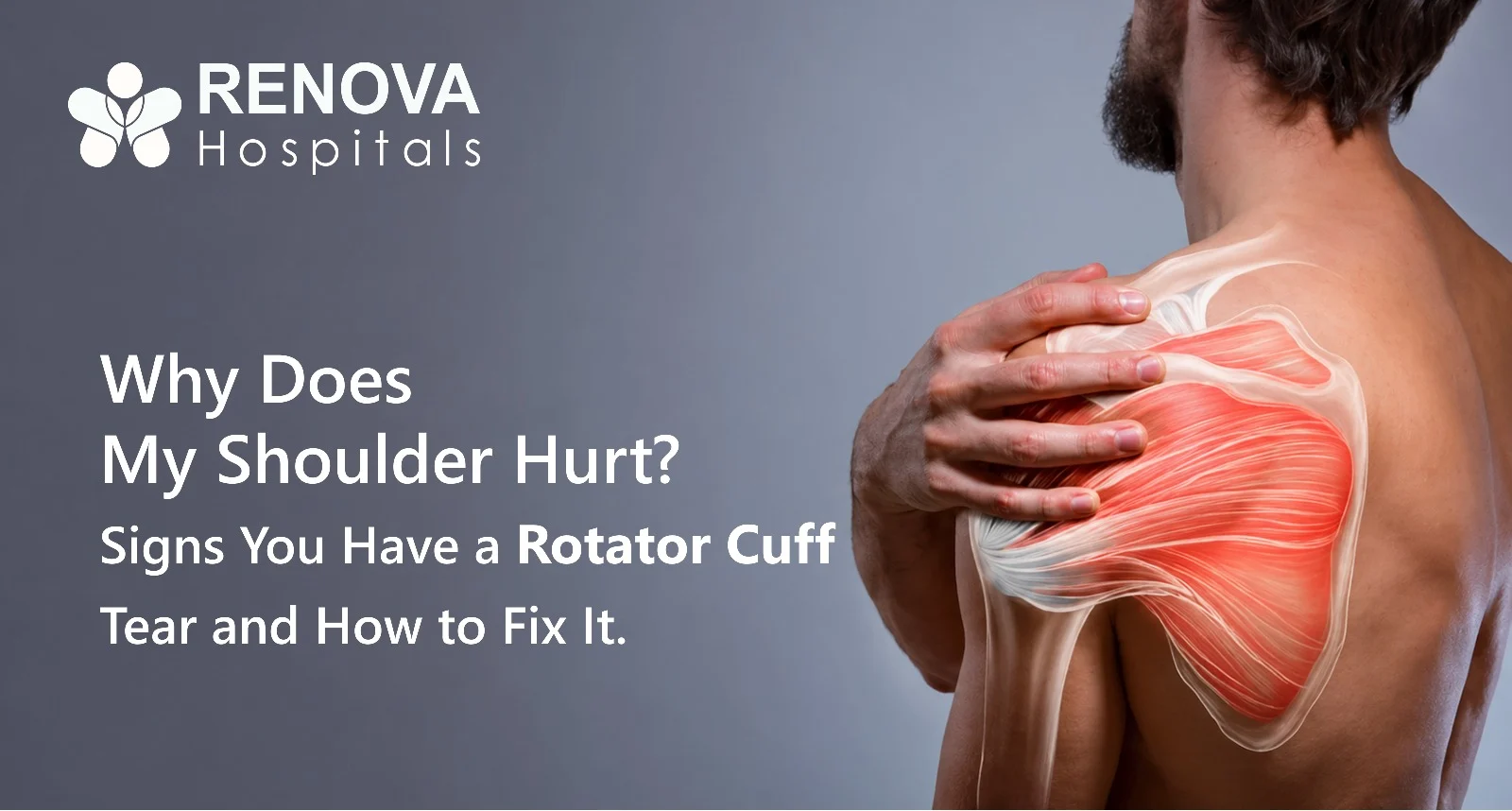
A rotator cuff tear occurs when one of these tendons is damaged or torn, either partially or completely. In a partial rotator cuff tear, the tendon remains attached but is frayed or weakened. In a full tear, the tendon detaches completely from the bone, leading to significant loss of function.
This condition can cause pain, weakness, and difficulty in performing even simple daily activities like combing hair or lifting objects.
Key Takeaways
- Shoulder pain is commonly caused by a partial rotator cuff tear or tendon degeneration
- Early symptoms include pain while lifting the arm, weakness, and night discomfort
- Around 8 out of 10 partial tears improve without surgery with proper rotator cuff tear therapy
- Severe or untreated tears may require rotator cuff tear surgery or advanced rotator cuff tear repair
- Early diagnosis and structured rotator cuff tear treatment can prevent permanent damage
Why Does My Shoulder Hurt? Understanding the Causes
Shoulder pain due to rotator cuff injury can occur suddenly or develop gradually over time.
Common Causes Include:
1. Degenerative Wear and Tear
With age, blood supply to tendons decreases, making them more prone to injury. This is the most common cause of rotator cuff tears.
2. Repetitive Movements
Activities involving repeated overhead motionโsuch as sports, gym workouts, or certain occupations can strain the shoulder over time.
3. Acute Injury
A fall, lifting a heavy weight, or sudden jerking movement can cause an immediate tear.
4. Bone Spurs and Impingement
Extra bone growth can rub against the tendon, leading to gradual damage and eventual tear.
If these causes are ignored, mild symptoms can progress, requiring more advanced rotator cuff tear treatment.
Signs You May Have a Rotator Cuff Tear
Rotator cuff tears often start subtly and worsen over time.
Key Symptoms to Watch For:
- Persistent dull ache deep in the shoulder
- Pain while lifting or lowering the arm
- Weakness or inability to lift objects
- Difficulty reaching behind the back
- Clicking, popping, or crackling sounds
- Pain that worsens at night or disturbs sleep
Some individuals may not initially experience severe pain, but weakness and reduced mobility are strong indicators of a developing partial rotator cuff tear.
Types of Rotator Cuff Tears: Partial vs Full-Thickness
Rotator cuff tears are broadly classified by severity.
A partial rotator cuff tear occurs when the tendon is damaged but still remains attached to the bone. This is the early stage and is often manageable with structured rotator cuff tear therapy and rehabilitation.
A full-thickness tear, on the other hand, means the tendon has completely detached from the bone. This type of injury usually causes significant weakness and may require advanced rotator cuff tear treatment, including surgical intervention.
Understanding the type of tear is important because early-stage injuries can often be managed without the need for rotator cuff tear surgery.
Which Activities Make Rotator Cuff Tears Worse?
Certain everyday activities can worsen a rotator cuff injury if not addressed early.
These include:
- Repetitive overhead movements, such as gym workouts or sports
- Sleeping on the affected shoulder
- Poor posture during long working hours
- Lifting heavy weights without proper technique
Rotator Cuff Tear vs Frozen Shoulder: How to Tell the Difference
Rotator cuff tears and frozen shoulder are often confused because both cause shoulder pain.
However, there are key differences:
- In a rotator cuff tear, pain is usually associated with weakness
- In frozen shoulder, stiffness is more prominent than pain
- Rotator cuff injuries allow some movement but with discomfort
- Frozen shoulder severely restricts movement in all directions
Accurate diagnosis is essential because the rotator cuff tear treatment approach is very different from that of frozen shoulder.
Stages of Rotator Cuff Injury Progression
Rotator cuff injuries typically develop gradually over time.
The progression usually follows these stages:
- Stage 1: Inflammation and tendon irritation (tendinitis)
- Stage 2: Tendon degeneration (tendinosis)
- Stage 3: Partial rotator cuff tear
- Stage 4: Full-thickness tear requiring rotator cuff tear repair
Early intervention with rotator cuff tear therapy can stop or slow this progression, preventing the need for surgery.
Best Sleeping Positions for Shoulder Pain Relief
Sleep can become difficult with a rotator cuff injury, especially when lying on the affected side.
To reduce discomfort:
- Sleep on your back with a pillow supporting your arm
- Use a pillow between your arm and body for alignment
- Avoid sleeping on the injured shoulder
These simple adjustments, along with proper rotator cuff tear treatment, can significantly improve sleep quality and reduce pain.
How Common Are Rotator Cuff Tears? (Statistics & Research)
- More than 2 million people are treated for rotator cuff problems each year
Source: Cleveland Clinic - Studies show over 20% of adults above 60 years have a rotator cuff tear
Source: American Academy of Orthopaedic Surgeons (AAOS) - Approximately 80% of partial tears improve with non-surgical care, including structured rehabilitation
Source: Clinical Orthopaedics Research - Nearly 40% of rotator cuff tears may be asymptomatic, meaning many patients are unaware until symptoms worsen
These findings highlight the importance of early diagnosis and timely rotator cuff tear therapy.
Diagnosis: When Should You See a Doctor?
You should consult an orthopaedic specialist if:
- Pain persists for more than 2โ3 weeks
- You experience weakness or reduced shoulder movement
- Pain interferes with daily activities or sleep
- There is a history of injury
Diagnostic Methods Include:
- Physical examination to assess strength and mobility
- X-rays to identify bone abnormalities
- MRI or ultrasound to confirm the extent of the tear
Early diagnosis enables effective, less invasive treatment for rotator cuff tears.
How Common Are Rotator Cuff Tears? (Statistics & Research)
These numbers highlight why early diagnosis and timely rotator cuff tear therapy are critical.
Rotator Cuff Tear Treatment Options
Treatment depends on the severity of the tear, age, activity level, and overall health.
1. Non-Surgical Treatment (First Line Approach)
In most cases, especially a partial rotator cuff tear, can be managed without surgery.
Common Non-Surgical Treatments Include:
- Rest and activity modification
- Anti-inflammatory medications
- Physiotherapy and guided rotator cuff tear therapy
- Steroid injections in selected cases
The goal is to reduce pain, improve mobility, and strengthen surrounding muscles.
Rotator Cuff Tear Exercises
Rehabilitation plays a central role in recovery.
Effective Exercises Include:
- Pendulum exercises to improve mobility
- External rotation strengthening
- Resistance band training
- Scapular stabilisation exercises
These rotator cuff tear exercises help:
- Restore shoulder strength
- Improve flexibility
- Prevent further injury
It is important that exercises are performed under supervision, as incorrect techniques can worsen the tear.
When Is Rotator Cuff Tear Surgery Needed?
Surgery is recommended in specific situations:
- Complete or large tendon tears
- Persistent pain despite therapy
- Significant loss of strength
- High-demand individuals (athletes, manual workers)
Surgical Options Include:
- Arthroscopic rotator cuff tear repair
- Minimally invasive tendon reattachment
- Open surgery for complex tears
Modern rotator cuff tear surgery is highly advanced, allowing faster recovery and improved outcomes.
How Long Does a Rotator Cuff Tear Take to Heal?
Recovery depends on the severity of the tear and the treatment approach.
- Mild injuries or a partial rotator cuff tear may improve within 6 to 12 weeks with rotator cuff tear therapy
- Moderate cases may take 3 to 6 months
- After rotator cuff tear surgery, full recovery can take 6 to 12 months
Consistency with physiotherapy and rotator cuff tear exercises plays a major role in faster recovery.
Complications If Left Untreated
Ignoring a rotator cuff tear can lead to:
- Chronic shoulder pain
- Progressive weakness
- Loss of range of motion
- Increased tear size
- Permanent disability in severe cases
Timely rotator cuff tear treatment can prevent these complications.
Prevention: How to Protect Your Shoulders
While not all tears can be prevented, risk can be reduced by:
- Regular strengthening exercises
- Maintaining proper posture
- Avoiding repetitive strain
- Warming up before physical activity
When to Seek Immediate Medical Attention
Seek urgent care if you experience:
- Sudden severe pain after injury
- Inability to lift your arm
- Visible deformity
- Severe weakness
Do Not Ignore Shoulder Pain
Shoulder pain is often dismissed as temporary, but it can be an early sign of a rotator cuff injury. Whether it begins as a partial rotator cuff tear or progresses to a complete tear, timely diagnosis and the right rotator cuff tear treatment are essential for recovery.
At Renova Hospitals, expert orthopaedic specialists provide advanced diagnostics, personalised rehabilitation, and minimally invasive rotator cuff tear surgery options to help patients regain strength and mobility.
If you are experiencing persistent shoulder pain, early intervention and guided rotator cuff tear therapy can help you return to a pain-free life.