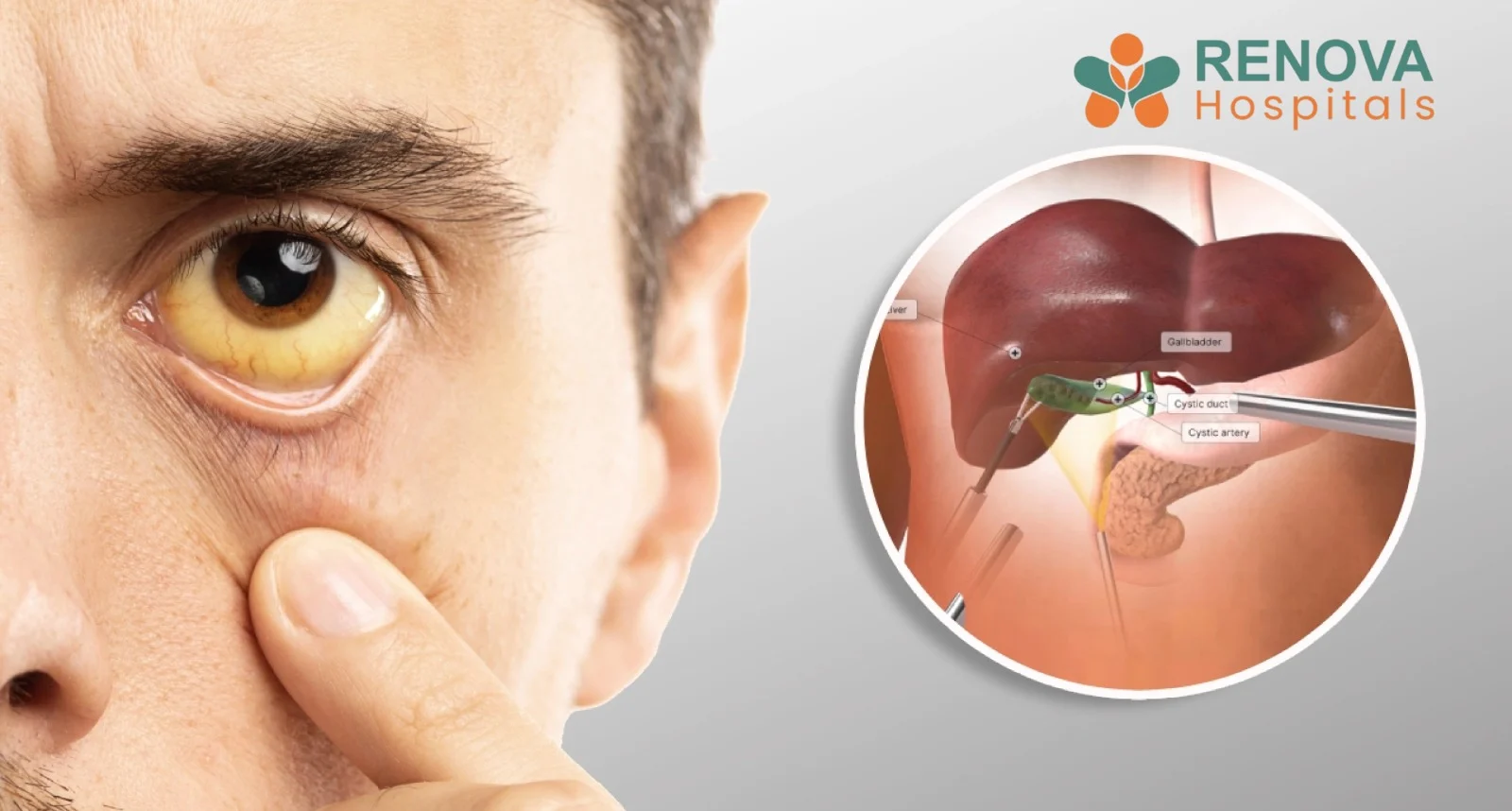
Jaundice is a medical condition marked by yellow discolouration of the skin, eyes, and mucous membranes. This occurs due to elevated bilirubin levels in the bloodstream, typically indicating a problem with the liver, bile ducts, or blood cells. In adults, jaundice should always be considered a warning sign that needs medical evaluation.
At Renova Hospitals, a leading hospital for jaundice in Hyderabad, patients receive NABH-accredited care, advanced diagnostics, and multidisciplinary expertise. Our focus is early diagnosis, cause-specific treatment, and complete recovery.
How Jaundice Develops in the Body
Jaundice results from a disruption in the normal bilirubin metabolism cycle. This process involves multiple organs working together, and failure at any stage can result in jaundice.
Normal bilirubin pathway
Old red blood cells are broken down in the spleen and bone marrow, producing bilirubin. The liver then converts bilirubin into a water-soluble form and secretes it into bile. Bile is released into the intestines and eliminated through stool.
What goes wrong
If red blood cells break down too rapidly, the liver becomes overwhelmed. If liver cells are damaged, bilirubin cannot be processed efficiently. If bile ducts are blocked, bilirubin cannot be excreted. In all these cases, bilirubin accumulates and causes jaundice.
Types of Jaundice and Their Clinical Importance
Doctors classify types of jaundice based on where bilirubin metabolism is disrupted. This classification is crucial because treatment depends on the type.
Obstructive jaundice
Obstructive jaundice occurs when bile cannot flow freely from the liver to the intestines. This leads to rapid bilirubin buildup and more intense symptoms. Gallstones, bile duct strictures, and pancreatic tumours are common causes.
Patients often experience severe itching, pale stools, dark urine, and abdominal pain. This condition frequently requires endoscopic or surgical intervention.
Possible Causes of Jaundice in Adults
Jaundice can result from many conditions, ranging from infections to chronic liver disease. Identifying the cause is essential for safe and effective treatment.
Prehepatic causes
These conditions increase bilirubin production:
- Hemolytic anemias
- Breakdown of large bruises
Hepatic causes
These directly damage liver cells:
- Viral hepatitis (A, B, C, E)
- Alcohol-related liver disease
- Autoimmune hepatitis
- Genetic metabolic disorders
- Drug-induced liver injury
Posthepatic causes
These block bile drainage:
- Gallstones
- Gallbladder inflammation or cancer
- Pancreatic tumors
Typhoid and jaundice
Severe bacterial infections like typhoid can affect liver function. This condition, known as typhoid jaundice, requires antibiotics and careful monitoring due to the risk of complications.
Recognising Jaundice Symptoms Early
Some patients notice jaundice immediately, while others develop symptoms gradually. Early recognition improves outcomes and shortens recovery.
Common jaundice symptoms
- Yellowing of eyes and skin
- Dark urine
- Pale or clay-colored stools
- Persistent itching
- Fever and chills
- Abdominal discomfort
- Fatigue or confusion
- Weight loss
If these symptoms appear, prompt consultation with a jaundice specialist doctor in Hyderabad is advised.
How Does Jaundice Spread?
Patients frequently ask how does jaundice spread, but jaundice itself does not spread between people. Transmission depends on the underlying cause.
Is jaundice communicable?
Jaundice is contagious only when caused by infections such as:
- Hepatitis A and E through contaminated food or water
- Hepatitis B and C through blood or body fluids
Jaundice due to alcohol, gallstones, medications, or tumours is not contagious.
Diagnostic Evaluation at Renova Hospitals
Accurate diagnosis is the foundation of effective treatment. At Renova, evaluation is systematic and evidence-based.
Diagnostic tests include:
- Blood tests for bilirubin and liver enzymes
- Differentiation between conjugated and unconjugated bilirubin
- Viral hepatitis screening
- Ultrasound or CT scan of the abdomen
- MRCP or endoscopy if bile obstruction is suspected
- Liver biopsy in select cases
An experienced jaundice specialist in Hyderabad interprets these findings to guide treatment.
How to Treat Jaundice Safely and Effectively
Many patients search online for how to treat jaundice or specific jaundice medicine, but treatment is always cause-specific. There is no single drug that treats all forms of jaundice.
Supportive care may include medications for itching or nausea. Unverified home remedies for jaundice should never replace medical treatment.
Jaundice Diet: Nutrition for Liver Healing
Dietary care significantly influences recovery. A structured jaundice diet reduces liver workload and supports regeneration.
What to eat in jaundice
- Fresh fruits such as papaya and apple
- Cooked vegetables
- Rice, dal, and soft cereals
- Plenty of fluids
These are safe foods to eat in jaundice because they are low in fat and easy to digest.
Foods to avoid for jaundice
- Alcohol
- Fried and oily foods
- Processed and packaged snacks
- Red meat and high-fat dairy
Diet must always support medical treatment.
Jaundice Recovery Time and Long-Term Outlook
Jaundice recovery time varies widely depending on the cause, severity, and timing of treatment. Early diagnosis leads to faster recovery and fewer complications.
Typical recovery timelines:
- Viral hepatitis: 2–6 weeks
- Typhoid jaundice: 3–6 weeks
- Obstructive jaundice: improves after intervention
Delayed treatment may result in chronic liver disease or liver failure.
How to Avoid Jaundice and Protect Liver Health
While not all cases are preventable, risk can be significantly reduced.
How to avoid jaundice
- Vaccination against hepatitis A and B
- Drinking clean, safe water
- Practising good hygiene
- Limiting alcohol intake
- Avoiding unnecessary supplements
- Maintaining a healthy weight and cholesterol
When to Call the Doctor
Jaundice should always be evaluated by a healthcare provider. It often signals serious underlying disease.
Seek immediate care if yellowing of eyes or skin, dark urine, pale stools, fever, abdominal pain, or confusion develops.
Jaundice and Liver Function: Why the Liver Is Central
The liver plays a vital role in detoxification, digestion, and metabolism. One of its key responsibilities is processing bilirubin and ensuring it is safely eliminated from the body. When liver cells are inflamed, damaged, or overwhelmed, bilirubin clearance slows down, leading to jaundice.
Many conditions that affect liver health such as viral infections, alcohol use, metabolic disorders, or medication toxicity, can trigger jaundice symptoms. This is why jaundice is often one of the earliest visible signs of liver disease and should always prompt evaluation by a jaundice specialist doctor in Hyderabad.
Jaundice in Acute vs Chronic Liver Disease
Jaundice can appear suddenly in acute conditions or develop slowly in chronic liver disease. Understanding this difference helps patients recognise the urgency of care.
Acute jaundice
Acute jaundice develops rapidly, often due to infections like viral hepatitis, severe bacterial illness, or drug toxicity. Symptoms are usually more noticeable and may include fever, fatigue, nausea, and abdominal pain. With timely treatment, recovery is often complete.
Chronic jaundice
Chronic jaundice develops gradually and may be linked to long-standing liver disease such as alcoholic liver disease or cirrhosis. Yellowing may be mild initially but worsens over time. Chronic cases require long-term care from a jaundice specialist in Hyderabad to prevent liver failure.
Jaundice and Itching: Why Does It Happen?
One of the most distressing symptoms of jaundice is severe itching. This occurs because bile salts accumulate in the bloodstream and deposit in the skin when bile flow is impaired. Itching is especially intense in obstructive jaundice.
Medications may be prescribed to reduce itching and improve comfort. Managing the underlying cause of bile obstruction is the most effective long-term solution.
Role of Imaging and Advanced Tests in Jaundice
Blood tests alone are often not enough to identify the exact cause of jaundice. Imaging plays a crucial role in detecting structural problems.
Common imaging tests include:
- Ultrasound to detect gallstones or bile duct dilation
- CT scan to assess liver and pancreatic abnormalities
- MRCP to visualise the bile ducts non-invasively
- Endoscopic procedures when obstruction is suspected
At Renova, advanced diagnostics help confirm whether jaundice is due to infection, inflammation, or blockage, ensuring accurate treatment planning.
Jaundice in Relation to Other Medical Conditions
Jaundice may appear as part of another illness rather than a primary problem. Conditions such as sepsis, heart failure, and severe infections can reduce blood flow to the liver, impairing bilirubin processing.
Infections like typhoid and jaundice often occur together in severe cases. Typhoid jaundice signals liver involvement and increases the need for hospital-based care and monitoring.
Lifestyle Factors That Worsen Jaundice
Certain lifestyle habits can worsen jaundice or delay recovery. Alcohol is one of the most harmful contributors, even in small amounts, when the liver is already under stress.
Other factors include:
- Self-prescribing medications
- Excessive use of herbal supplements
- Poor hydration
- High-fat or processed foods
Avoiding these factors is essential for reducing jaundice recovery time.
Importance of Follow-Up After Jaundice Treatment
Recovery from jaundice does not always end when yellowing fades. Follow-up tests are essential to ensure liver function has returned to normal and no chronic damage remains.
Your jaundice doctor may recommend repeat blood tests, imaging, or lifestyle changes. Skipping follow-ups increases the risk of relapse or undetected liver disease.
Why Choose Renova Hospitals for Jaundice Care?
Managing jaundice requires coordinated care across specialities. Renova Hospitals offers a structured, patient-centric approach.
At Renova, patients benefit from:
- NABH-accredited clinical protocols
- Experienced jaundice specialist doctor in Hyderabad
- Advanced diagnostic facilities
- Multidisciplinary liver and digestive care
- Safe inpatient and outpatient management
This makes Renova a trusted jaundice hospital in Hyderabad for both simple and complex cases.
Early recognition of jaundice symptoms, timely diagnosis, proper treatment, dietary support, and specialist care ensure complete recovery in most patients. At Renova Hospitals, expert teams deliver comprehensive, evidence-based care for all forms of jaundice.
Frequently Asked Questions (FAQs)
1. What are the earliest jaundice symptoms to watch for?
Yellowing of the eyes, dark urine, and unusual fatigue are often the earliest signs.
2. Is jaundice communicable to others?
It depends on the cause. Viral hepatitis-related jaundice can spread, but jaundice due to gallstones or alcohol cannot.
3. How does jaundice spread in infectious cases?
It spreads only when caused by infections like hepatitis A, B, C, or E.
4. What is the most serious type of jaundice?
Obstructive jaundice can be serious if untreated, as bile blockage can damage the liver quickly.
5. How long does jaundice recovery time usually take?
Jaundice recovery time ranges from 2 weeks to several months, depending on the cause and treatment timing.
6. What is the best jaundice diet during recovery?
A balanced jaundice diet includes easily digestible foods, fruits, vegetables, and adequate fluids.
7. What food to eat in jaundice for faster recovery?
Food to eat in jaundice includes rice, dal, cooked vegetables, fruits, and plenty of water.
8. Which foods should be avoided for jaundice?
Foods avoided for jaundice include alcohol, fried foods, processed snacks, and high-fat dairy.
9. Can home remedies for jaundice cure the condition?
Home remedies for jaundice may support hydration, but cannot replace medical treatment.
10. When should I consult a jaundice specialist in Hyderabad?
Consult a jaundice specialist in Hyderabad immediately if yellowing, dark urine, fever, or abdominal pain appear.