Gallstones are one of the most frequently diagnosed biliary conditions worldwide. They form when chemical particles in bile harden into stones within the gallbladder. Some patients may live with gallstones for years without symptoms, but others develop sudden pain, infection, or life-threatening complications requiring urgent intervention.
When a patient experiences repeated episodes of upper abdominal pain, nausea, or shoulder pain after meals, timely evaluation from a gallstone specialist becomes crucial.
This guide provides an in-depth understanding of gallstones, types, symptoms, risk factors, medical management options, surgical treatment, dietary modifications, and when hospital care is necessary. It also highlights the availability of advanced gallstone treatment in Hyderabad at Renova Hospitals.
Overview
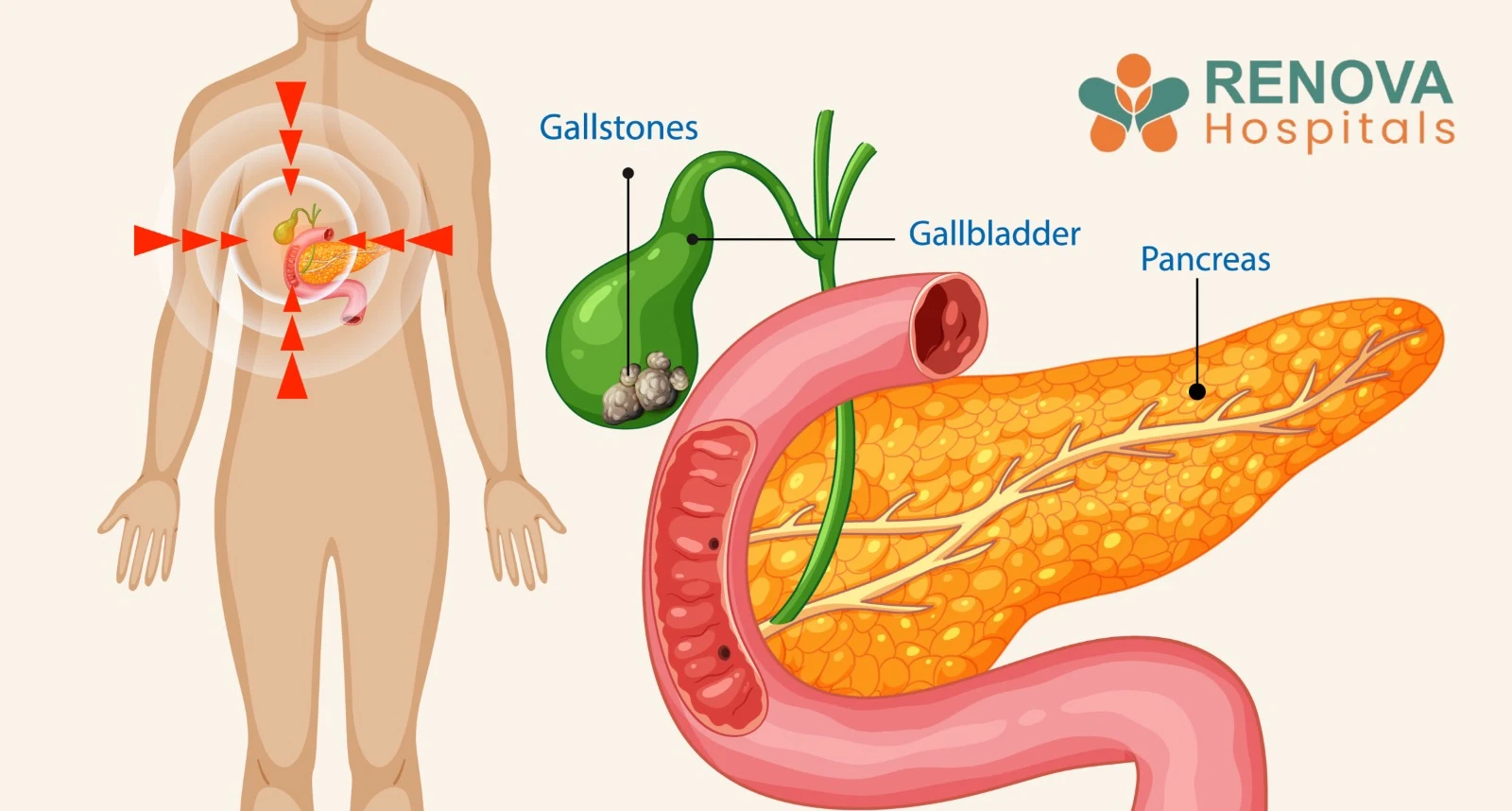
The gallbladder is a small, pear-shaped organ beneath the liver. Its primary function is to store bile, a digestive fluid that breaks down dietary fats. When bile components such as cholesterol, bilirubin, or bile salts accumulate abnormally, they crystallise into stones. These stones may remain silent for long periods or migrate into bile ducts, creating blockages that cause pain and inflammation.
Key insights:
- Gallstones are hardened deposits of bile stored in the gallbladder.
- Stones vary in size from a grain of sand to several centimetres.
- Symptomatic gallstones require treatment to prevent severe complications.
- Gallstone removal surgery remains the most reliable long-term cure.
What Are Gallstones?
Gallstones, medically known as cholelithiasis, are solid masses formed by bile components. Bile normally contains cholesterol, bile salts, and bilirubin in balance. When this balance is disturbed, precipitation occurs, leading to stone formation.
Types of Gallstones
1. Cholesterol Stones
- Most commonly seen in adults.
- Develop due to excess cholesterol in the bile.
- Often associated with obesity, a fatty diet, a sedentary lifestyle, or hormone changes.
2. Pigment Stones
- Formed due to excess bilirubin.
- Frequently linked to liver disease, hemolytic anaemia, or chronic infections.
- Typically smaller but more numerous.
3. Mixed Stones
- Contains cholesterol and pigment components.
- Common in chronic gallbladder inflammation cases.
How Serious Are Gallstones?
Silent stones may not demand immediate treatment. However, once symptoms appear, gallstones become clinically significant. Obstruction of the bile ducts can lead to inflammation, infection, or pancreatitis. Untreated cases may progress to life-threatening conditions requiring urgent hospitalisation.
Seriousness increases when:
- Pain becomes recurrent.
- Jaundice develops.
- Fever accompanies abdominal pain.
- Vomiting persists.
- Blood tests indicate elevated liver enzymes or infection.
How Common Are Gallstones?
Gallstones affect millions globally. Incidence increases with age and lifestyle changes.
Prevalence patterns:
- Higher in women, especially during reproductive years.
- Increased risk during gallstones and pregnancy due to hormonal changes.
- More common in individuals who are obese or who rapidly lose weight.
- Strong familial and genetic influence.
Symptoms and Causes
Common Symptoms of Gallstones
Gallstones may remain asymptomatic until they obstruct the bile ducts. Symptomatic patients exhibit:
- Sudden severe pain in the right upper abdomen.
- Pain triggered after high-fat meals.
- Persistent nausea or vomiting.
- Indigestion, bloating, early satiety.
- Gallstones and back pain radiating to shoulder or between shoulder blades.
- Dark urine and pale stools due to altered bilirubin flow.
- Fever and chills indicating infection.
- Jaundice suggesting obstruction.
Pain episodes lasting minutes to hours indicate biliary colic.
What Does Gallstone Pain Feel Like?
Patients describe gallstone attacks as:
- Sharp, throbbing, cramping, and squeezing abdominal pain.
- Pain severe enough to interrupt sleep.
- Pain aggravated by deep breathing or movement.
- Episodes often occurring at night or after heavy meals.
- Pain subsiding temporarily only to recur later.
Where Is Gallstone Pain Located?
Pain usually originates under the right rib cage but may radiate to:
- Right shoulder
- Upper back
- Area between the shoulder blades
- Central abdomen or chest
Referred pain often leads to confusion between gallstones and kidney stones, gastritis, or cardiac problems.
Gallstones in Women and Pregnancy
Gallstones and pregnancy correlate due to hormonal influence.
Mechanism:
- Estrogen increases cholesterol in bile.
- Progesterone slows gallbladder emptying.
- Reduced movement causes stagnation and stone formation.
Pregnant women experiencing persistent abdominal pain require medical supervision for safe management strategies.
What Triggers Gallstone Pain?
Common triggers include:
- Heavy, oily or spicy meals
- Eating large portions at once
- Skipping meals and overeating later
- High cholesterol and a low-fibre diet
- Rapid weight loss programs
- Dehydration and prolonged fasting
- Alcohol consumption in some individuals
Warning Signs That Should Not Be Ignored
Immediate evaluation is needed when:
- Pain is continuous and lasts more than 6 hours.
- Fever accompanies abdominal pain.
- Vomiting persists.
- Skin or eyes turn yellow.
- Abdominal swelling with tenderness appears.
These signs indicate complications such as cholecystitis, cholangitis or pancreatitis.
Possible Complications of Untreated Gallstones
If a stone blocks the bile ducts, the following complications may occur:
- Acute cholecystitis (gallbladder inflammation)
- Pancreatitis caused by duct obstruction
- Cholangitis (infection of the bile ducts)
- Hepatitis or liver damage
- Empyema or perforation of the gallbladder
- Sepsis, which is life-threatening
Early diagnosis prevents most complications.
What Causes Gallstones?
Gallstones form when the chemical balance in bile is disturbed.
Biological reasons:
- Excess cholesterol exceeds bile salt capacity.
- High bilirubin levels due to hemolytic diseases.
- Reduced bile flow, causing stagnation.
- Chronic infections in the biliary system.
Lifestyle reasons:
- High-fat diet with low fibre intake.
- Being overweight or sedentary.
- Very rapid weight loss after dieting or surgery.
Risk Factors
Higher risk observed in:
- Women more than men.
- Individuals above 40 years.
- Family history of gallstones.
- Gallstones and pregnancy.
- Obesity or sudden weight loss.
- High-cholesterol dietary habits.
- Diabetes or metabolic syndrome.
- Liver disease or hemolytic disorders.
- Long-term birth control pill usage
Diagnosis and Tests
A gallstone specialist performs a physical evaluation and orders investigations.
Diagnostic methods:
- Ultrasound Abdomen
- First-line imaging.
- Detects stones in the gallbladder and bile ducts.
- MRCP (Magnetic Resonance Cholangiopancreatography)
- Detailed view of the biliary tree.
- Recommended for ductal stones.
- HIDA Scan
- Evaluates gallbladder function.
- Useful in acute cholecystitis.
- Endoscopic Ultrasound
- Detects small stones not visible in surface ultrasound.
- ERCP
- Diagnostic and therapeutic.
- Can remove stones in the common bile duct.
Blood tests to evaluate:
- Liver function tests
- Bilirubin levels
- Pancreatic enzymes
- Inflammatory markers
Management and Treatment
Treatment depends on size, symptoms, and complications.
Medication for Gallstones
Medical therapy is limited. Ursodeoxycholic Acid may help dissolve small cholesterol stones, but requires long-term use, and recurrence risk is high. Medication for gallstones is generally recommended only when surgery is not possible temporarily.
Limitations:
- Works only for small stones.
- Takes months to years.
- Does not guarantee a permanent cure.
Gallstone Removal Surgery
Gallbladder removal (laparoscopic cholecystectomy) is the standard and definitive treatment when symptomatic.
Benefits:
- Prevents recurrent attacks permanently.
- Reduces risk of infection and pancreatitis.
- Short hospital stay.
- Faster recovery with minimal scarring.
At Renova Hospitals, advanced laparoscopy facilities allow patients to return home quicker. Patients searching for gallstone surgery in Hyderabad receive complete evaluation, procedure planning, and postoperative support.
Post-Surgical Recovery
Recovery timeline:
- Discharge within 24 to 48 hours in most cases.
- Resume light activities in a few days.
- Full recovery in 1 to 2 weeks.
- Normal diet gradually reintroduced.
- Long-term dietary restrictions are usually minimal.
Diet and Lifestyle Management
Diet influences symptoms significantly.
Gallstones Foods to Avoid
- Fried foods, excessive oils.
- Red meat, liver, high-fat dairy.
- Bakery products, refined flour.
- Foods rich in trans fats.
- Processed meats.
- Cream-based gravies and desserts.
Foods Recommended
- High-fibre vegetables and whole grains.
- Lean proteins like fish and chicken.
- Brown rice, oats, millets.
- Adequate hydration.
- Moderate use of healthy fats like olive oil.
Lifestyle habits:
- Maintain a healthy body weight.
- Avoid rapid weight loss and crash diets.
- Regular physical activity.
- Avoid alcohol if it triggers symptoms.
- Eat small, frequent meals instead of heavy servings.
When to See a Doctor
Professional consultation is necessary when:
- Experiencing repeated right upper abdominal pain.
- Pain wakes you up at night.
- Jaundice develops.
- Fever accompanies abdominal pain.
- Pain radiates to the back or right shoulder.
- Symptoms worsen after eating fatty meals.
Immediate hospital evaluation is required during attacks.
Prognosis / Outlook After Treatment for Gallstones
Patients who undergo timely treatment for gallstones, especially through laparoscopic gallbladder removal, generally have an excellent prognosis. Once the gallbladder is removed, stones do not recur because the organ responsible for stone formation is no longer present.
Important points about prognosis:
- Most patients resume normal activity within 1 to 2 weeks after surgery.
- Digestive function remains normal in the long term, as bile flows directly to the intestine.
- A small percentage of patients may develop mild loose stools initially; this usually improves naturally or with diet adjustments.
- Chronic complications such as recurrent infection, pancreatitis, or bile duct obstruction largely disappear after surgery.
- Patients with untreated gallstones have a higher chance of emergencies, including cholecystitis, cholangitis, or pancreatitis, which can be severe.
- Prognosis is significantly better when intervention is done early rather than waiting for complications.
- Asymptomatic gallstones may require only monitoring, but symptomatic stones have a high chance of recurring attacks.
Long-term expectations:
- Quality of life returns to normal.
- No major dietary restrictions are required after recovery.
- No impact on lifespan when treated appropriately.
- Patients usually do not require repeat procedures.
Overall outlook is strongly positive with early diagnosis and proper management. Renova Hospitals offers complete evaluation, imaging and gallstone treatment in Hyderabad with skilled surgeons and post-operative support ensuring long-term wellness.
Gallstone Treatment at Renova Hospitals, Hyderabad
Renova Hospitals provides comprehensive gallstone treatment in Hyderabad, including diagnostics, medical care, and gallstone removal surgery.
Facilities available:
- Experienced gastroenterologists and biliary surgeons.
- 24/7 emergency care.
- Advanced imaging, including Ultrasound, MRCP, and ERCP.
- Minimally invasive laparoscopic gallbladder removal.
- Post-surgery dietary and recovery monitoring.
Early Diagnosis Prevents Complications
Gallstones are manageable with early diagnosis and timely treatment. While some remain silent, symptomatic stones demand medical evaluation to prevent complications. Diet modifications reduce attacks, but a definitive cure requires gallbladder removal. Renova Hospitals offers advanced gallstone treatment in Hyderabad with minimally invasive surgery and expert post-operative care.
Individuals experiencing recurrent abdominal pain, vomiting or jaundice should not delay seeking medical care. Early treatment ensures better outcomes, minimal complications and faster recovery.
FAQs
1. Do gallstones dissolve without treatment?
Gallstones rarely disappear naturally. Most remain unchanged or grow over time.
2. Are medications effective for treating gallstones?
Medication for gallstones works only for small cholesterol stones and requires a long duration. Surgery remains the most reliable option.
3. When is surgery necessary?
Surgery is recommended if symptoms begin, stones cause blockage, infection occurs, or the risk of complications increases.
4. Can gallstones cause back or shoulder pain?
Yes. Referred nerve pain often results in gallstones and back pain or right shoulder discomfort.
5. What if gallstones are found during pregnancy?
Treatment depends on severity. Diet modification and monitoring may be sufficient. Emergency cases require specialist-managed treatment.
6. Are gallstones and kidney stones the same?
No. Gallstones vs kidney stones differ in location, formation, symptoms and treatment approach.
7. How long does recovery take after surgery?
Most patients resume routine life in 1 to 2 weeks after laparoscopic removal.
8. Can diet prevent gallstones?
Diet reduces risk but does not remove existing stones. Balanced nutrition and weight management help prevent.
9. Can gallstones be left untreated if no pain exists?
Asymptomatic stones may remain under observation, but symptomatic stones require treatment to prevent complications.
10. Is life normal after gallbladder removal?
Yes. Bile flows directly into the intestine, and digestion continues normally with minimal long-term dietary adjustments.