Yellowing of the skin and eyes is one of the most recognisable signs of internal illness. Even people with little medical knowledge immediately associate this colour change with jaundice. But while the appearance is well known, the reason behind it is often misunderstood.
Why does the skin turn yellow? Why do the eyes change colour first? Is jaundice always related to the liver? And why does jaundice in adults often signal something serious?
This blog focuses specifically on why skin and eyes turn yellow in jaundice, the biological processes responsible, how this differs across age groups, and what this visible sign reveals about liver and bile duct health.
While Renova Hospitals already has an educational blog on jaundice, this article takes a deeper, more scientific approach to the colour change itself, what causes it, how doctors interpret it, and why it should never be ignored.
Jaundice: A Sign, Not a Disease
Jaundice is not a standalone illness. It is a clinical sign that appears when a substance called bilirubin builds up in the body. This accumulation causes yellow discolouration of the skin, eyes, and mucous membranes.
In healthy individuals, bilirubin is continuously produced and eliminated without causing any visible change. Jaundice develops only when this finely balanced process is disrupted.
Understanding jaundice, therefore, requires understanding bilirubin metabolism.
The Role of Bilirubin in Skin Colour Change
Bilirubin is a yellow pigment formed during the normal breakdown of red blood cells. Every day, millions of ageing red blood cells are broken down in the spleen. When this happens, haemoglobin is released and converted into bilirubin.
Under normal circumstances:
- Bilirubin enters the bloodstream
- The liver removes it from circulation
- The liver modifies it into a water-soluble form
- It is excreted into the bile
- Bile carries it into the intestines
- It leaves the body through stool
When any step in this process fails, bilirubin accumulates in the blood. Once blood levels rise above a certain point, bilirubin begins to deposit in tissues—especially the skin and eyes—causing jaundice.
Why Does Skin Turn Yellow in Jaundice?
The yellow colour seen in jaundice is caused by bilirubin depositing in the skin. Bilirubin has a natural yellow-brown pigment, and when present in high concentrations, it alters skin colour.
Several factors explain why this yellowing becomes visible:
- Bilirubin circulates freely in the blood when not cleared by the liver
- It has an affinity for skin tissues
- It accumulates gradually, starting with lighter areas
- As levels rise, yellowing becomes more intense and widespread
Mild jaundice may appear subtle, especially under artificial lighting. Severe jaundice, however, causes deep yellow or mustard-coloured skin that is difficult to miss.
Why Are the Eyes Affected First?
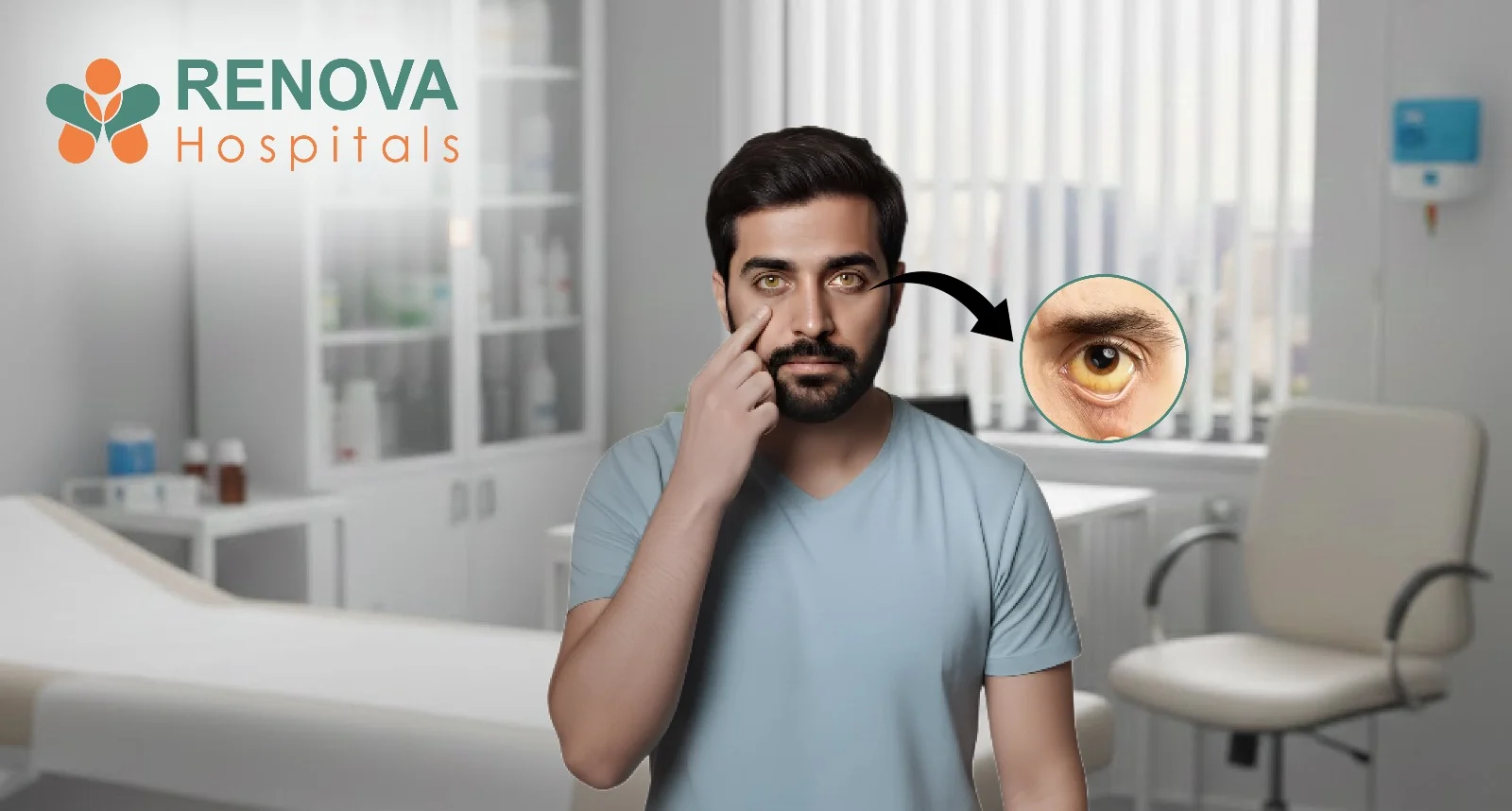
One of the earliest and most reliable signs of jaundice is yellowing of the eyes.
The white part of the eye, known as the sclera, contains a protein called elastin. Bilirubin binds strongly to elastin, which is why even small increases in bilirubin levels cause visible yellowing here before the skin changes colour.
This early eye involvement explains why doctors routinely examine the eyes when jaundice is suspected.
Normal eyes vs jaundice
- Normal eyes have a bright white sclera
- Jaundiced eyes appear yellow or pale yellow
- The colour change is usually uniform
Jaundice eye symptoms may include:
- Yellow discolouration of the sclera
- Mild irritation or dryness
- Eye fatigue
- Increased sensitivity to light in severe cases
Because eye changes occur early, they often prompt patients to seek medical attention before skin changes become obvious.
Different Forms of Bilirubin and Their Impact
Not all bilirubin behaves the same way. Understanding its forms helps explain the severity and pattern of jaundice.
Unconjugated (Indirect) Bilirubin
This form has not yet been processed by the liver. It is not water-soluble and circulates bound to proteins. Elevated levels are commonly seen in:
- Excessive red blood cell breakdown
- Certain inherited conditions
- Liver processing defects
Conjugated (Direct) Bilirubin
This form has been processed by the liver and is water-soluble. When bile flow is blocked, conjugated bilirubin leaks back into the bloodstream, leading to prominent jaundice.
Both forms can cause yellow skin, but conjugated bilirubin is more commonly associated with dark urine and pale stools.
Types of Jaundice Based on the Site of the Problem
Doctors classify jaundice into categories depending on where bilirubin handling fails. Understanding the types of jaundice helps determine why the skin turns yellow and how severe the condition may be.
Pre-hepatic Jaundice
This occurs before bilirubin reaches the liver. Excessive red blood cell destruction overwhelms the liver’s ability to process bilirubin, causing it to accumulate in the blood.
Hepatic Jaundice
In this type, liver cells themselves are damaged. The liver cannot efficiently process or excrete bilirubin, leading to its accumulation. This form is common in hepatitis, fatty liver disease, and cirrhosis.
Obstructive jaundice
This occurs when bile flow from the liver is blocked. Although bilirubin is processed, it cannot exit the liver. As a result, it builds up in the blood, causing intense yellowing of skin and eyes along with severe itching.
Causes of Jaundice in Adults
Unlike newborn jaundice, jaundice in adults almost always signals an underlying medical problem. The causes of jaundice in adults are diverse and range from reversible conditions to serious diseases.
Common causes include:
- Viral hepatitis (A, B, C, or E)
- Alcohol-related liver injury
- Non-alcoholic fatty liver disease
- Gallstones blocking the bile ducts
- Liver cirrhosis
- Tumours of the liver, bile duct, or pancreas
- Certain medications and toxins
- Blood disorders causing excessive red cell breakdown
Because adult jaundice is rarely harmless, prompt evaluation is essential.
Symptoms of Jaundice in Adults Beyond Skin Colour
Yellowing of the skin is the only visible sign. Symptoms of jaundice in adults often provide critical clues to the underlying cause.
These may include:
- Yellow skin and jaundice eyes
- Dark-coloured urine
- Pale or clay-coloured stools
- Persistent itching
- Fatigue and weakness
- Loss of appetite
- Nausea or vomiting
- Abdominal pain or bloating
- Weight loss in chronic cases
The combination of these symptoms helps doctors determine whether the jaundice is hepatic, obstructive, or pre-hepatic in origin.
How Doctors Confirm Jaundice: The Jaundice Test
Visual examination alone cannot determine the cause of jaundice. A jaundice test is required to confirm the diagnosis and guide treatment.
Key investigations include:
- Blood bilirubin levels (total, direct, indirect)
- Liver enzyme tests
- Complete blood count
- Viral hepatitis markers
- Ultrasound of the abdomen
- CT or MRI scans if obstruction or tumour is suspected
These tests allow precise identification of the cause and ensure appropriate jaundice treatment.
Why Obstructive Jaundice Causes Severe Yellowing and Itching
In obstructive jaundice, bile cannot flow normally from the liver to the intestine. This leads to:
- Accumulation of conjugated bilirubin in the blood
- Deep yellow skin and eyes
- Severe itching due to bile salt deposition
- Pale stools and dark urine
Obstructive jaundice often requires urgent intervention because prolonged blockage can permanently damage the liver.
Treatment of Jaundice in Adults: Addressing the Root Cause
There is no single medicine that directly “cures” jaundice. Treatment of jaundice in adults focuses on correcting the underlying problem causing bilirubin buildup.
Depending on the cause, treatment may include:
- Antiviral therapy for hepatitis
- Alcohol cessation and nutritional support
- Weight management and metabolic control
- Removal of gallstones
- Endoscopic or surgical relief of bile duct obstruction
- Cancer-specific treatment when required
As bilirubin levels fall, skin and eye colour gradually return to normal.
Effective jaundice treatment not only improves appearance but also prevents long-term liver damage and complications.
Why Yellow Skin Should Never Be Ignored
Jaundice is one of the body’s most visible warning signs. It often appears only after significant internal disruption has occurred.
Ignoring jaundice can lead to:
- Progressive liver injury
- Chronic liver disease
- Liver failure
- Life-threatening infections
Early evaluation allows reversible causes to be treated before permanent damage sets in.
When to Seek Immediate Medical Care
Seek urgent medical attention if jaundice is associated with:
- Severe abdominal pain
- Fever and chills
- Confusion or altered consciousness
- Rapid worsening of the yellow colour
- Bleeding tendencies
These signs may indicate serious liver dysfunction or infection requiring emergency care.
Yellow Skin Is the Body’s Alarm System
The yellow colour seen in jaundice is not a cosmetic issue—it is a biological alarm. It reflects disruption in bilirubin metabolism, liver function, or bile flow.
Understanding why skin turns yellow, recognising early eye changes, and undergoing timely jaundice test evaluation can make the difference between recovery and long-term disease.
If you notice yellowing of the skin or jaundice eyes, consult a specialist without delay. Early diagnosis and expert jaundice treatment can protect your liver and your life.
For comprehensive liver evaluation and expert care, consult the specialists at Renova Hospitals.