Neck pain is no longer just an age-related issue. Across India, especially in urban populations, increasing screen exposure, sedentary work culture, poor posture, long commuting hours, repetitive strain, and degenerative spinal changes are leading to a growing number of cervical spine disorders in younger as well as older adults.
While occasional neck stiffness may improve with rest or physiotherapy, persistent symptoms such as radiating arm pain, tingling, numbness, weakness, loss of grip strength, balance problems, or hand clumsiness may indicate something much more serious, compression of the spinal nerves or spinal cord.
One of the most effective surgical procedures worldwide for treating such conditions is Anterior Cervical Discectomy and Fusion (ACDF).
Key Facts
- ACDF is one of the most commonly performed cervical spine surgeries globally
- The surgery helps relieve nerve pressure caused by damaged cervical discs
- It is widely used for herniated discs, cervical stenosis, cervical spondylosis, and cervical radiculopathy
- The procedure is designed to reduce neck pain, arm pain, numbness, tingling, and weakness
- Modern ACDF surgery offers improved recovery, smaller incisions, and better spinal stabilisation
- Early treatment can help prevent permanent neurological damage
What Is Anterior Cervical Discectomy and Fusion (ACDF)?
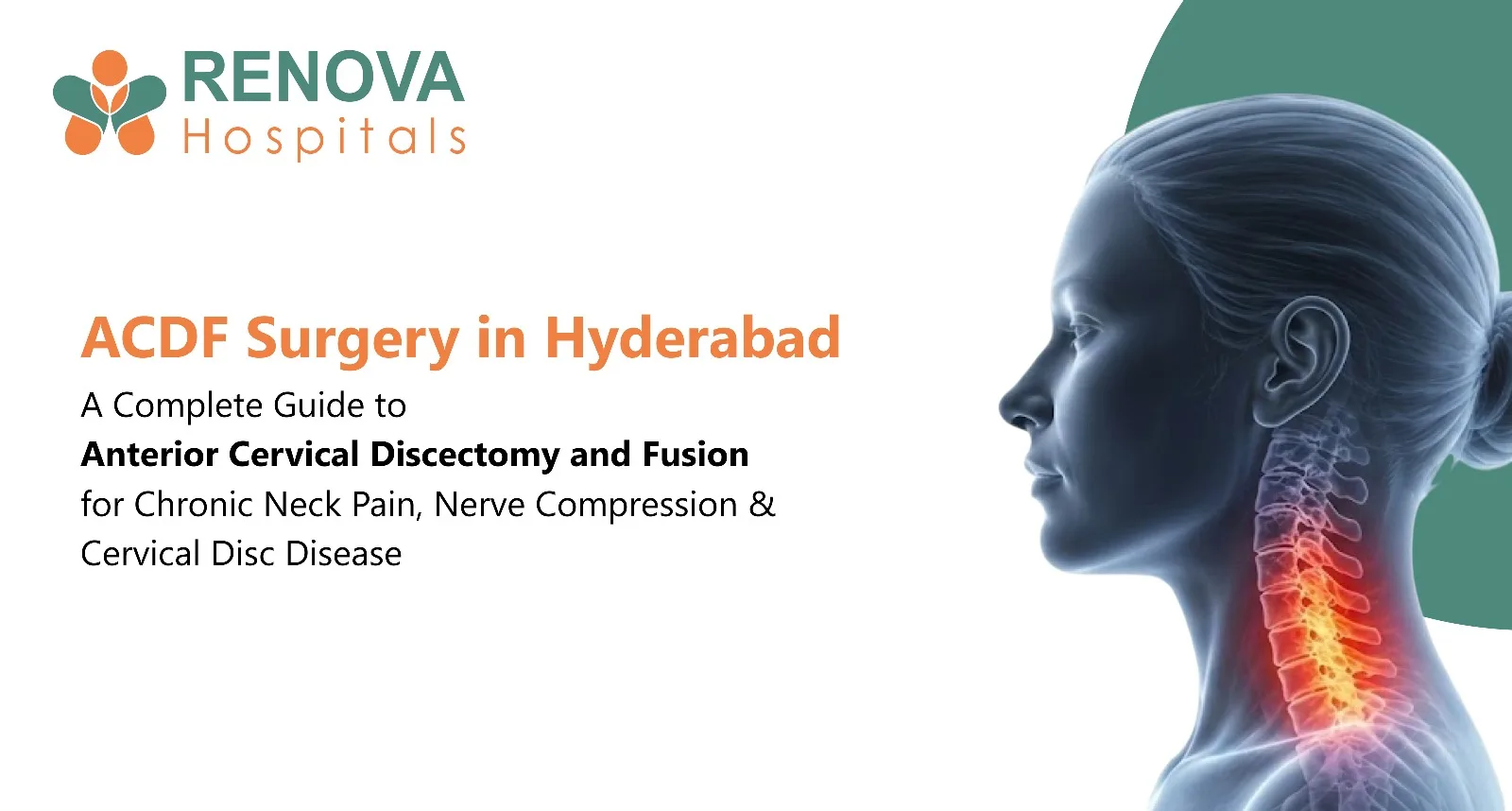
Anterior Cervical Discectomy and Fusion, commonly called ACDF surgery, is a specialised cervical spine surgery performed to remove damaged or herniated discs in the neck that are compressing the spinal cord or spinal nerves.
After removing the damaged disc, the surgeon stabilises the spine using a bone graft, spacer, or cage implant placed between the vertebrae. Plates and screws may also be used to improve stability and support fusion.
Over time, the adjacent vertebrae fuse into a single stable segment.
- Anterior → Surgery is performed through the front of the neck
- Cervical → Refers to the cervical spine (neck region)
- Discectomy → Removal of the damaged intervertebral disc
- Fusion → Stabilisation and joining of vertebrae
This procedure is considered one of the gold-standard surgical treatments for cervical nerve compression disorders.
Understanding the Cervical Spine
The cervical spine consists of seven vertebrae (C1–C7) located in the neck region.
Between these vertebrae are intervertebral discs that:
- Absorb shock
- Allow smooth neck movement
- Maintain spinal flexibility
- Protect the spinal cord and nerves
The spinal cord travels through the cervical spine and carries signals between the brain and the rest of the body. Nerves emerging from the cervical spine control:
- Shoulder movement
- Arm strength
- Hand coordination
- Finger sensation
- Upper body motor function
When a disc degenerates, bulges, ruptures, or collapses, it can compress these nerves or the spinal cord itself.
This compression may lead to severe pain and progressive neurological symptoms.
What are the Common Modern Risk Factors for Spinal Disorders
The incidence of cervical spine problems has increased dramatically due to modern lifestyle patterns.
Prolonged Computer Use
Long hours in front of screens place continuous strain on the cervical spine.
Poor Posture
Forward neck posture while using mobile phones or laptops significantly increases stress on cervical discs.
Sedentary Lifestyle
Lack of physical activity weakens the supporting neck and spinal muscles.
Repetitive Occupational Strain
Drivers, office workers, IT professionals, dentists, surgeons, machine operators, and desk-based professionals are particularly vulnerable.
Age-Related Degeneration
As people age, cervical discs lose hydration and elasticity, increasing the risk of degeneration and disc prolapse.
Smoking
Smoking reduces blood supply to spinal tissues and accelerates disc degeneration.
Global Statistics on Neck Pain and Cervical Spine Disorders
According to the World Health Organization (WHO):
A
study published in
The Lancet Rheumatology also reported a significant increase in spinal and musculoskeletal disorders globally over recent decades.
What Conditions May Require ACDF Surgery?
Herniated Cervical Disc
A herniated cervical disc occurs when the inner portion of the disc protrudes outward and compresses nearby nerves.
Symptoms of Cervical Disc Herniation
- Severe neck pain
- Shooting arm pain
- Tingling sensation
- Numbness in fingers
- Weakness in the shoulders or hands
- Burning pain
- Muscle spasms
Many patients initially mistake these symptoms for shoulder problems or muscular strain.
Cervical Spondylosis
Cervical spondylosis refers to age-related degeneration affecting the discs, vertebrae, joints, and ligaments of the neck.
It may gradually lead to:
- Disc collapse
- Bone spur formation
- Reduced spinal flexibility
- Chronic stiffness
- Spinal nerve compression
In advanced stages, cervical spondylosis may affect spinal cord function.
Cervical Spinal Stenosis
Spinal stenosis occurs when the spinal canal narrows and compresses the spinal cord.
This can become a serious neurological condition if left untreated.
Symptoms of Cervical Stenosis
- Difficulty walking
- Poor balance
- Hand clumsiness
- Weakness
- Numbness
- Reduced coordination
- Difficulty performing fine motor tasks
Cervical Radiculopathy
Cervical radiculopathy occurs when cervical nerve roots become compressed or inflamed.
Patients often describe:
- Electric shock-like pain
- Pain radiating into the arms
- Pins and needles sensation
- Tingling
- Weakness
- Difficulty lifting objects
ACDF surgery is highly effective in relieving this type of nerve compression.
Cervical Myelopathy
Cervical myelopathy occurs when the spinal cord is compressed.
This is considered a serious condition because prolonged spinal cord compression may result in permanent neurological damage.
Symptoms of Cervical Myelopathy
- Balance issues
- Difficulty walking
- Loss of hand coordination
- Weakness
- Muscle stiffness
- Frequent falls
- Difficulty with buttons or handwriting
What are the Common Symptoms of Spinal Disorders That Should not be Ignored?
Many patients continue self-medication for months before consulting a spine specialist. However, delayed treatment may worsen nerve damage.
Persistent Neck Pain
Pain lasting several weeks despite medications or physiotherapy requires investigation.
Pain Radiating Into Arms
Radiating pain usually indicates cervical nerve involvement.
Tingling or Numbness
Finger numbness may signal ongoing nerve compression.
Weakness in Hands or Arms
Loss of grip strength or difficulty lifting objects may indicate worsening neurological function.
Balance Problems
Difficulty walking or instability may indicate spinal cord compression.
Hand Coordination Issues
Frequent dropping of objects or difficulty with fine movements should not be ignored.
How Is ACDF Surgery Requirement Diagnosed?
At
Renova Hospitals, detailed spine evaluation helps determine the exact cause and severity of cervical compression.
MRI Scan for Cervical Spine
MRI is the most important imaging test for cervical spine disorders.
It helps identify:
- Disc herniation
- Spinal cord compression
- Nerve root compression
- Disc degeneration
- Soft tissue abnormalities
CT Scan
CT imaging helps visualise bone structures in greater detail.
Digital X-Rays
X-rays evaluate:
- Cervical alignment
- Instability
- Disc space narrowing
- Degenerative changes
Neurological Examination
The surgeon evaluates:
- Reflexes
- Muscle strength
- Coordination
- Sensory function
- Gait stability
Conservative Treatments Before ACDF Surgery
Not every patient with cervical disc disease immediately requires surgery.
Initial treatment may include:
- Medications
- Physiotherapy
- Posture correction
- Lifestyle modification
- Cervical traction
- Activity modification
- Nerve pain medications
- Epidural injections
Surgery is usually considered when conservative treatment fails or when neurological symptoms worsen.
When Is ACDF Surgery Recommended?
ACDF may be recommended if:
- Symptoms persist despite conservative treatment
- MRI confirms nerve or spinal cord compression
- Weakness is progressing
- Pain affects daily life significantly
- Balance problems develop
- Neurological deficits worsen
- Cervical instability is present
Benefits of ACDF Surgery
Relief From Chronic Neck and Arm Pain
Many patients experience substantial pain relief after decompression.
Improved Neurological Recovery
Symptoms such as weakness, numbness, and tingling often improve progressively.
Better Spinal Stability
Fusion prevents abnormal movement and reduces instability.
Improved Daily Function and Mobility
Patients often regain:
- Better sleep
- Improved movement
- Increased productivity
- Greater physical confidence
- Better quality of life
Prevention of Further Neurological Damage
Timely surgery may help avoid irreversible spinal cord or nerve injury.
What Is the Success Rate of ACDF Surgery?
ACDF surgery has consistently shown high success rates globally.
Research published in the
Global Spine Journal reported excellent outcomes for patients with cervical radiculopathy and myelopathy undergoing ACDF.
Studies indexed in the National Library of Medicine also demonstrate significant improvements in pain relief, neurological recovery, and functional outcomes following surgery.
Prognosis of ACDF Surgery
Recovery timelines vary depending on:
- Number of spinal levels treated
- Severity of compression
- Patient health
- Rehabilitation participation
Immediate Recovery
Patients are encouraged to mobilise early after surgery.
Pain Management
Post-operative discomfort is managed through:
- Medications
- Ice therapy
- Controlled activity
- Rehabilitation support
Physiotherapy After ACDF
Physical therapy focuses on:
- Restoring flexibility
- Improving posture
- Strengthening muscles
- Supporting long-term recovery
Returning to Daily Activities
Many patients gradually return to work and normal activities under medical guidance.
Risks and Complications of ACDF Surgery
Although ACDF is considered safe, all surgeries involve some risk.
Possible complications include:
- Infection
- Bleeding
- Swallowing difficulty
- Hoarseness
- Non-fusion
- Adjacent segment degeneration
- Rare nerve injury
However, complication rates remain relatively low when surgery is performed by experienced spine specialists.
Why Early Spine Consultation Matters
Delaying treatment for cervical nerve compression can increase the risk of:
- Permanent nerve damage
- Chronic weakness
- Reduced mobility
- Balance problems
- Loss of coordination
- Long-term disability
Early diagnosis often significantly improves surgical outcomes and recovery potential.
Advanced ACDF Surgery in Hyderabad at Renova Hospitals
- Advanced imaging technology
- Modern spine surgery infrastructure
- Minimally invasive surgical approaches
- Neuro-rehabilitation support
- Multidisciplinary spine care
- Personalised recovery planning
Chronic Neck Pain Should Never Be Ignored
Persistent neck pain accompanied by arm pain, numbness, tingling, weakness, or balance problems should not be dismissed as routine muscular strain.
Modern cervical spine surgery, such as ACDF, can provide long-term relief, restore neurological function, improve spinal stability, and significantly improve quality of life when performed at the appropriate stage.
Early diagnosis and timely spine consultation can help prevent long-term complications and irreversible nerve damage.
Patients seeking ACDF surgery in Hyderabad, cervical disc surgery, cervical stenosis treatment, or neck nerve compression treatment can consult Dr. Srinivas Thankari for expert evaluation and treatment. To consult him at
Renova Hospitals, call 040 2333 3333.
Disclaimer
This article is intended solely for educational and awareness purposes and should not be considered medical advice, diagnosis, or treatment guidance. Individual treatment decisions should always be made after consultation with a qualified medical professional.
The medical information presented in this article has been reviewed and approved by Dr. Srinivas Thankari for clinical accuracy, patient education