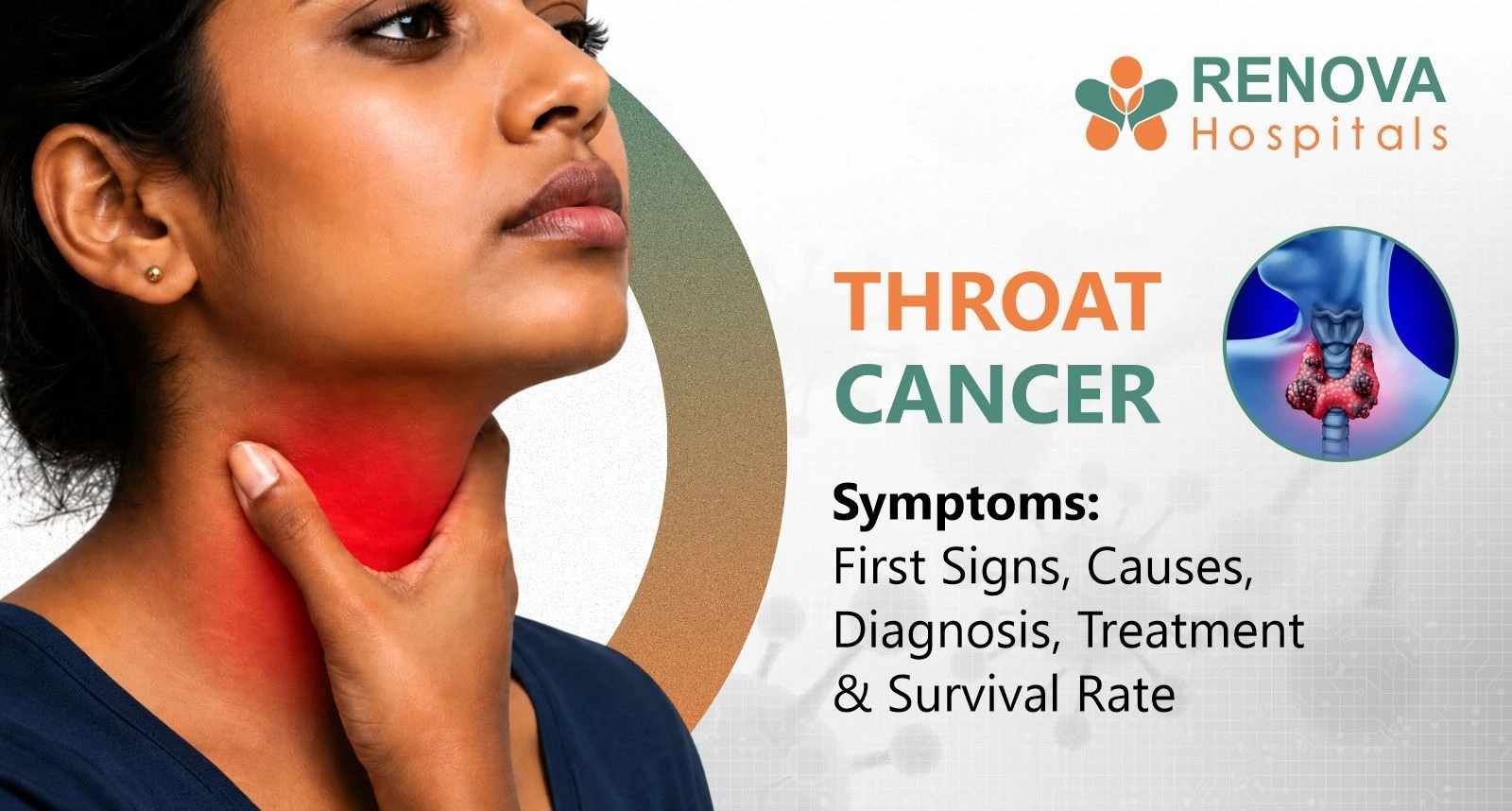
Throat cancer symptoms may include a persistent sore throat, hoarseness lasting more than three weeks, difficulty swallowing, a lump in the neck, ear pain, chronic cough, or unexplained weight loss. While these symptoms can occur due to less serious conditions, persistent or worsening symptoms should be evaluated promptly. Early diagnosis significantly improves treatment outcomes and survival.
Key Takeaways
- A persistent sore throat lasting more than three weeks should never be ignored.
- Hoarseness is often one of the first signs of throat cancer.
- Difficulty swallowing may indicate cancer affecting the throat or voice box.
- Smoking, alcohol use, and HPV infection are major risk factors.
- HPV throat cancer is increasing, particularly in younger adults.
- Early diagnosis allows more treatment options and better survival.
- Modern treatments include surgery, radiation therapy, chemotherapy, targeted therapy, and immunotherapy.
Throat Cancer at a Glance
Condition: Throat Cancer (Head and Neck Cancer)
Common Symptoms: Persistent sore throat, hoarseness, difficulty swallowing, neck lump, ear pain, chronic cough
Diagnosis Methods: Physical examination, flexible laryngoscopy, imaging scans, biopsy
Specialists Involved: ENT Surgeon, Surgical Oncologist, Medical Oncologist, Radiation Oncologist
Treatment Options: Surgery,
Radiation Therapy, Chemotherapy, Immunotherapy, Targeted Therapy
Why Awareness Matters
Many people mistake throat cancer symptoms for a common cold, throat infection, or acid reflux. Unfortunately, delaying medical evaluation allows the disease to progress.
Worldwide, thousands of new cases of throat cancer are diagnosed every year. Fortunately, many patients diagnosed at an early stage respond well to treatment and maintain excellent quality of life.
Recognizing the first signs of throat cancer and seeking timely medical care can make a life-changing difference.
Expert Insight
"Persistent throat symptoms should never be dismissed simply as seasonal infections. Hoarseness, difficulty swallowing, or a sore throat lasting several weeks deserve proper evaluation. Early diagnosis remains one of the most important factors influencing successful treatment."
โ Head & Neck Oncology Team, Renova Hospitals
What Is Throat Cancer?
Throat cancer refers to cancers that develop in the tissues of the throat (pharynx) or voice box (larynx). It is part of a broader group known as head and neck cancers.
Depending on where it begins, throat cancer may affect:
- Nasopharynx
- Oropharynx
- Hypopharynx
- Larynx (voice box)
Cancer develops when abnormal cells grow uncontrollably, forming a tumour that may spread to nearby lymph nodes or other organs if left untreated.
First Signs of Throat Cancer
The first signs of throat cancer are often subtle and easy to overlook.
Common early warning signs include:
- Persistent sore throat
- Hoarseness lasting more than three weeks
- Difficulty swallowing
- Feeling that something is stuck in the throat
- Lump in the neck
- Pain while swallowing
- Persistent cough
- Bad breath that does not improve
- Ear pain without an ear infection
- Voice changes
Many people initially mistake these symptoms for allergies,
viral infections, or acid reflux.
Common Throat Cancer Symptoms
The severity of throat cancer symptoms depends on the location and stage of the disease.
Symptoms may include:
- Persistent sore throat
- Hoarseness or voice changes
- Difficulty swallowing
- Pain during swallowing
- Lump in the neck
- Chronic cough
- Blood in saliva
- Unexplained weight loss
- Persistent ear pain
- Difficulty breathing
- Fatigue
A persistent sore throat that does not improve after several weeks deserves medical attention.
Throat Cancer Symptoms in Men
Historically, throat cancer symptoms in men have been more common because of higher rates of tobacco and alcohol use.
Symptoms may include:
- Persistent hoarseness
- Chronic sore throat
- Difficulty swallowing
- Neck swelling
- Voice changes
- Persistent cough
- Weight loss
Although men remain at higher risk, increasing HPV infections have changed disease patterns in recent years.
Throat Cancer Symptoms in Women
Throat cancer symptoms in women are generally similar to those in men.
Women may experience:
- Persistent sore throat
- Hoarseness
- Pain while swallowing
- Lump in the neck
- Ear pain
- Voice changes
- Unexplained weight loss
Because throat cancer is less commonly suspected in women, diagnosis may occasionally be delayed.
Laryngeal Cancer Symptoms
The larynx contains the vocal cords, making voice changes one of the earliest warning signs.
Common laryngeal cancer symptoms include:
- Hoarseness
- Voice becoming weak or rough
- Persistent cough
- Difficulty breathing
- Difficulty swallowing
- Throat pain
- Chronic throat irritation
If hoarseness continues for more than three weeks, it should always be evaluated by an ENT specialist.
What Causes Throat Cancer?
Several factors increase the risk of developing throat cancer.
Common throat cancer causes include:
Tobacco Use
Smoking cigarettes, bidis, cigars, or using smokeless tobacco significantly increases risk.
Alcohol Consumption
Heavy alcohol use further increases the likelihood of developing throat cancer, particularly when combined with smoking.
HPV Infection
Human papillomavirus (HPV), particularly HPV-16, is linked to cancers of the oropharynx.
Poor Oral Hygiene
Chronic dental problems may contribute to increased risk.
Occupational Exposure
Exposure to asbestos, wood dust, paint fumes, and industrial chemicals may increase risk.
Poor Nutrition
Low fruit and vegetable intake has been associated with a higher incidence of throat cancer.
HPV Throat Cancer Explained
Unlike tobacco-related cancers, HPV throat cancer often affects younger adults who may have never smoked.
The virus infects cells in the throat, particularly the tonsils and base of the tongue.
The encouraging news is that
HPV-related throat cancers often respond better to treatment than smoking-related cancers.
HPV vaccination also plays an important role in preventing HPV-associated cancers.
When Should You See a Doctor?
Consult a healthcare professional if you experience:
- Persistent sore throat for more than three weeks
- Hoarseness lasting longer than three weeks
- Difficulty swallowing
- Neck lump
- Persistent ear pain
- Blood in saliva
- Unexplained weight loss
- Difficulty breathing
- Persistent cough
Do not ignore these symptoms, especially if you smoke or consume alcohol regularly.
How Is Throat Cancer Diagnosed?
Accurate throat cancer diagnosis requires several investigations.
Step 1: Physical Examination
An ENT specialist examines the mouth, throat, neck, and lymph nodes.
Step 2: Flexible Laryngoscopy
A thin camera is inserted through the nose to visualize the throat and voice box.
Step 3: Imaging
Your doctor may recommend:
These scans determine tumour size and spread.
Step 4: Biopsy
A
biopsy confirms the diagnosis by examining tissue under a microscope.
This remains the gold standard for diagnosing throat cancer.
Throat Cancer Stages
Throat cancer stages describe how far the cancer has spread.
Stage I
Small tumour confined to one area.
Stage II
Larger tumour but still localized.
Stage III
Cancer spreads to nearby tissues or lymph nodes.
Stage IV
Cancer has spread extensively to nearby structures or distant organs.
Staging guides treatment planning and helps predict prognosis.
Throat Cancer Treatment
The best throat cancer treatment depends on the stage, location, overall health, and patient preferences.
Surgery
Early cancers may be removed while preserving speech and swallowing. Advanced cases may require partial or complete removal of affected tissues.
Radiation Therapy
High-energy radiation destroys cancer cells while preserving surrounding healthy tissue whenever possible.
Chemotherapy
Chemotherapy uses medications to destroy rapidly growing cancer cells. It is often combined with radiation for advanced disease.
Targeted Therapy
These medicines specifically target
cancer cell proteins responsible for growth.
Immunotherapy
Immunotherapy stimulates the body's immune system to recognize and destroy cancer cells.
Many patients with advanced disease now benefit from newer
immunotherapy drugs.
Throat Cancer Survival Rate
The throat cancer survival rate depends on several factors:
- Stage at diagnosis
- HPV status
- Overall health
- Response to treatment
Patients diagnosed at an early stage generally have significantly better outcomes than those diagnosed after the cancer has spread.
HPV-positive throat cancers often have better survival rates compared with HPV-negative cancers.
This highlights the importance of recognizing symptoms early and seeking timely treatment.
Can Throat Cancer Be Prevented?
While not all cases can be prevented, you can reduce your risk by:
- Avoid smoking
- Limit alcohol consumption
- Get vaccinated against HPV
- Maintain good oral hygiene
- Eat a diet rich in fruits and vegetables
- Attend regular health check-ups
- Seek evaluation for persistent throat symptoms
Myth vs Fact
Myth: A sore throat always means an infection.
Fact: A persistent sore throat may be an early sign of throat cancer.
Myth: Only smokers develop throat cancer.
Fact: HPV infection is becoming a major cause, especially in younger adults.
Myth: Hoarseness is never serious.
Fact: Persistent hoarseness lasting more than three weeks requires medical evaluation.
Myth: Women rarely develop throat cancer.
Fact: Both men and women can develop throat cancer.
Myth: Throat cancer is always fatal.
Fact: Early-stage throat cancer is often highly treatable.
Why Choose Renova Hospitals for Throat Cancer Care?
Renova Hospitals offers comprehensive multidisciplinary care for patients with head and neck cancers.
Patients benefit from:
- Experienced ENT and Head & Neck Oncologists
- Advanced diagnostic imaging
- PET-CT and pathology services
- Personalized treatment planning
- Modern radiation therapy
- Medical oncology and immunotherapy
- Surgical oncology expertise
- Rehabilitation for speech and swallowing
- Long-term follow-up care
Conclusion
Throat cancer often begins with symptoms that are easy to overlook, including a persistent sore throat, hoarseness, difficulty swallowing, or a lump in the neck. While these symptoms do not always indicate cancer, they should never be ignored if they persist. Early recognition, prompt diagnosis, and timely treatment greatly improve outcomes and quality of life. If you experience ongoing throat symptoms, seek medical advice without delay. At Renova Hospitals, our multidisciplinary team provides comprehensive diagnosis, personalized treatment, and compassionate care to help patients achieve the best possible outcomes.
Medically Reviewed & Approved By:
Dr. Rajesh Bollam
MBBS (Gold Medalist) DNB - General Medicine DM - Medical Oncology ECMO - European Certified Medical Oncologist
This article has been reviewed and approved by a qualified medical professional to ensure accuracy, credibility, and adherence to current clinical standards.